
This web page summarizes the sites that feature trees and bushes which relate to Biblical verses or subjects.
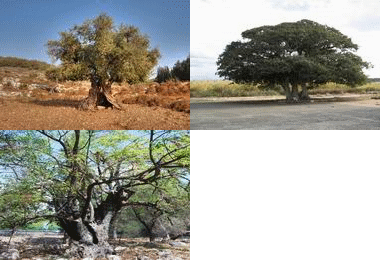
Psalms 1:3: “And he shall be like a tree planted by the rivers of water”
Home > Info > Nature > Trees and Bushes
Contents:
Overview
Sites
Biblical
Etymology
Links
Overview
Trees and bushes are mentioned numerous times throughout the Bible, both in the Old Testament and the New Testament. Trees and bushes appear roughly 400 times in the Bible—more than almost any other non-human element. Their prominence stems from both the physical landscape of the ancient Near East and their deep theological symbolism.
In the arid Mediterranean climate, trees were literally life-sustaining infrastructure:
-
Shade and Refuge: A spreading tree (like a fig or oak) offered relief from intense sun, making them natural gathering places for teaching, legal judgments, and rest.
-
Essential Resources: Trees provided food (figs, dates, pomegranates), olive oil for light and anointed sacred rituals, and timber for construction.
-
Landmarks: Large, distinct trees served as border markers and meeting points in a landscape without modern roads.
Biblically, trees function as visual metaphors for spiritual truths:
- Human Character: Righteous people are repeatedly likened to healthy trees planted by streams of water, yielding fruit in season (Psalm 1). Conversely, wicked or arrogant leaders are compared to lofty trees brought low.
-
Divine Encounter Locations: God frequently reveals Himself or communicates near significant trees—Moses at the Burning Bush, Abraham at the Oaks of Mamre, and Deborah judging under a palm tree.
Biblical Examples
Here are a few examples of trees and bushes that appear in the Bible:
- The Tree of Life: The Tree of Life is mentioned in the Book of Genesis in the Garden of Eden. It is said to have provided eternal life to Adam and Eve before they sinned.
- The Burning Bush: In the Book of Exodus, God speaks to Moses through a burning bush that is not consumed by the flames.
- The Cedars of Lebanon: Cedars of Lebanon are mentioned several times throughout the Old Testament as symbols of strength and beauty.
- The Fig Tree: The fig tree is mentioned frequently in the Bible, and it is often used as a symbol of Israel. In the New Testament, Jesus curses a fig tree for not bearing fruit.
- The Mustard Seed: In the New Testament, Jesus uses the example of a mustard seed to illustrate the power of faith. He says that even a small amount of faith can move mountains.
- The Olive Tree: The olive tree is a symbol of peace and prosperity in the Bible. It is mentioned numerous times throughout both the Old and New Testaments.
- The Vine: The vine is used as a metaphor for God’s people in the Old Testament. In the New Testament, Jesus refers to himself as the true vine and his followers as branches that bear fruit.
These are just a few examples of the many trees and bushes that are mentioned in the Bible. Trees and plants are often used as symbols throughout the Bible to illustrate spiritual concepts and principles.
Sites with Trees and bushes:
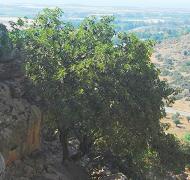
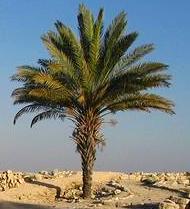
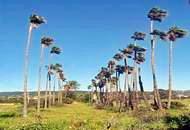
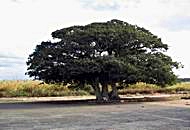
The following table lists the sites with trees and bushes that are featured in BibleWalks.
The name field includes up to 3 names: a common name, a scientific name in italic, and a (Hebrew name in parenthesis). To see more information – click on the site’s name. Hit the photo in order to view it in higher resolution.
Name |
Biblical & HistoricalReferences |
Site(click & go) |
Photo
|
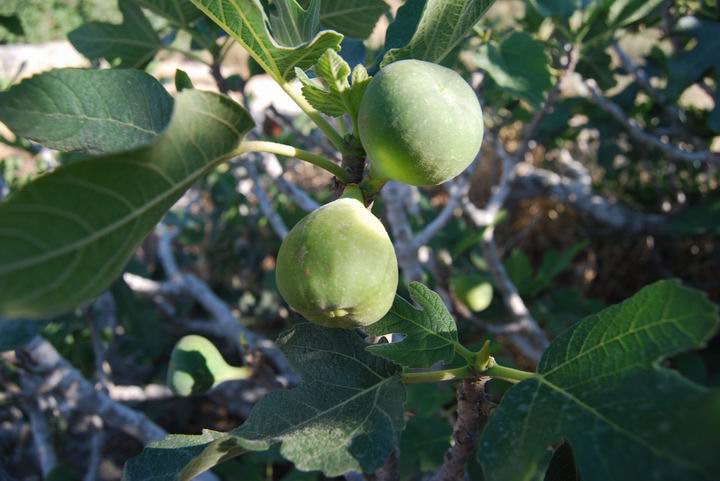
Fig TreeFicus Carica(Te’ena) |
The first tree in the Bible (Genesis 3 7): “…and they sewed fig leaves together, and made themselves aprons”.Appears many times pairing with grape: Isaiah 34 4 (NASB version): “As a leaf withers from the vine, or as one withers from the fig tree“ |
Migdal-MalchaMadrasahSochoh |
|
Olive treeOlea(Za’yit) |
Numerous references –Genesis 8:11:”And the dove came in to him … in her mouth was an olive leaf plucked off”Psalms 52 8: “But I am like a green olive tree in the house of God: I trust in the mercy of God for ever and ever”. |
Kh. BezaGethsemaneMt. OlivesKissonSiah Brook |
|
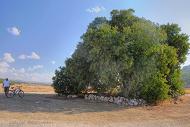
Arabian Jujube treeZiziphusSpina-christi“Christ Thorn”(sheisaf matsui) |
Matthew 27: 29: “And when they had platted a crown of thorns, they put it upon his head…” |
EmmausFazaelLachishBiblical Tamar |
|
White AcaciaAcaciaAlbida(Shittah Malbinah) |
A rare tree in the north, but common in the desert.Isaiah 41:19:” I will plant in the wilderness the cedar, the shittah tree, and the myrtle, and the oil tree; I will set in the desert the fir tree, and the pine, and the box tree together:” |
ShimronElah Valley |
|
CarobCeratoniaSiliqua(Harub) |
Only indirect reference:Isaiah 1:19: “If ye be willing and obedient, ye shall eat the good of the land” |
Oren CavesFachir |
|
Palm treePhoenixDactylifera(Tamar Matsui) |
Psalms 92:12: “The righteous shall flourish like the palm tree“Song 7:7: “This thy stature is like to a palm tree, and thy breasts to clusters of grapes” |
MegiddoUbeidiya |
|
Mexican PalmWashingtoniaRobusta(Dekel) |
Non Biblical, native to Mexico; introduced to Israel in 1905, as ornamental plants for gardens and landscaping |
Qarta |
|
SycamoreFichusFichus(Ficus) |
Achziv |
|
|
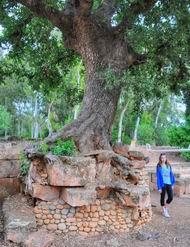
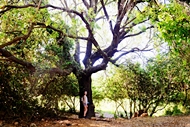
Gall oakQuercusIthaburensis(Alon Tabor) |
Judges 10:3: “And thou shalt go on forward from thence, and shalt come to the oak of Tabor“Judges 6 11:”And there came an angel of the LORD, and sat under an oak which was in Ophrah” |
K. HannaniaBeth Lehem GalileeTell DanHigh Place |
|
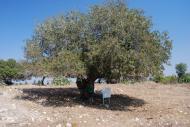
Palestine oakQuercuscalliprinos(AlonMatsui). |
Genesis 12:6 – Abraham traveled through the land to Shechem, reaching the Oak of Moreh, where God first promised the land of Canaan to his descendants. |
Horvat Dur |
|
AtlanticPistachioAnacardiaceaePistaci(Elah Atlantit) |
Note – In KJV Bible, the Hebrew “Elah” was translated as “oak” –2 Samuel 18:9: “And Absalom rode upon a mule, and the mule went under the thick boughs of a great oak, and his head caught hold of the oak…” |
UshaNahalalElah Valley |
|
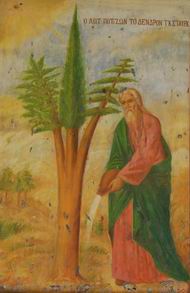
TripletHoly tree |
The Holy tree, according to the tradition and the local paintings in the Monastery, was based on a triplet seeding (olive + cypress + cedar) that Abraham gave to Lot. |
Cross-monastery |
|
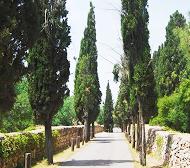
Funeral CypressCupressusSempervirensaka: Fir tree(Brosh Matsui) |
Isaiah 44:14: “He heweth him down cedars, and taketh the cypress and the oak, which he strengtheneth for himself among the trees of the forest: he planteth an ash, and the rain doth nourish it.” |
Tabor Greek |
|
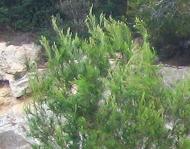
Pine treePinusHalepensis(Oren Yerushalmi) |
Isaiah 44:14 (Darby): “he chooseth for himself among the trees of the forest: he planteth a pine, and the rain maketh [it] grow.” |
Kh. Oren |
|
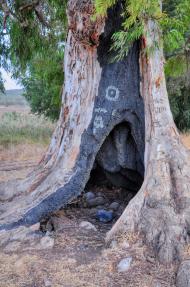
EucalyptusEucalyptusCamaldulensis |
Non Biblical, native to Australia; introduced to the Levant during the 19th-20th century |
Ein-Dor |
|
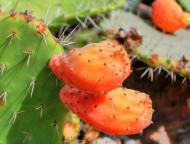
CactusOpuntiaFicus-indica |
Non Biblical, native to Mexico; introduced to the Levant during the 18th-20th century |
Ein-DorKanafNahalalQula |
|
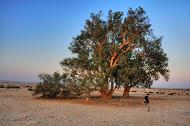
TamarixAphyllaEshel |
Genesis 21:33: “And Abraham planted a grove in Beersheba, and called there on the name of the LORD, the everlasting God”. |
Nitzana |
|
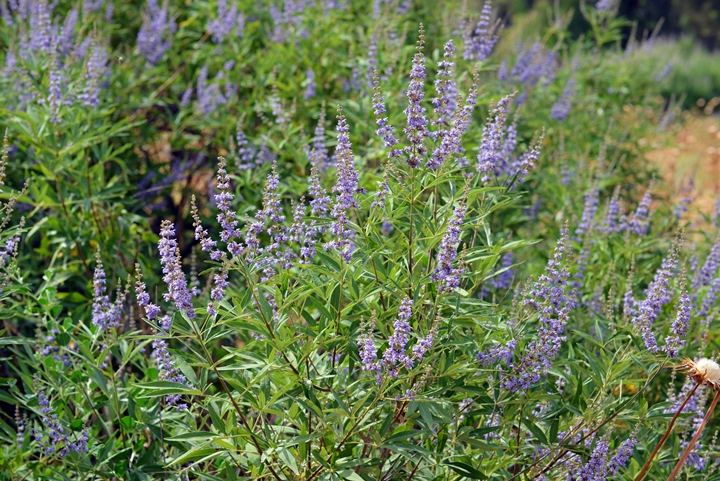
Abraham’s balmVitex Agnus-Castus(Abraham’s bush)Chastetree |
Genesis 22:14: “And Abraham lifted up his eyes, and looked, and behold behind him a ram caught in a thicket by his horns: and Abraham went and took the ram, and offered him up for a burnt offering in the stead of his son”. |
Tel Issachar |
|
TerebinthPistaciaPalaestina(Elah) |
Note – In KJV Bible, the Hebrew “Elah” was translated as “oak”2 Samuel 18:9: “And Absalom rode upon a mule, and the mule went under the thick boughs of a great oak, and his head caught hold of the oak…” |
Elah ValleyAdullamSochohHemetCistern |
|
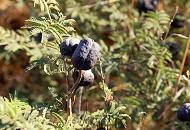
Dwarf MesquiteProsopisfarcta(Yanbut Hasadeh) |
Isaiah 7:19: “And they shall come, and shall rest all of them in the desolate valleys, and in the holes of the rocks, and upon all thorns, and upon all bushes”. |
Ubeidiya |
|
SaltbushAtriplex(Malluah)
|
Job 30:4: Who cut up mallows by the bushes…”. |
Tel Malluah |
|

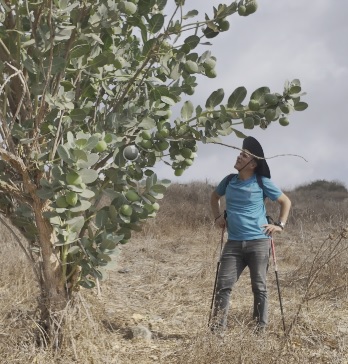
Apple of SodomCalotropis procera (Ptilat HaMidbar)
|
This desert shrub, locally known as Osher, is found in the Dead Sea area and the Jordan valley.Flavius Josephus – The Jewish War (Book IV, Chapter 8, Section 4): “The country of Sodom borders upon it. It was of old a most happy land, both for the fruits it bore and the riches of its cities, although it be now all burnt up… [and] there are still to be seen the ashes reproduced in the fruits, which indeed resemble edible fruits in color, but, on being plucked with the hands, are dissolved into smoke and ashes.” |
Tel Ein Haddah |
|

More will be added…
Biblical references:
These are dozens of references to trees and bushes in the Bible. Here are some samples –
 Genesis 1:11: “And God said, Let the earth bring forth grass, the herb yielding seed, and the fruit tree yielding fruit after his kind, whose seed is in itself, upon the earth: and it was so”.
Psalms 1:3 “And he shall be like a tree planted by the rivers of water”
Bible as a Tree – AI generated by Stable Diffusion
Etymology (behind the name):
- Etz – Hebrew: Tree
- Siach – Hebrew: Bush
Links:
- Survey of Israel’s ancient trees (1990-2005) – pdf; Hebrew.
- Gall oaks (reviews)
- Wild Flowers of the Holy Land
BibleWalks.com – Gateway to the Land of the Bible
Wild flowers <<<—Previous info—<<< All Info >>>—Next Info—>>> Birds
This page was last updated on Sep 12, 2026 (add Apple of Sodom)
Sponsored links: