
The 12th-13th Century Crusaders main fortress and headquarters, halls and structures on the North-West side of the city.
Home > Sites > Acre > Knights Halls (Crusaders period)
Contents:
Background
Location
History
Photos
* Eastern Entrance
* Great Hall
* Refectorium
* Tunnel
* St.John Church
* Court Yard
* Beautiful Hall
* Prisoners Hall
* Halls 1-6
Video Tour
Links
Etymology
Background:
The Crusaders main fortress (castrum) and headquarters, halls and structures are located on the North-West side of the city. Excavations in recent years reconstructed many of the large structures which are located under and south to the Ottoman/British citadel. In this place was the Crusaders’ Royal palace and main headquarters after retreating from Jerusalem.
Location:
The ruins of the large Crusaders compound (4,500 square meters) is located at the north-west corner of the old city, close to the sea. It is accessed through the city museum entrance, which is located at the Ottoman/British citadel area. You can enter the old city through the north entrance and park in the museum’s small parking lot.
During the 13th century this location was in the middle of the city, which was almost 3 times the current size, and its walls extended to the north.
History of the place:
These halls were built by the “Hospitallers” – the order of the Knights of the Hospital of Saint John – in the beginning of the 12th Century, after the Crusaders captured the city in 1104 AD.
The Crusaders were driven out from Jerusalem by Saladin in 1187, and Acre also fell to Saladin’s forces. However, several years later Richard the Lion Heart headed a new Crusade and retook the city (1191), and established the capital of the remnant of the Kingdom of Jerusalem. This was the Crusaders last stronghold in the Holy Land. They enforced and expanded their central fortress and palace on the site and ruled their smaller Kingdom from the Citadel. The city’s port enabled them to keep the vital supply line to Europe.
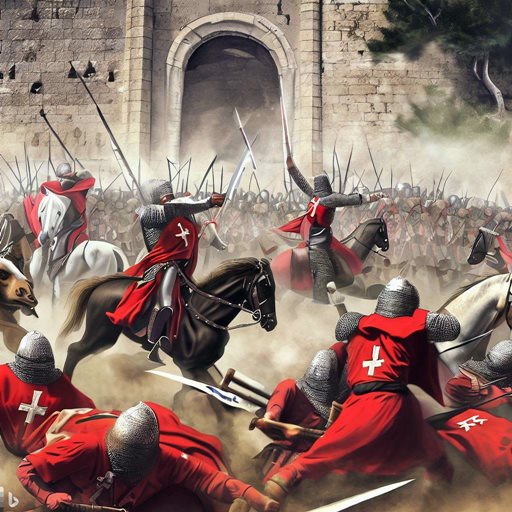
Crusaders fight Arab forces – AI generated by Bing
- Fall of the Crusaders:
This lasted 100 years: In 1291 the city was taken by the Mamlukes, and was completely destroyed.
The history of the following years are described in the Citadel page.
Photos:
Eastern entrance:
The following photo shows the eastern entrance to the Knights Halls complex. The towering building, dated to the 17/18th Ottoman period, was built over the ruins of the Crusaders fortress. Walking straight through the gate brings you to the Great Hall (on the far left), the Halls 1-10 (on the far right), the courtyard (far center), and down the steps to the lower level (Prisoners hall).
Click on the photos to view in higher resolution…

The Great Hall:
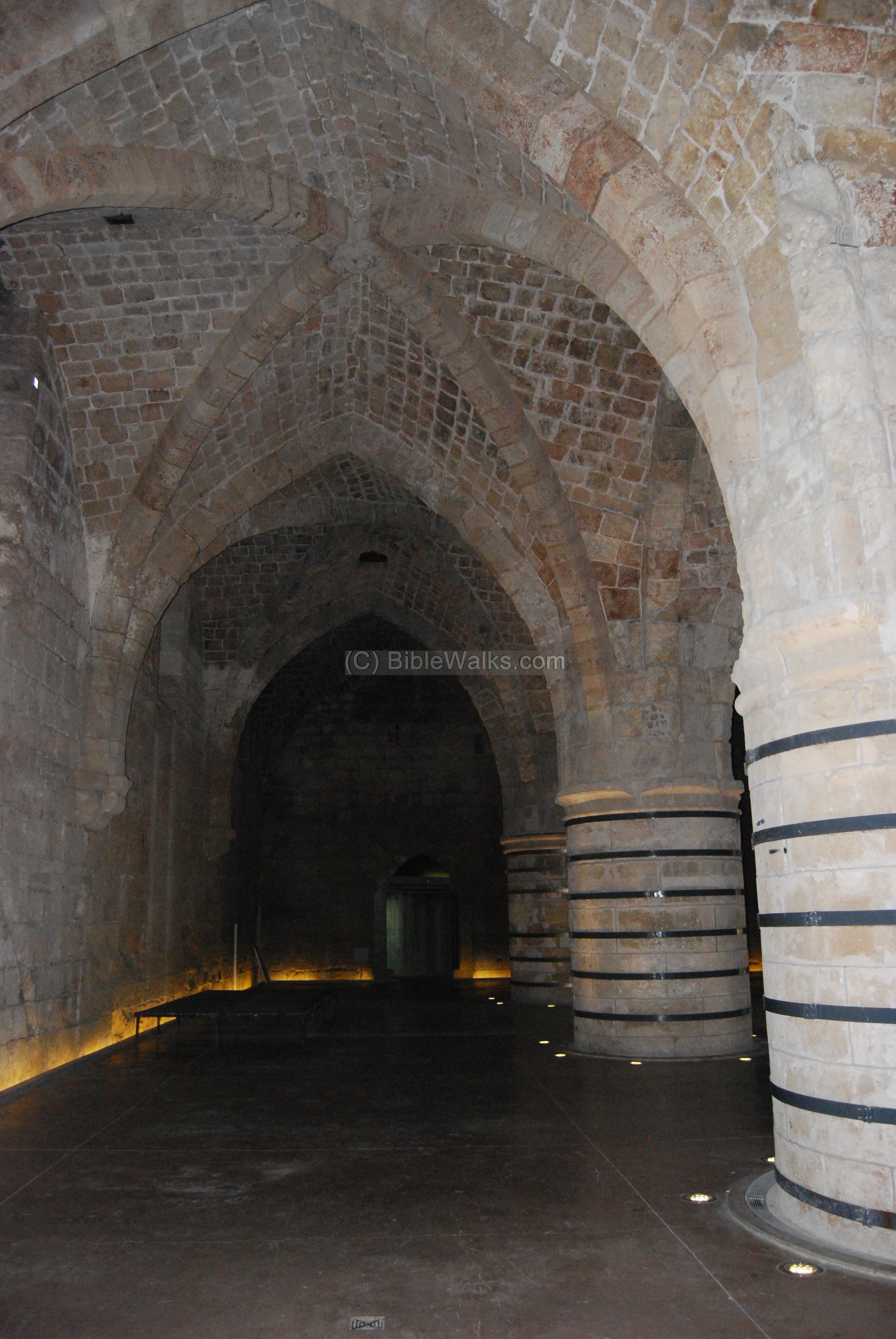
The Great Hall, also known as the Knights’ Refectory or Hospital Hall, is the largest vaulted space in the entire Hospitaller compound. Measuring about 45 × 30 meters, its interior is divided by 15 massive square piers, which support 20 cross-ribbed vaults. The design is characteristic of the monumental Gothic style employed by the Hospitallers, emphasizing functionality, durability, and a sense of solemnity befitting the Order’s mission.
The hall’s primary function was that of a hospital ward, reflecting the Hospitallers’ role as both warriors and caretakers. Contemporary accounts suggest that in such large infirmaries, the brothers provided care for pilgrims, the sick, and wounded crusaders. The vast space allowed the accommodation of large numbers of patients, with beds arranged in orderly rows beneath the soaring vaults.
Above this impressive ground floor stood three to four additional stories, now completely lost. These upper levels would likely have housed dormitories for the brothers, storerooms, and possibly additional wards. Together, the multi-storied structure formed one of the most imposing and practical buildings of Crusader Acre, combining military-scale architecture with monastic and charitable functions.
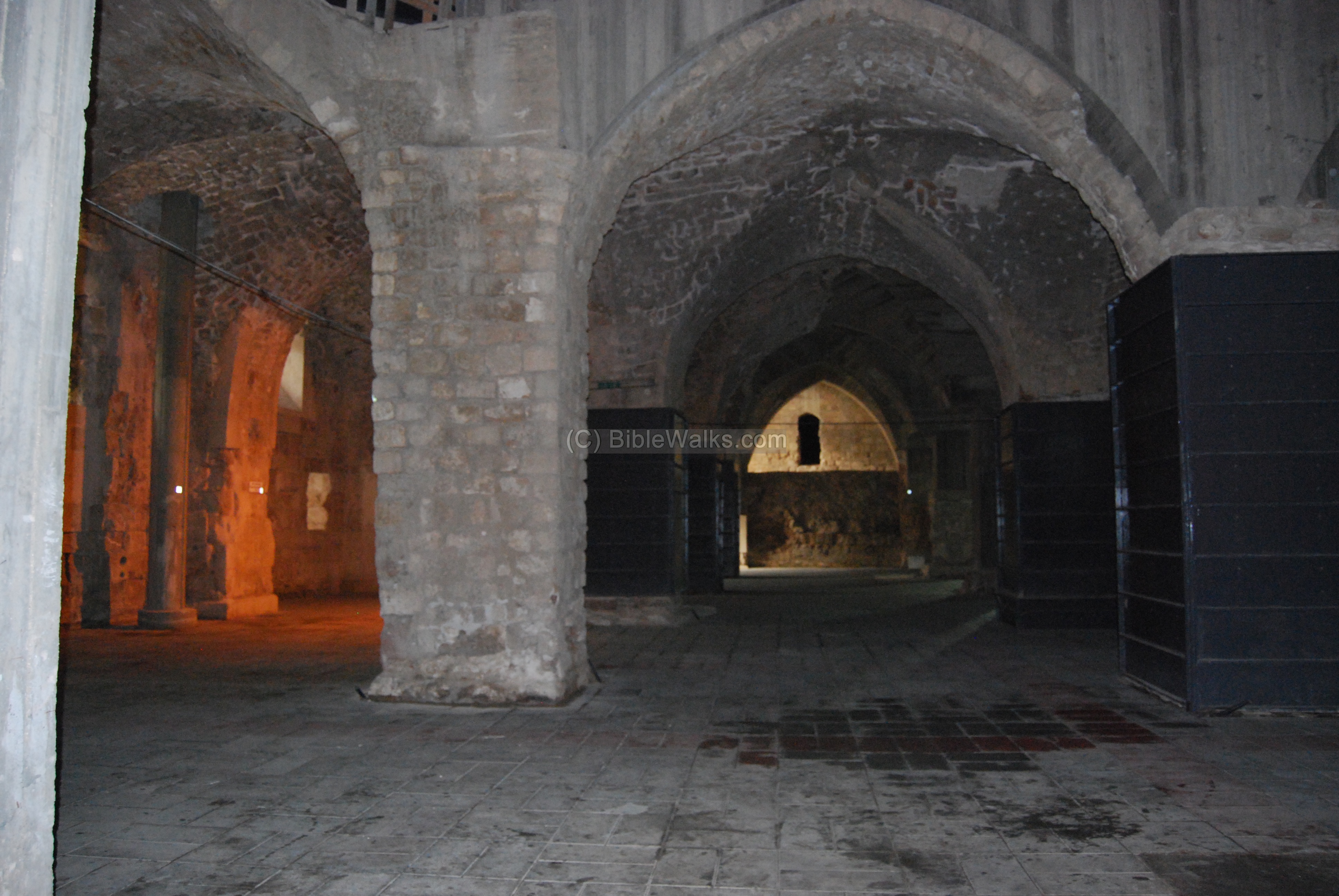
The hall’s current preserved state, stripped of its upper levels, still conveys its grandeur. The surviving vaults—among the best-preserved Crusader constructions in Acre—offer a glimpse into the architectural ambition of the Hospitallers and their capacity to build complex, multi-level stone structures that rivaled contemporary cathedrals of Europe in size and engineering skill.
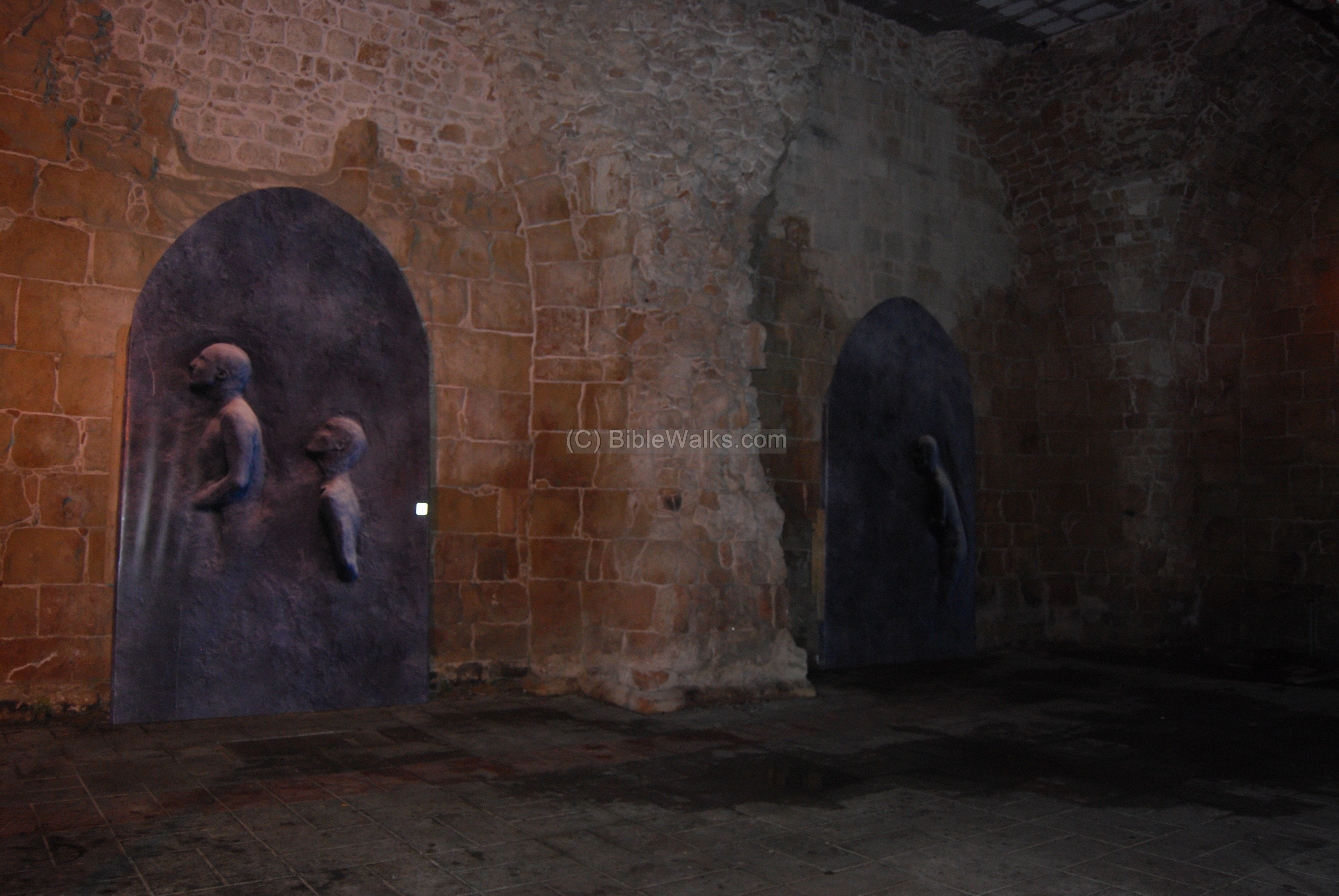
As seen below, the are some of the art works left from the annual art & theater festival held in October in Acre.
The Refectorium (Dining room):
The Refectorium—from the Latin reficere, “to restore”—was the formal dining hall of the Hospitallers, reflecting their monastic origins. Like in European monasteries, the refectorium was not just a place for meals, but also a space for communal discipline, where the brothers gathered in silence while one of them read aloud from sacred texts.
The hall itself is an impressive vaulted chamber, measuring about 450 square meters in area. It is divided into eight cross-ribbed vaults, each soaring to a height of around 10 meters, giving the space a sense of grandeur and solemnity. The architecture, with its elegant proportions and sturdy ribbing, mirrors the Gothic style seen in the Great Hall and elsewhere in the Hospitaller complex.
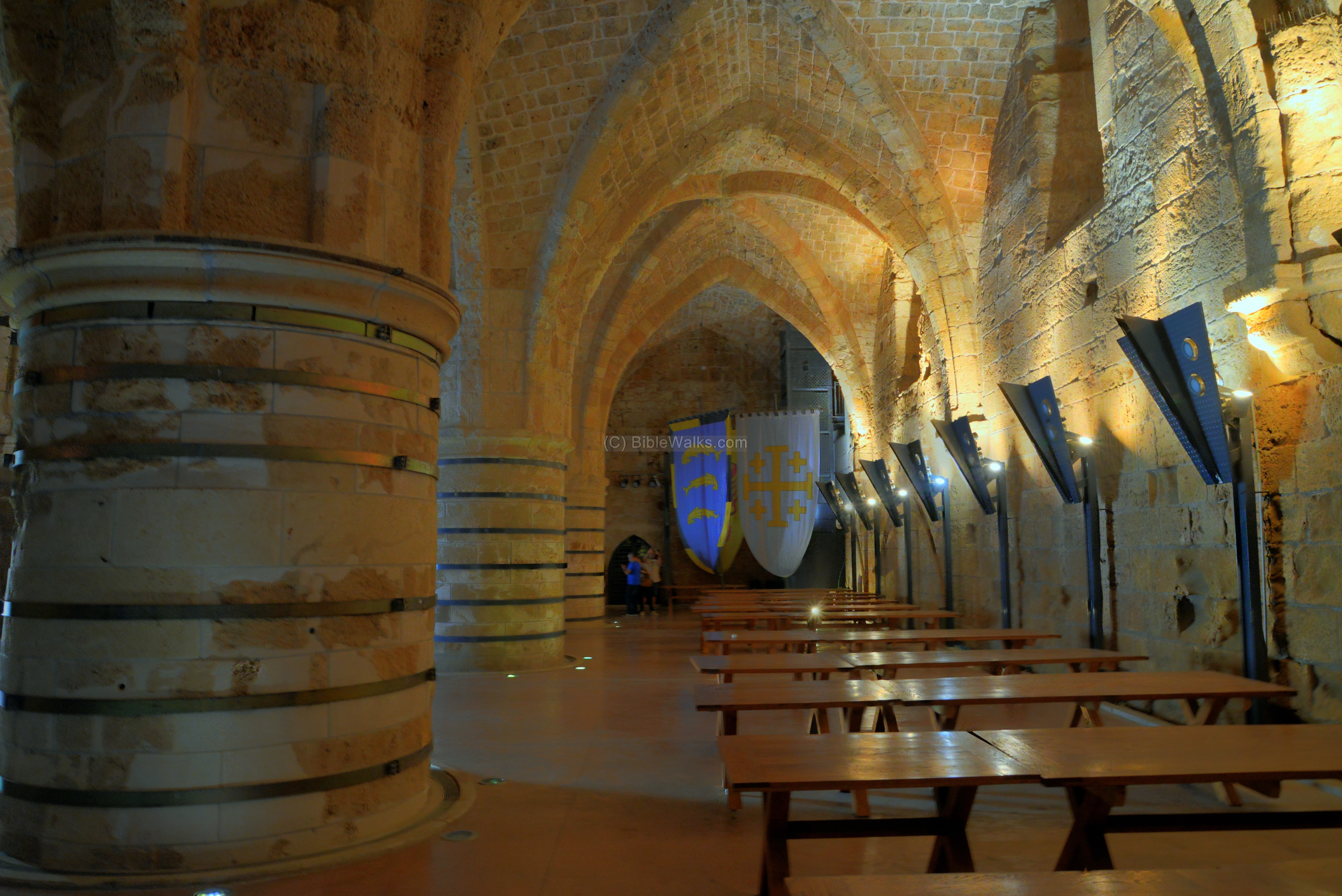
Constructed toward the end of the Crusader period, the refectorium was designed not only for functionality but also to inspire a sense of order and devotion among the brothers. Adjacent to the hall was a kitchen, which served the meals for the community. The presence of an integrated kitchen highlights the careful planning of the compound, where food preparation and communal dining were efficiently linked.
Today, the preserved structure—with its lofty vaults and monumental scale—provides a vivid impression of how the Hospitallers combined practicality, discipline, and architectural refinement in their communal spaces.
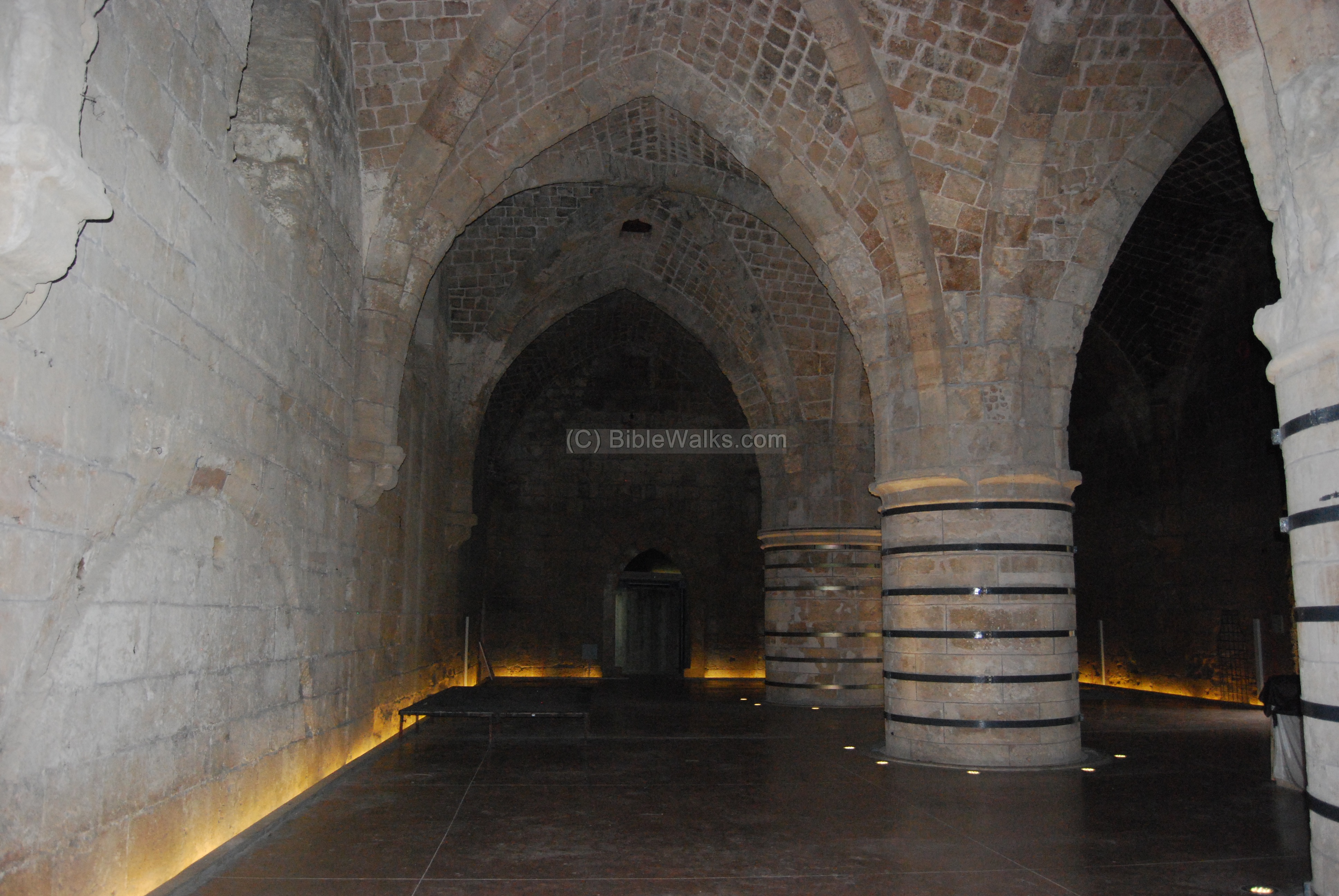
Next – another view of the dining room.
The entrance to the refectorium opens directly from the central courtyard, emphasizing its importance in daily life and its accessibility to the Hospitaller brothers. One can imagine the processional movement of the community from the courtyard into the dining space, reinforcing the rhythm of monastic routine.
The Tunnel to the Crypt:
A narrow underground tunnel links the Refectorium (the dining hall) to what is commonly referred to as the “crypt”—a word derived from the Greek kryptos, meaning “hidden.” This crypt is situated beneath the Church of St. John, the main place of worship for the Hospitallers in Acre.
The tunnel, carved through the bedrock and reinforced with stonework, was deliberately built to be extremely narrow—wide enough for only a single person at a time. This constricted design was not accidental: it enhanced security, limited access, and made the passage easier to defend if necessary. Its dimensions, however, made movement slow and cumbersome, and created a kind of medieval “one-way system” where two-way traffic would have been impossible.
The passage served a highly practical and strategic function. On the one hand, it allowed the brothers to move discreetly between the dining hall and the crypt, maintaining a measure of privacy and ritual seclusion in their activities. On the other, it connected the fortress to hidden storerooms and armories concealed beneath the church. In times of siege, this subterranean route provided a secure, invisible link between vital areas of the compound, enabling the Hospitallers to access supplies or weapons without exposing themselves in the open courtyard.
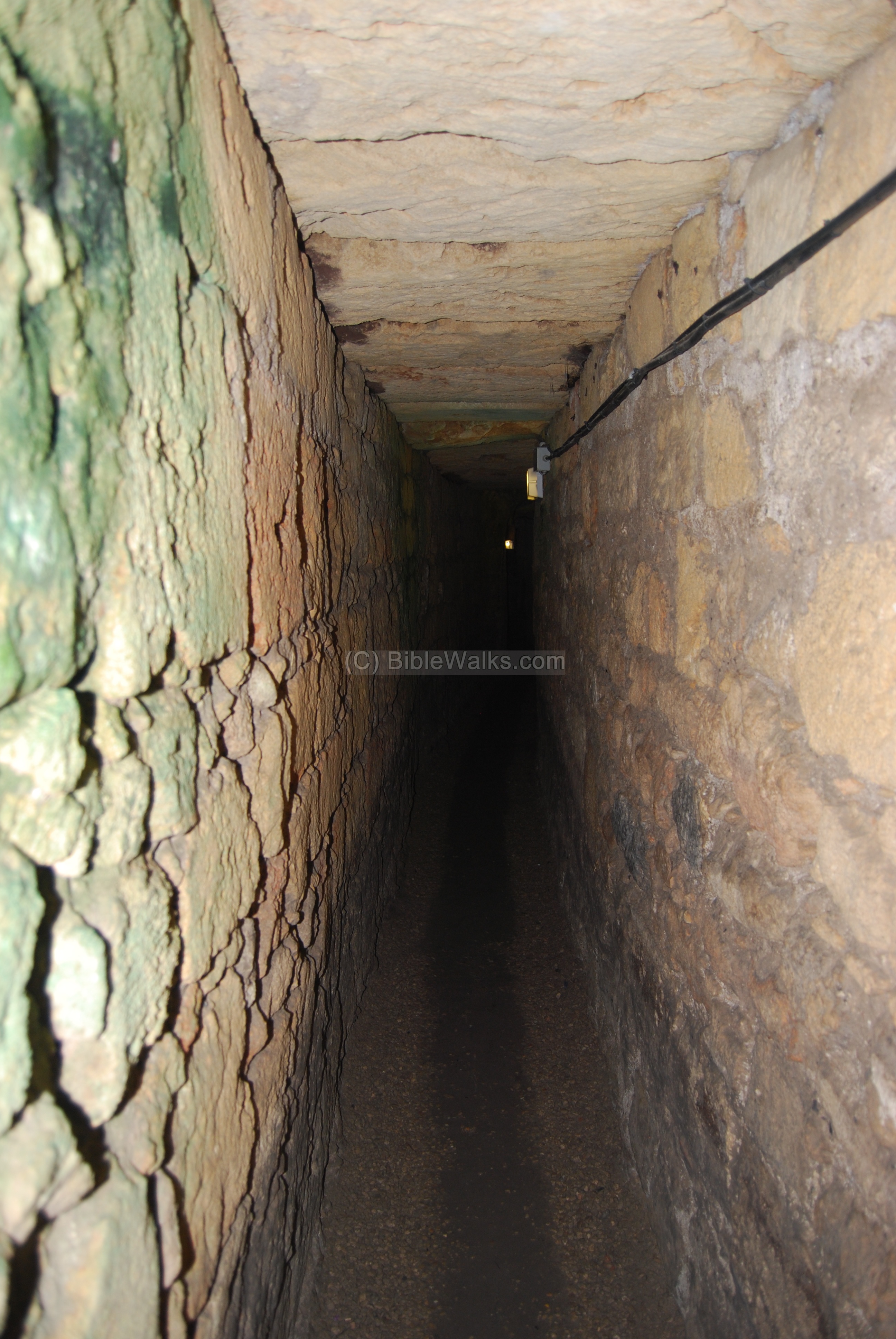
The crypt itself, beneath the church, was originally conceived as a sacred underground chamber—possibly used for burials of prominent Hospitallers, as was customary in Crusader ecclesiastical architecture. Its later adaptation as a storage and armory space reflects the dual religious and military role of the Order. The blending of sacred and defensive functions is typical of the Hospitaller ethos, where monastic devotion and martial readiness coexisted in the same architectural framework.
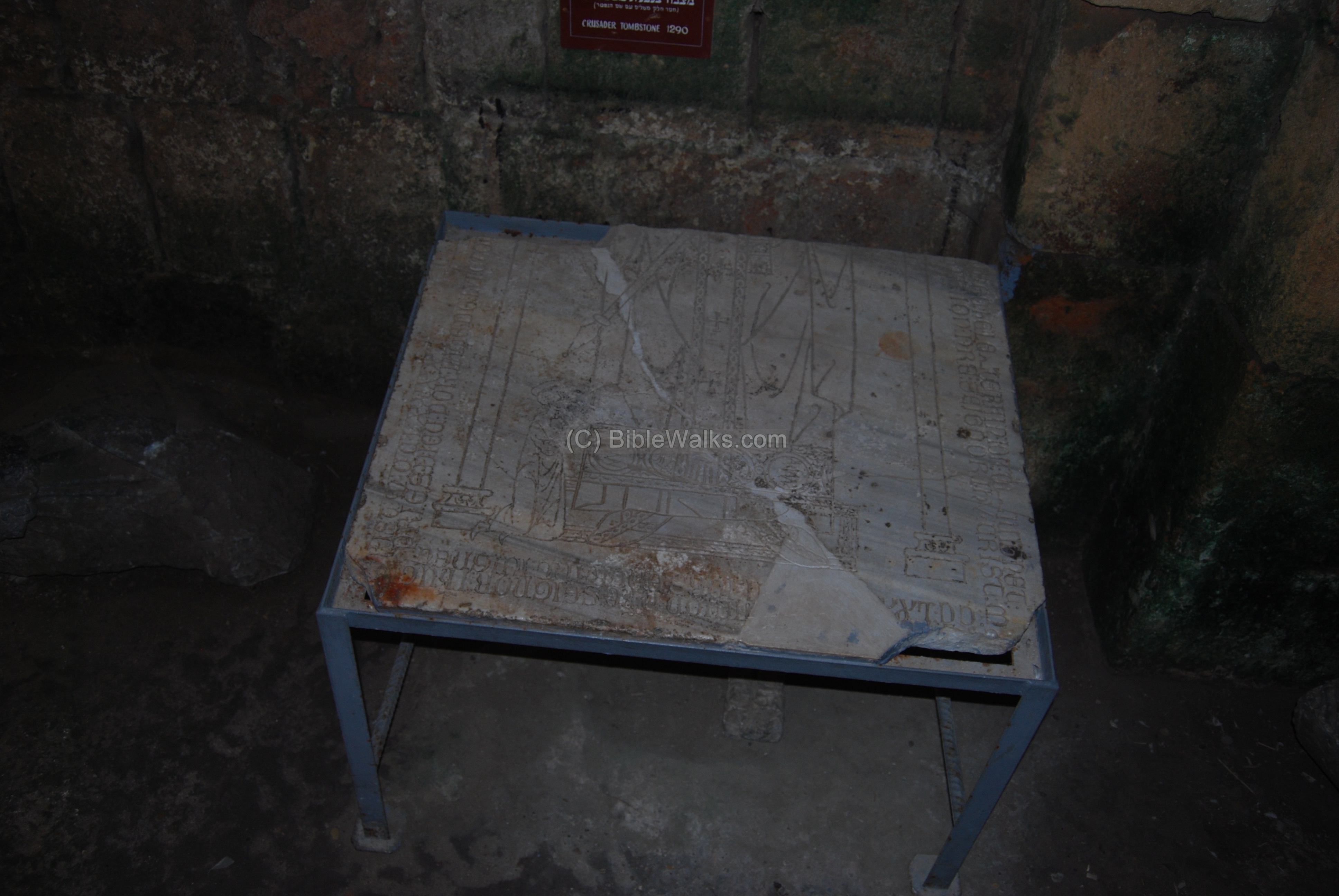
In the Crypt are a number of Crusaders tombstones on display:
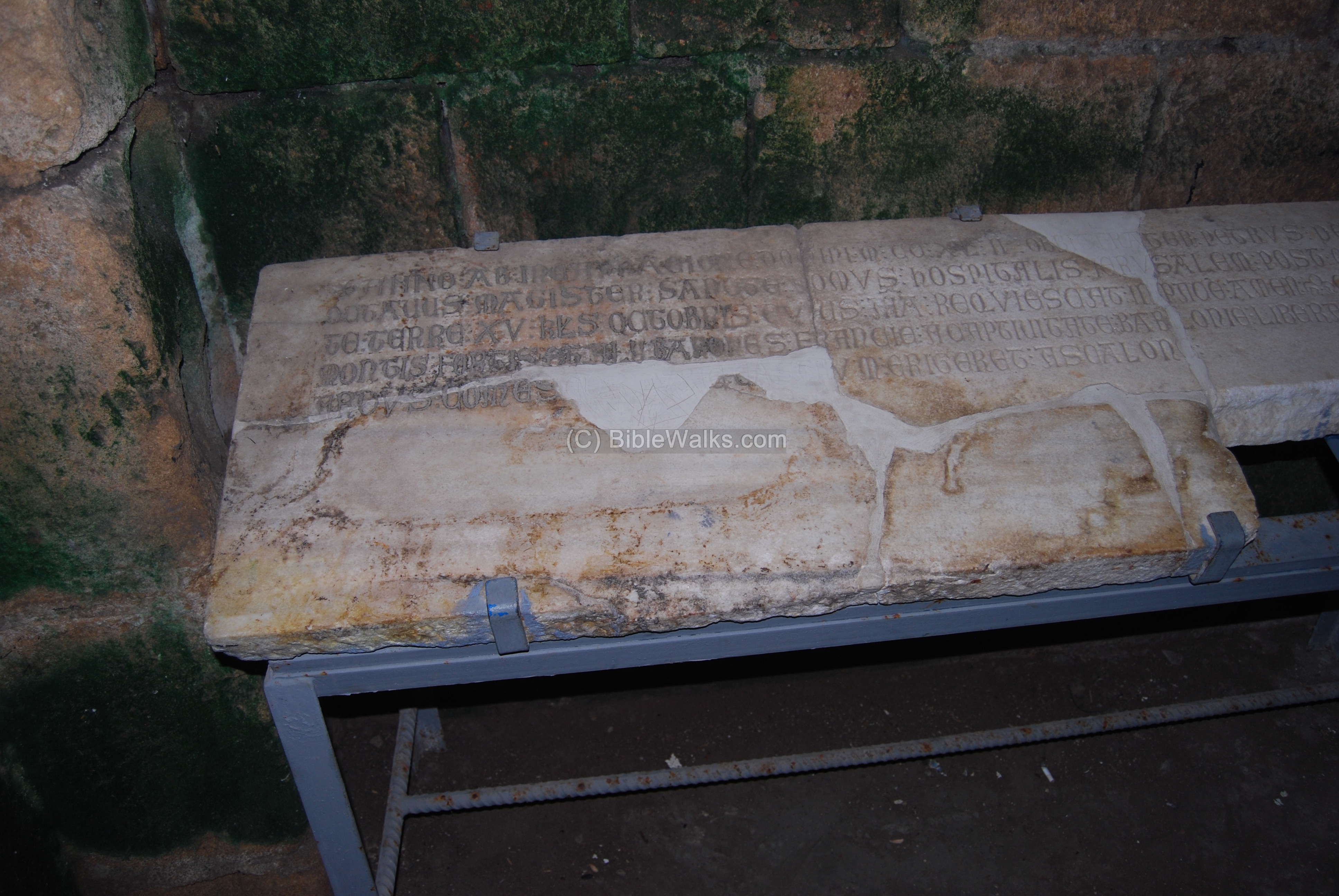
A Crusaders tombstone from 1290:
- The Church of St. John the Baptist:
The Church of St. John the Baptist was the central place of worship for the Hospitaller Order in Acre. Built in the 12th century, it stood as the spiritual heart of the Knights’ compound, complementing the Great Hall, Refectorium, and barracks with a sacred space that embodied the religious vocation of the Order.
The church was a Romanesque-Gothic structure, typical of Crusader ecclesiastical architecture: a single nave with a high vaulted ceiling, flanked by side aisles, and ending in a semicircular apse. Decorative details were restrained but harmonious, emphasizing clarity and strength over elaborate ornamentation. The walls were built of finely dressed limestone blocks, while ribbed vaulting gave the interior both height and solemnity.
Beneath the main sanctuary lay the crypt, a subterranean chamber used both for religious and practical purposes. Some sources suggest it served as a burial place for prominent Hospitallers; others indicate it was later adapted for use as a hidden storeroom or armory. This crypt was directly linked to the Refectorium by a narrow tunnel, allowing discreet underground passage between the church and other parts of the fortress.
The church was not only the site of daily prayers, Mass, and liturgical ceremonies for the Hospitallers, but also a symbol of their dual identity as monks and warriors. Here the brothers renewed their vows, received the Eucharist before battle, and commemorated the dead. Its location within the fortified complex emphasized that, for the Hospitallers, spiritual devotion and military duty were inseparable.
Unfortunately, much of the superstructure of St. John’s Church was destroyed after the fall of Acre in 1291. Later construction—particularly during the Ottoman period—erased most of its visible remains above ground. Today, what survives are the foundations, substructures, and the crypt, which continue to testify to the presence of one of the most important Crusader churches in Acre.
The Courtyard:
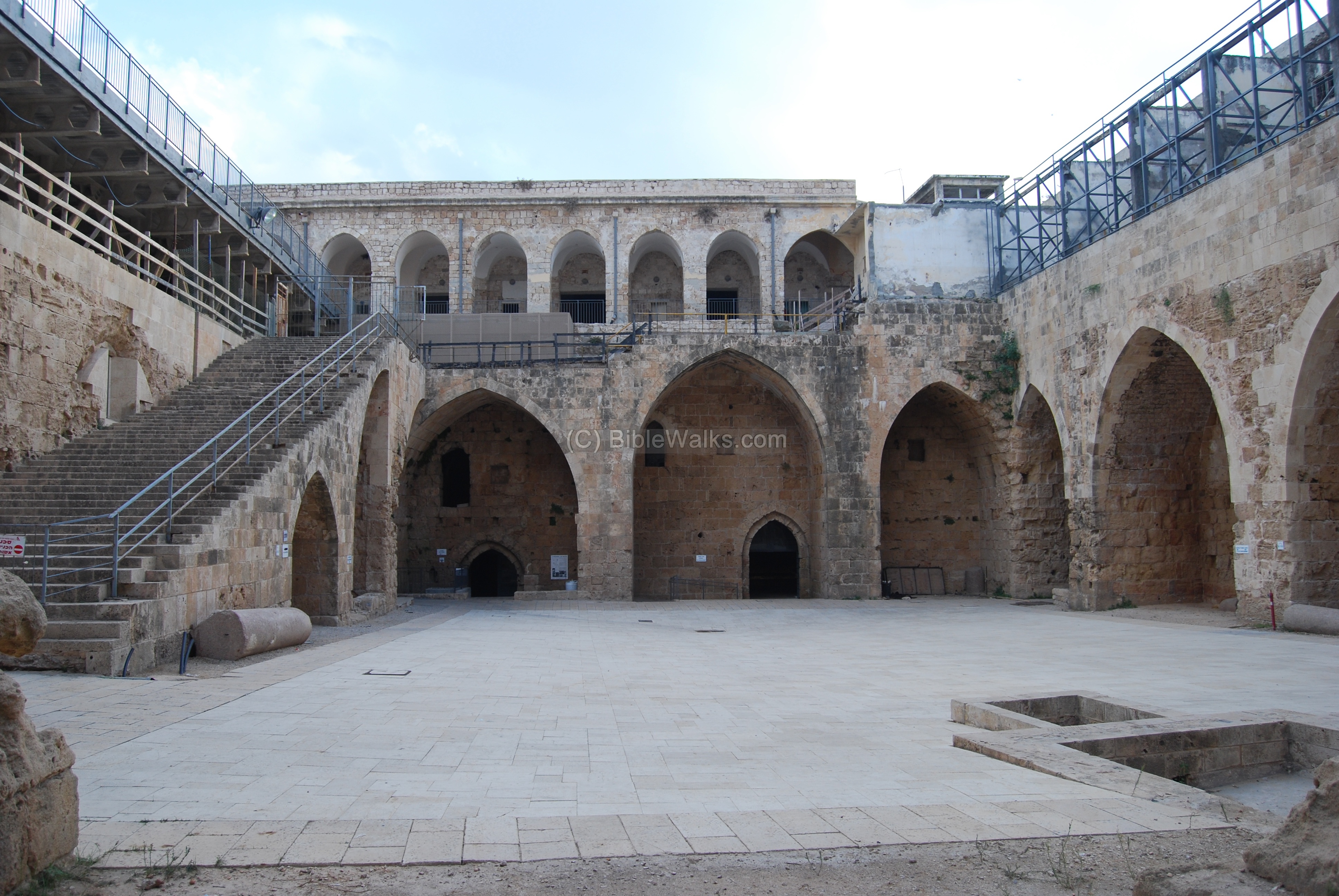
The courtyard spans approximately 1,200 m², surrounded by arcaded walkways that once supported stairways leading to the upper floors. The following photo shows a view towards the south, with the entrance to the “Refectorium” (Crusaders dining hall) on the lower level.
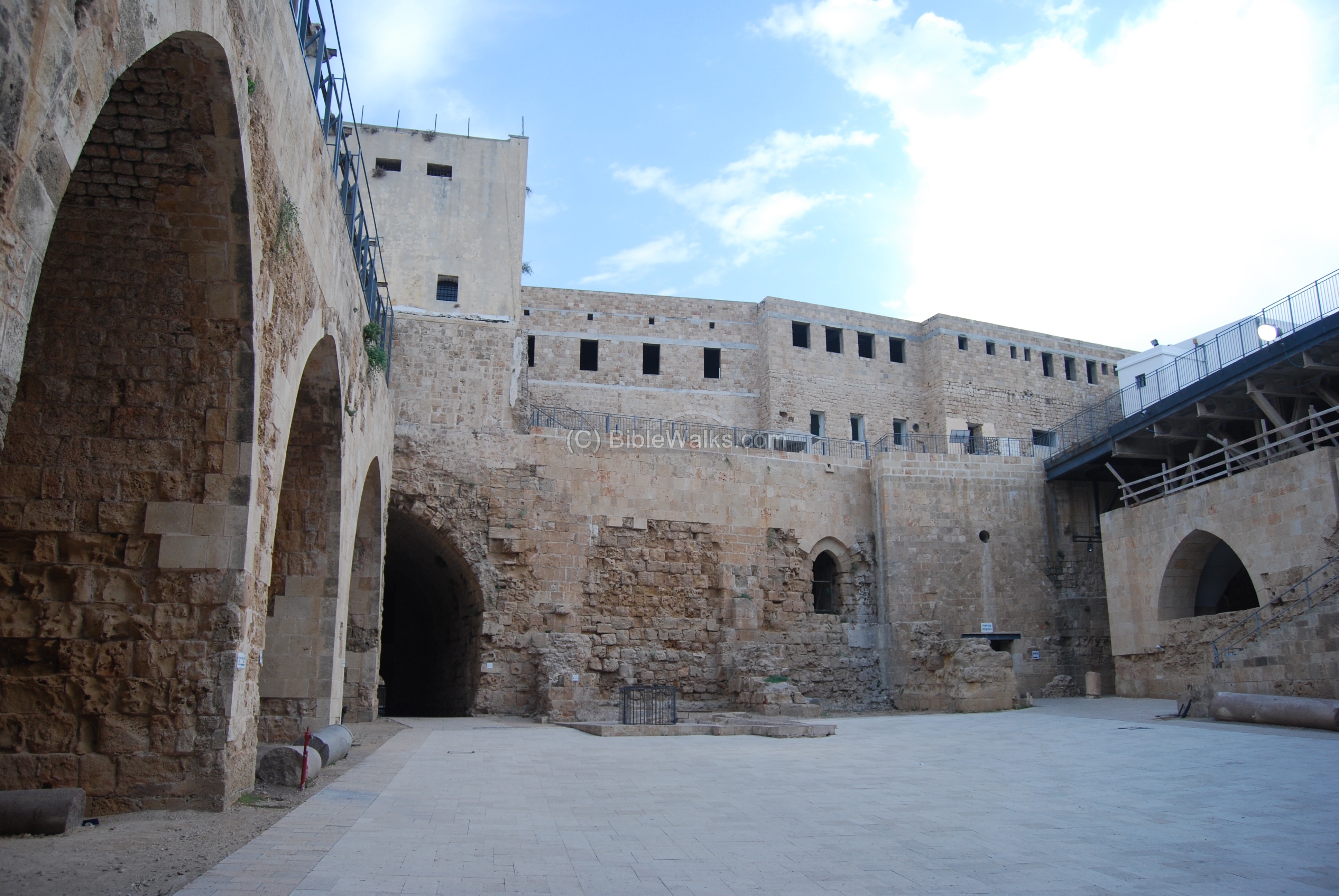
The following is a view of the courtyard towards the north walls. Above the court yard is the north side of the Ottoman/British citadel.
A 4–4.5 meter-deep well sits near the northern side, flanked by shallow plastered pools used for washing. On the southern side, there’s another well and a 1.5 meter-deep pool, perhaps for bathing.
At the left side of the wall, on the north-west corner of the fortress, is a north-west gate.
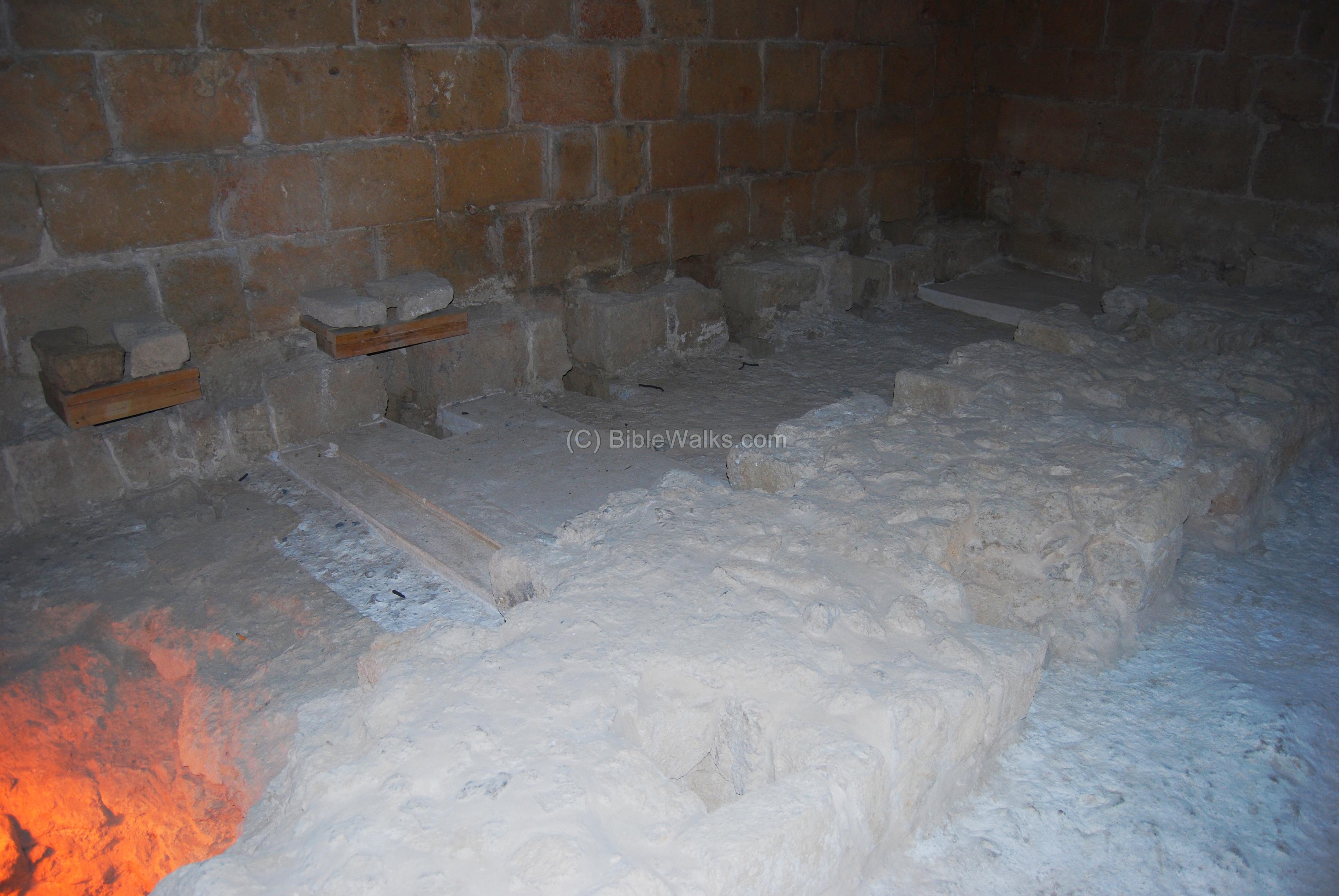
The northwest side of the central courtyard in the Knights’ Halls complex at Acre contains one of the most interesting and practical features of Crusader architecture: a communal latrine block.
The latrines, a total of 15-20, are built along the northwest corner of the courtyard, slightly elevated above the main courtyard level. The structure consists of a long hall with a continuous stone bench, perforated with evenly spaced round holes (seating openings). The bench runs along the wall, and underneath it, archaeologists found evidence of a stone-built channel system that carried waste out of the complex. Water from the complex (likely from wells or roof drainage) was channeled through this system to flush the waste toward the main sewer, which led outside the fortress.
This was a communal facility—it could accommodate multiple users at once, reflecting the military and monastic nature of the Knights Hospitaller. The concept of privacy was minimal; this was common in medieval communal latrines. A handwashing basin (or small water pool) is believed to have been located nearby for hygiene. The Crusaders demonstrated advanced sanitation engineering. These latrines were connected to the extensive sewage network beneath the citadel, preventing contamination of the courtyard. Drainage channels were lined with waterproof plaster.
“Beautiful” Hall:
The so-called “Beautiful Hall”, located in the southern wing of the Hospitaller complex, is one of the most striking and best-preserved spaces in Crusader Acre. It is roofed by a series of elegant cross-vaults rising to a height of about 7.5 meters, creating a rhythmic and harmonious ceiling pattern that earned the hall its descriptive name.
What sets this chamber apart is the remarkable state of preservation: unlike many other parts of the compound that were damaged, rebuilt, or heavily restored, the Beautiful Hall survives almost entirely in its original 12th-century form. The stone walls, robust columns, and vaults are all authentically Crusader in construction, offering visitors a rare, unaltered glimpse of medieval Gothic architecture as it once stood.
The hall’s design combines both aesthetic refinement and practical utility. The carefully cut limestone blocks, the proportional spacing of the columns, and the graceful vaulting display the Hospitallers’ mastery of monumental architecture. At the same time, its relatively moderate scale—compared to the vast Great Hall—suggests it may have been used for more select gatherings, administrative functions, or smaller communal activities rather than mass accommodation.
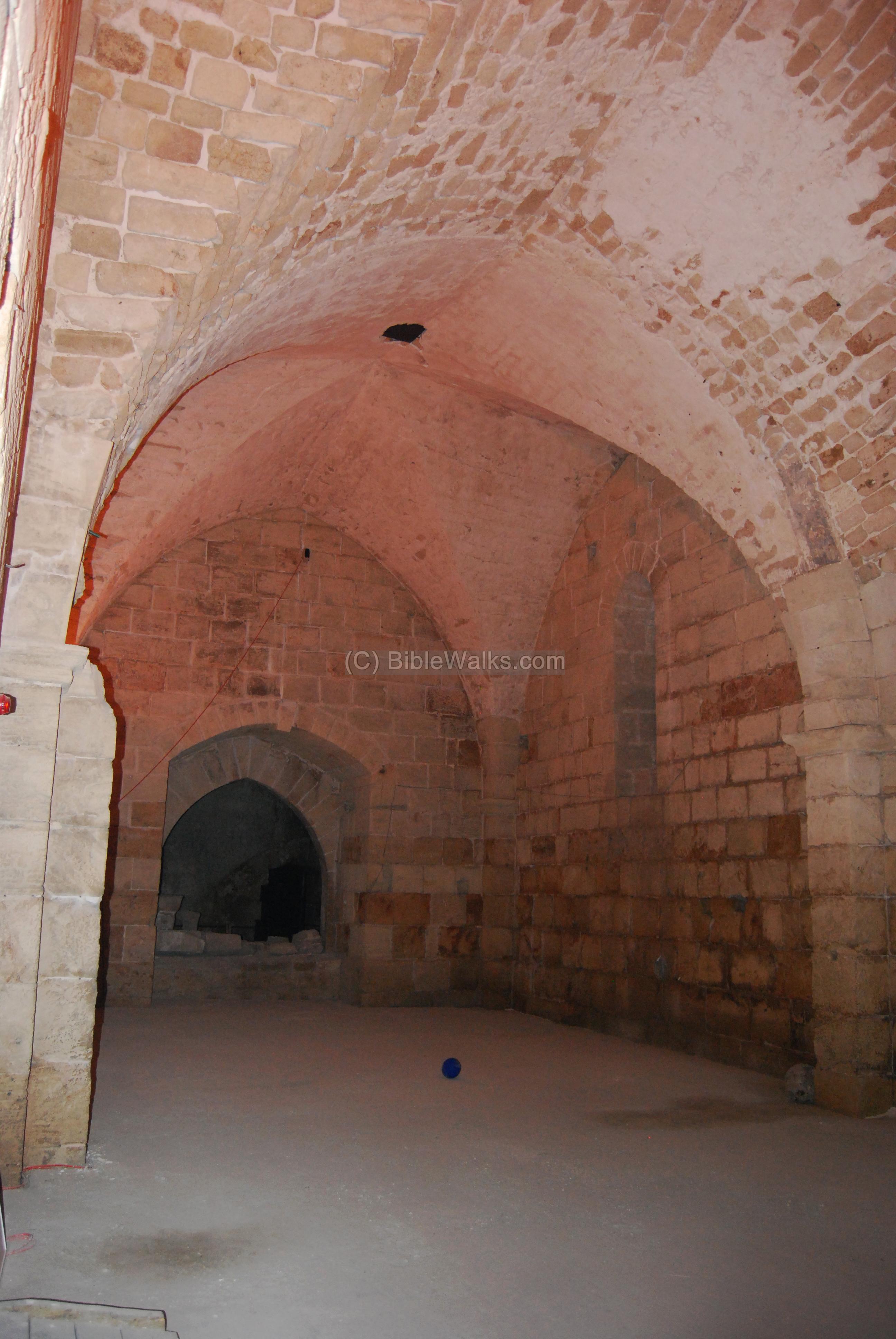
Light would have filtered in through narrow windows and doorways, creating an interplay of shadows on the ribbed vaults that added to its visual appeal. The sobriety of the Gothic lines, combined with the sheer intactness of the space, gives the room a kind of austere beauty—perhaps the reason why it was nicknamed the “Beautiful Hall” in modern times.
The “Prisoners” Hall:
The so-called “Prisoners’ Hall”, located along the eastern edge of the Hospitaller complex, is one of the more enigmatic spaces in the Crusader fortress. It is a relatively modest chamber compared to the grander halls, rising only about 5 meters in height and covered by six cross-ribbed vaults supported by thick stone walls.
A striking feature of this hall is its depressed floor level: it lies roughly 2.5 meters lower than the adjacent structures of the main complex. This sunken position, combined with its lack of windows, gives the interior a dark and enclosed atmosphere, quite unlike the lofty and light-filled Great Hall or Refectorium. For this reason, and because of its location outside the central nucleus of the Hospitaller headquarters, the hall was traditionally identified as a detention chamber and earned the modern name “Prisoners’ Hall.”
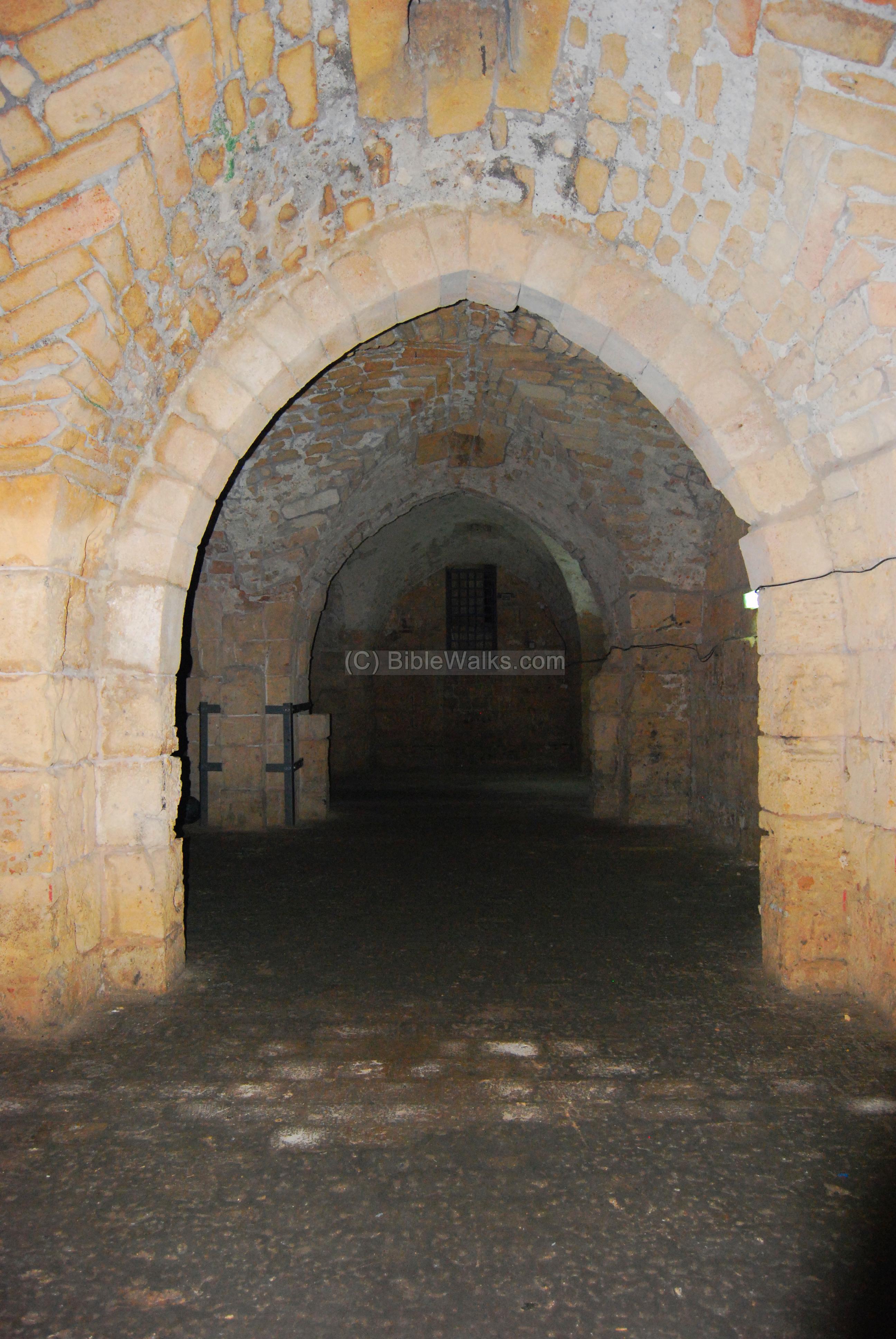
Its function, however, remains the subject of debate. While the name suggests it may have held captives—possibly enemy combatants, political prisoners, or even unruly soldiers—no direct archaeological evidence of prison fittings (such as chains, shackles, or cells) has been found. Some scholars propose that the hall may instead have served as a storage area, a service hall, or even a subterranean passageway link to outer defenses. Its seclusion and lack of natural light certainly made it suitable for uses requiring secrecy or controlled access.
The hall’s entrance orientation is also noteworthy. Today, visitors enter from the north, but the original medieval access was from the south, further reinforcing the idea that the circulation of the Hospitaller compound has changed dramatically since the Crusader period. The south-facing entrance would have linked the hall more closely to outer courtyards or possibly to defensive installations along Acre’s eastern fortifications.
Halls 1-6:
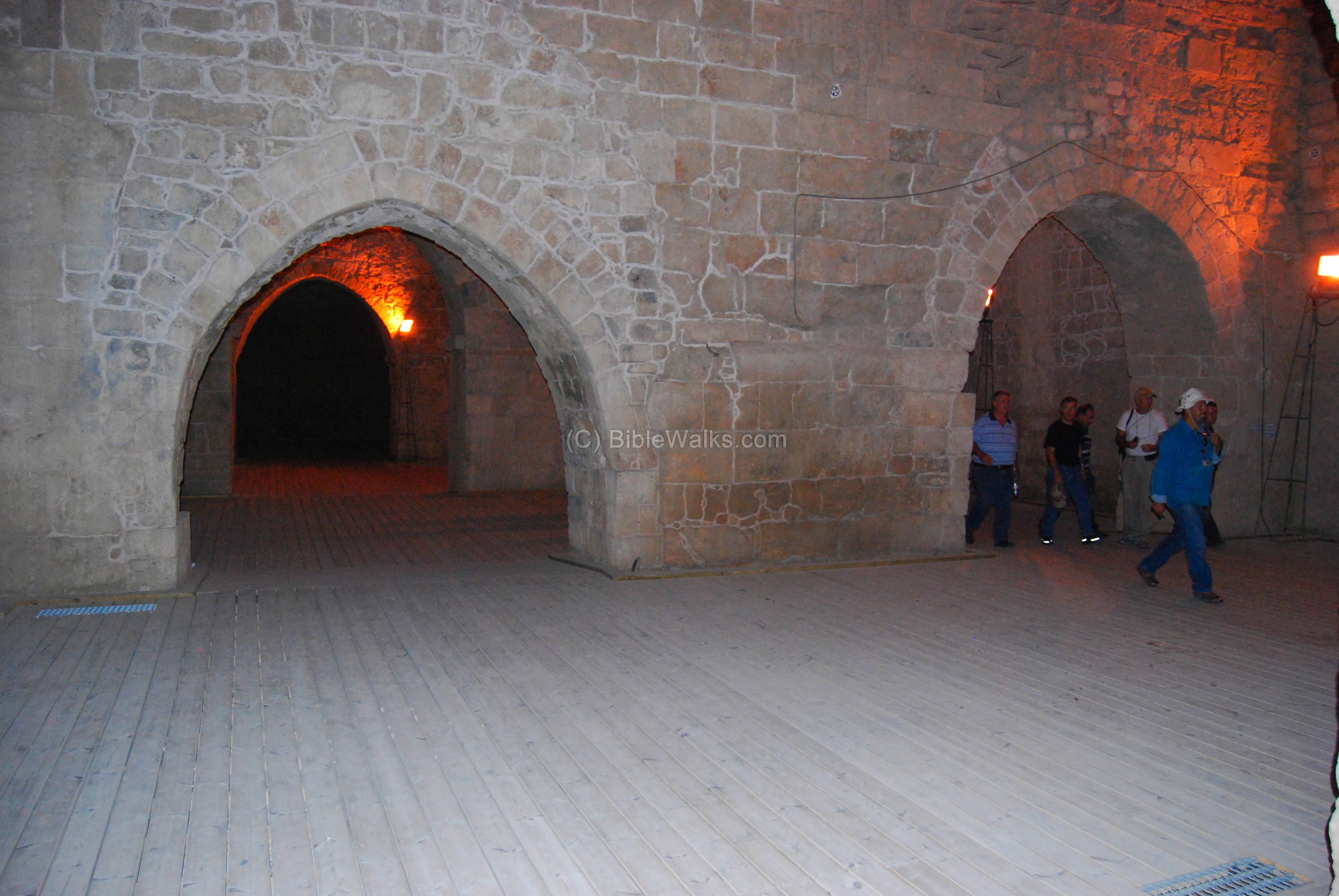
The group known today as Halls 1–6 occupies the northwestern sector of the Crusader complex, directly against the line of the northern city wall and beneath the later British Mandate prison level. These spaces are among the most historically significant parts of the Hospitaller headquarters, as they represent the earliest construction phase of the Order in Acre, dating to the early 12th century, shortly after the Hospitallers established themselves in the city.
The six halls form a single continuous architectural unit, originally conceived as the barracks for the Hospitaller brothers. At nearly 10 meters in height, the chambers were monumental in scale, designed to accommodate large numbers of knights and sergeants in a practical yet imposing manner. Instead of being subdivided into small rooms, the barracks consisted of a vast open space, internally divided only by arched openings that created a rhythm of bays, allowing for both circulation and a sense of shared community life. Rows of bedding or simple wooden platforms would have lined the walls, reflecting the monastic discipline of the Order: communal living, modest furnishings, and strict routines.
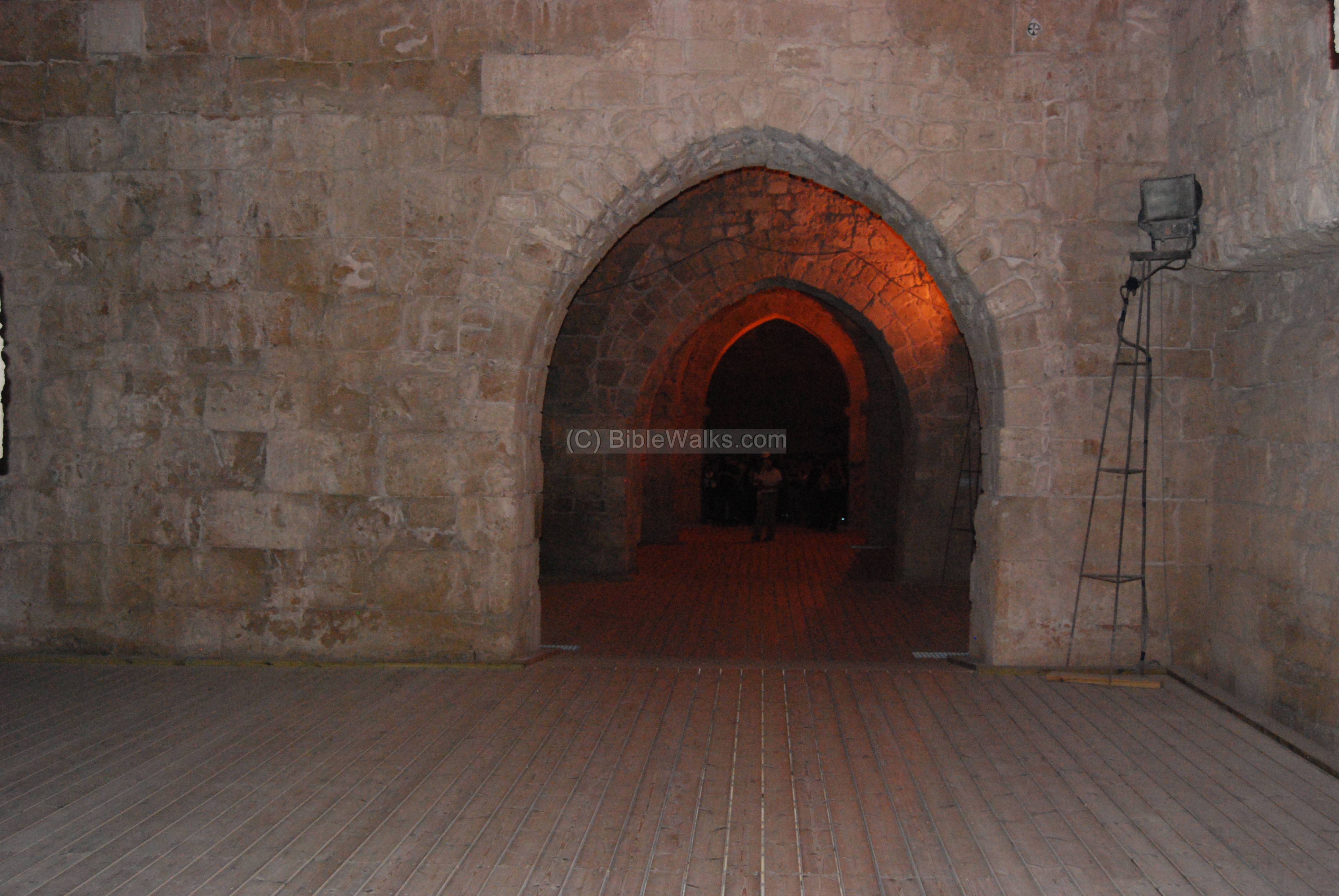
Their location was not accidental. Built behind the northern fortification line, the barracks ensured that the Hospitallers—who functioned both as a religious order and a military garrison—were positioned close to Acre’s walls in case of attack. From here, the knights could be quickly mobilized to man the defenses, while at the same time remaining within the protected enclosure of their headquarters. This dual positioning highlights the blended role of the Hospitallers: warriors, monks, and caretakers, all within a single fortified-monastic complex.
During the 1990s excavations the eastern halls (1-3) were mostly open spaces, but halls 4-6 had to be totally cleaned out.
Video Tour
 Visit the site with this 10+ minutes video tour (visited Aug 2025).
Links:
- Old Acre Development company ; Knights Halls
- The Akko Citadel conservation project
Etymology (behind the word):
- Castrum – from Latin: Castle. Plural: Castra.
BibleWalks.com – walk with us through the sites of the Holy Land
Navigation bar:
Acre Aqueduct <<<–previous Acre site—<<<All Sites>>>—next Acre site—>>> Acre Citadel
This page was last updated on Aug 31, 2025 (add Video Tour)
Sponsored links: