
A 12th century Greek-Orthodox monastery, on the side of the road from Jerusalem to Bethlehem. Built over the ruins of a Byzantine church, it serviced the pilgrimage route to Bethlehem.
Home > Sites > Judea > Mar Elias Monastery
Contents:
Overview
History
Photos
* Aerial views
* General view
* Bell Tower
* Entrances
* Interior
* Exterior
* West Hill
* East (“four”) hill
Biblical Refs
Etymology
Links
Overview:
Mar Elias (“Holy Elijah”) is a 12th century Greek-Orthodox monastery, on the side of the road from Jerusalem to Bethlehem. Built over the ruins of a Byzantine church, it serviced the pilgrimage route to Bethlehem.
The monastery is named after prophet Elijah (St. Elias), who according to tradition stopped here on his way to the south while fleeing from the anger of queen Jezebel, after slaying the Baal prophets on the Carmel.
1 Kings 19: 2: Then Jezebel sent a messenger unto Elijah… And when he saw that, he arose, and went for his life, and came to Beersheba, which belongeth to Judah…”
Location:
The site is 817M above sea level, located on the side of the ancient road from Jerusalem to Bethlehem, 800M southwest of Kibbutz Ramat-Rachel.

History:
The site was founded in the Byzantine period (6th century AD) and was ruined after the Persian conquest (614 AD). It was rebuilt later.
The monastery was severely damaged by an earthquake (1160), after a previous quake (1033/4) already shattered the structure. Immediately after the quake, in 1160, the monastery was built again by Byzantine emperor Manuel I Komnenos (Comnenus) during the Crusaders period.
In the 14th century the Greek bishop of Bethlehem, Elias, was buried here (1345). In his memory the residents of Bethlehem and the area, who called the monastery Mar Elias. This evolved into a tradition that prophet Elijah (Elias in Greek/Arabic) was associated also with this site – stopping here to rest – when he fled to the desert and to Mount Horeb.
Photos:
(a) Aerial views
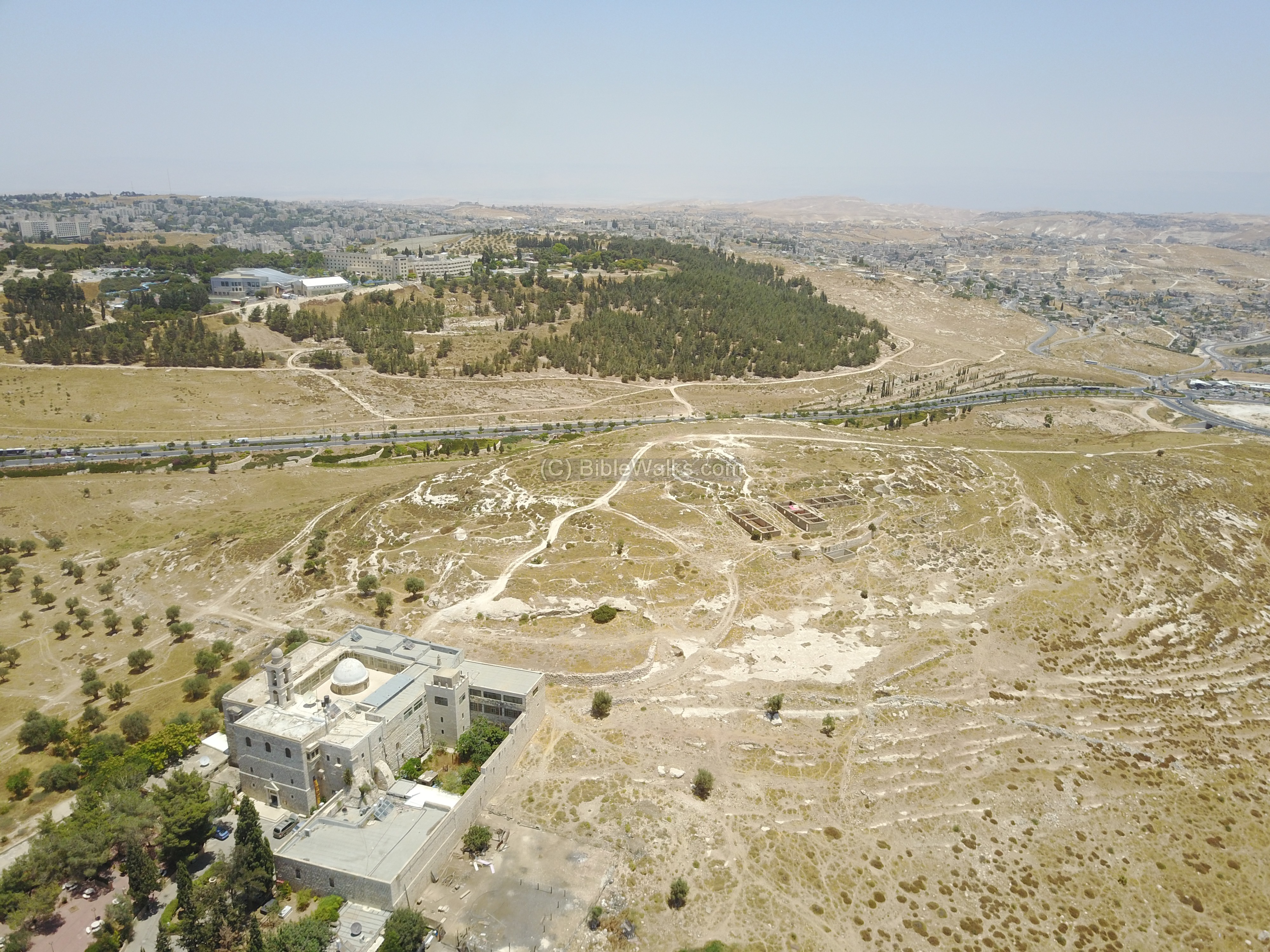
A drone captured this view of Mar Elias from the south west side. To the right of the monastery is the east hill (the “hill of the four”). On the left background is Kibbutz Ramat Rachel. In the far background is Jerusalem.
Click on the photos to view in higher resolution…
 The following YouTube video shows a flight over the site:
(b) General views:
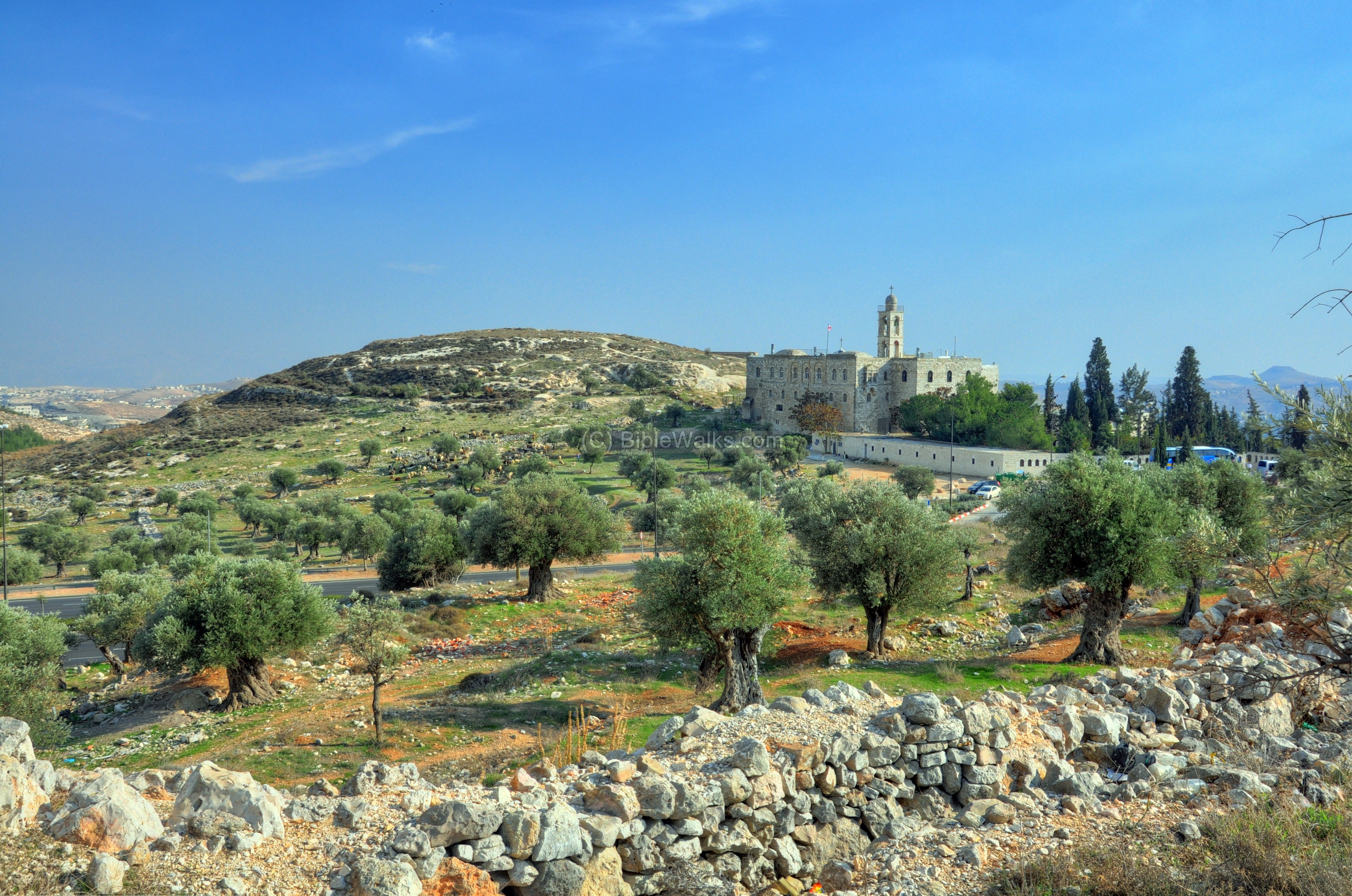
The monastery is seen in this photo from the west side. The road to Bethlehem passes from left to right. Behind the monastery, on its east side, is the hill of “the four”. In the far right background is the cone shaped hill of Herodion.
A closer view of the monastery:
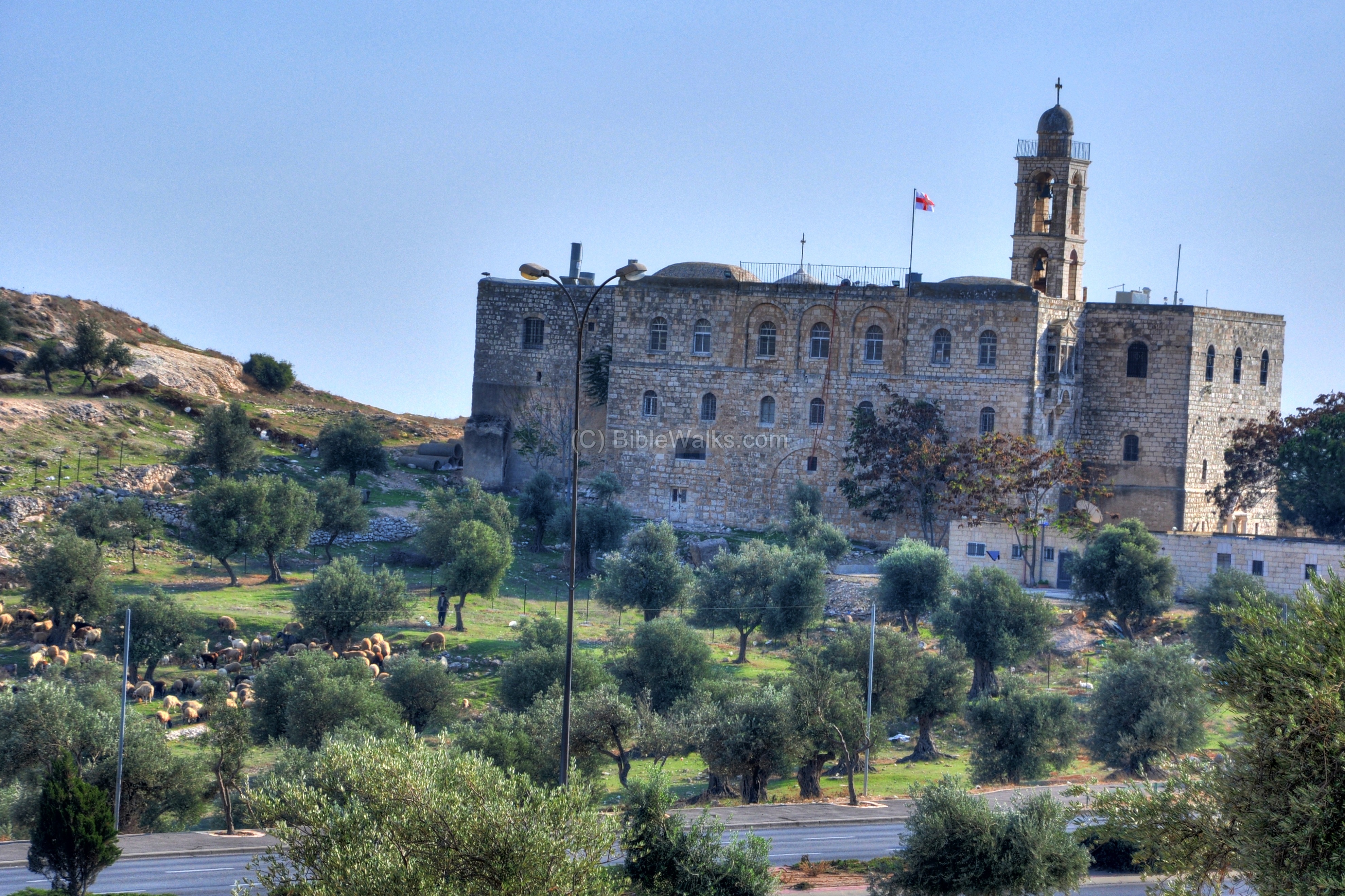
A herd of goats and sheep graze between the olive trees on the north side of the monastery:
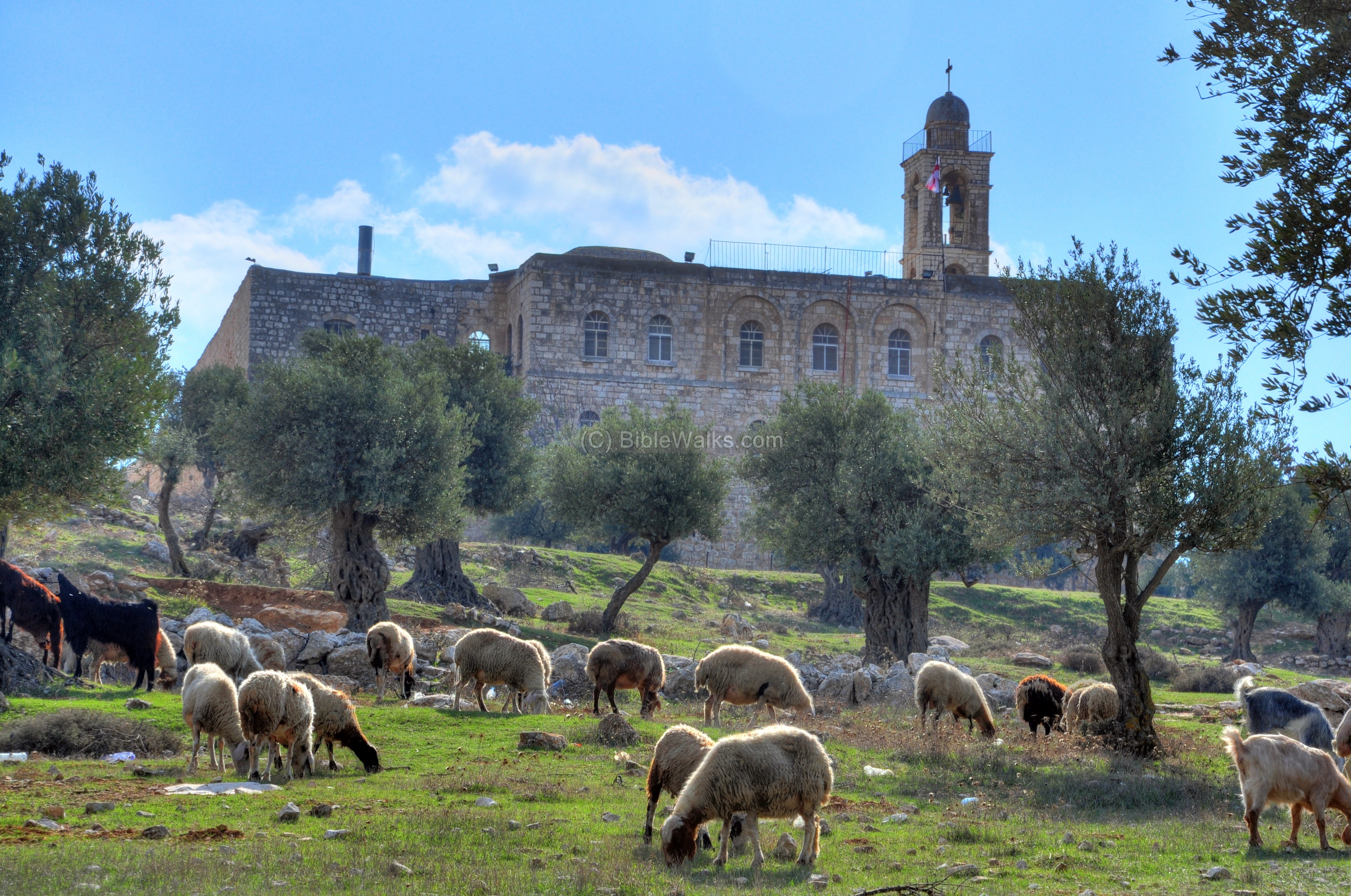
View of the Mar Elias monastery from the north side:
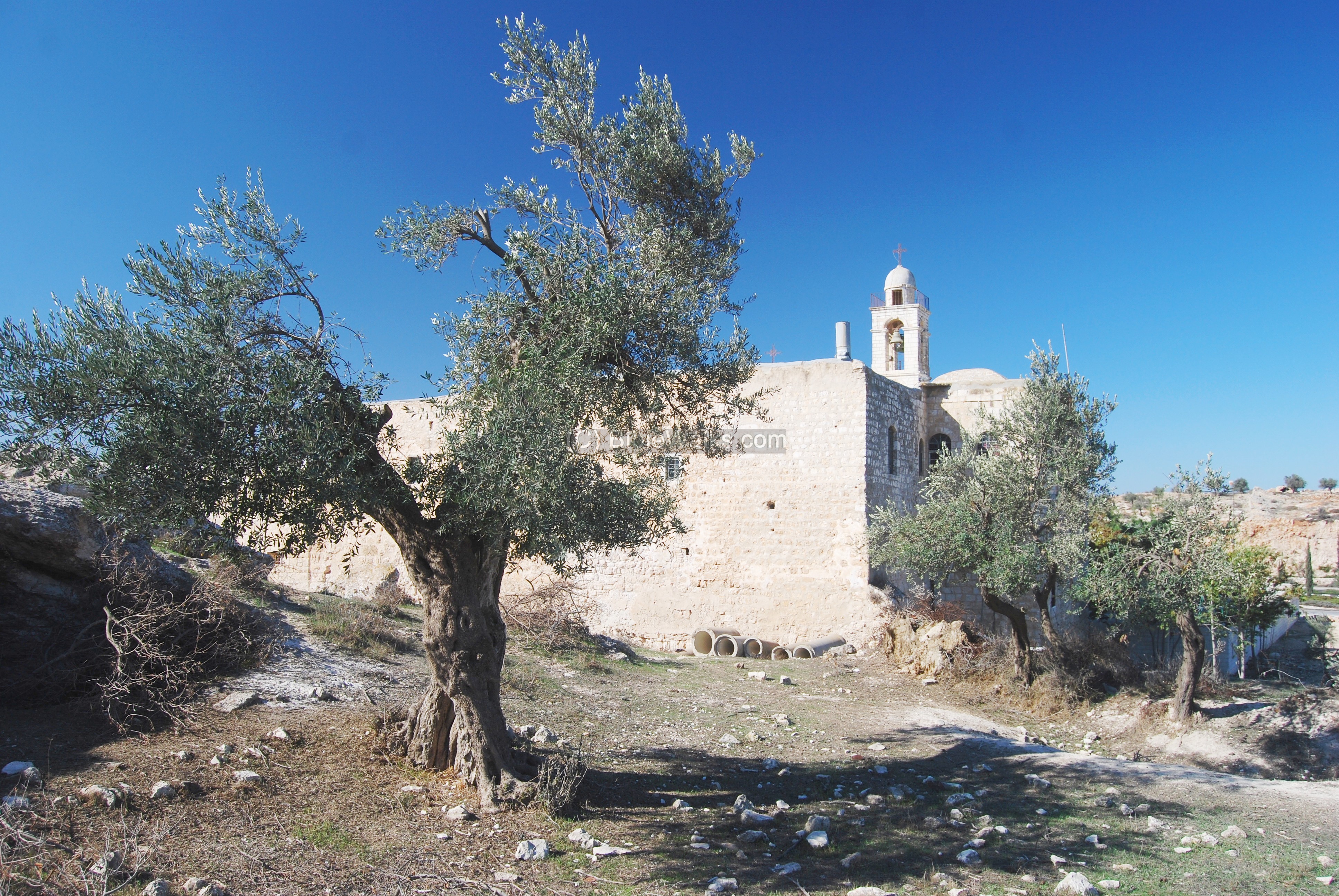
View of the monastery from the front, on the side of the road from Jerusalem to Bethlehem.
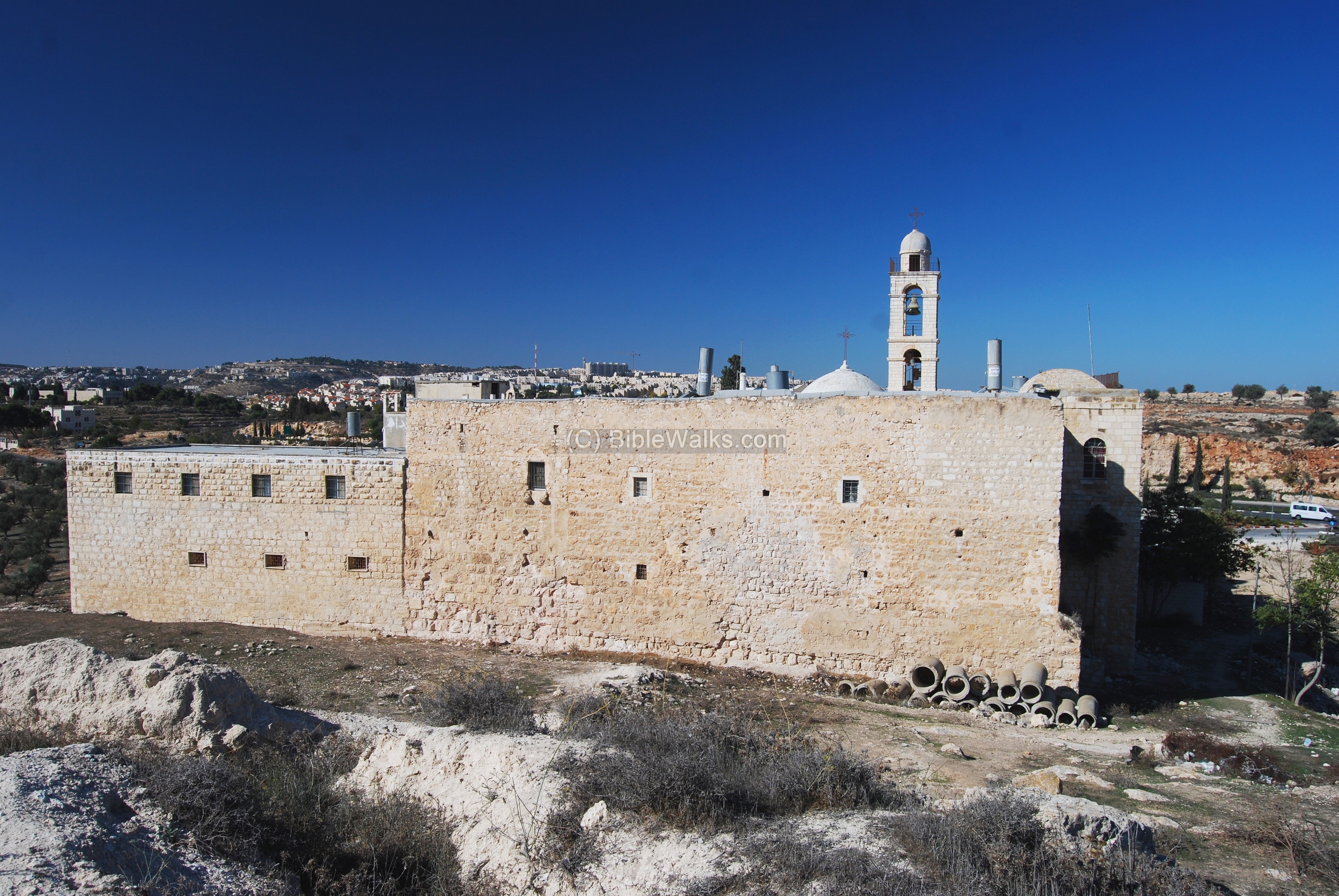
View of the structure from the east hill. The three story building, built in the 12th century, looks more like a fortress; it was designed this way to add protection to its residents.
(c) Bell tower:
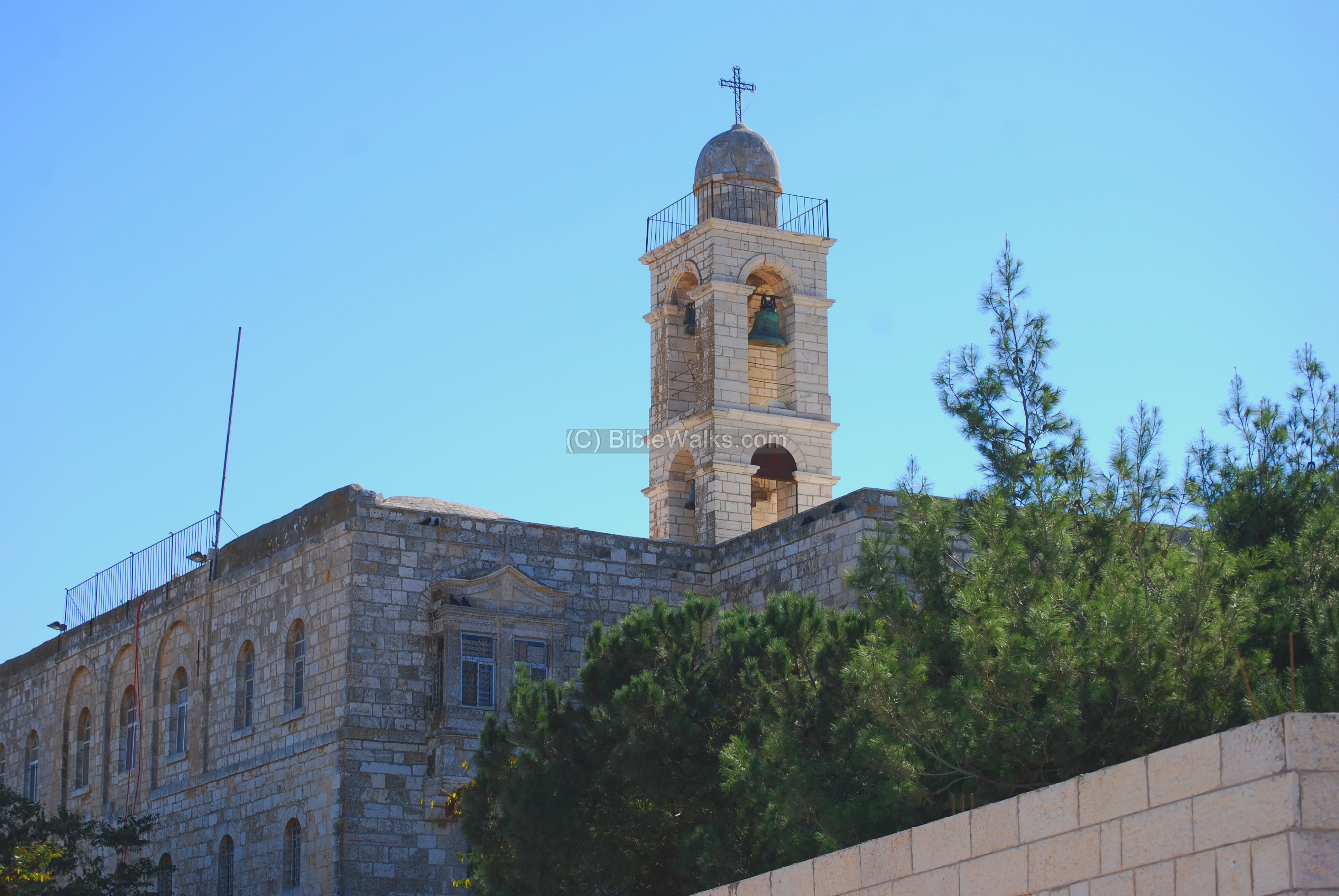
The square bell tower rises over the monastery.

A closer detail of the bell tower:

The symbol of the Greek Orthodox church is seen on the stone above the bell (as detailed on the right). This monogram spells “TΦ” and means “Theopolis” = friend of God.

(d) Entrances:
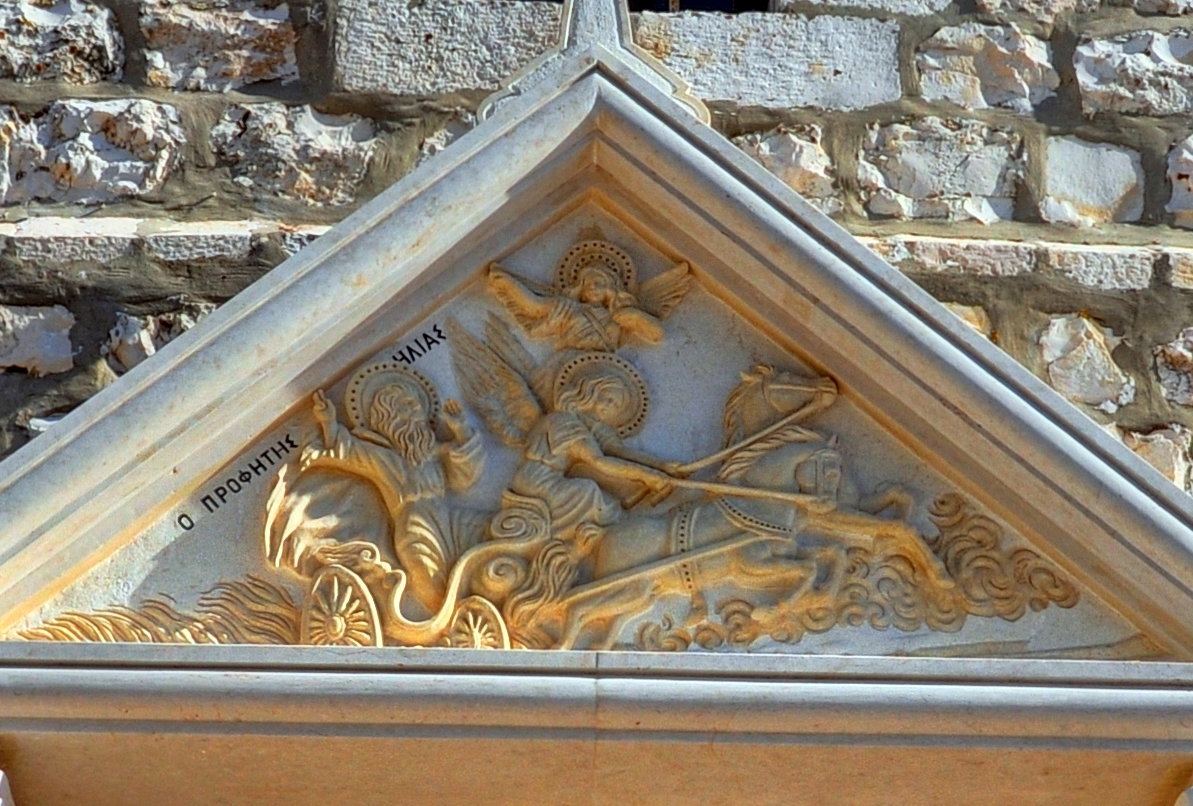
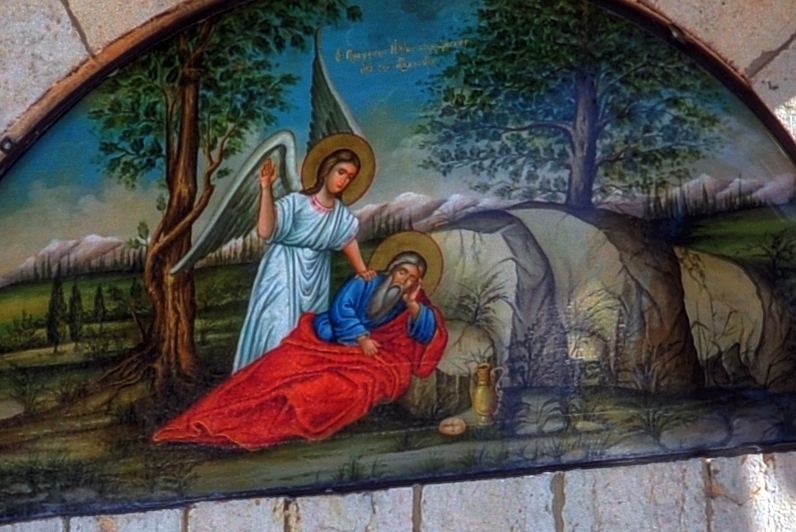
The entrance to the monastery has a carved illustration , showing Elijah riding a chariot of fire, and a lower painting showing Elijah resting on a rock.
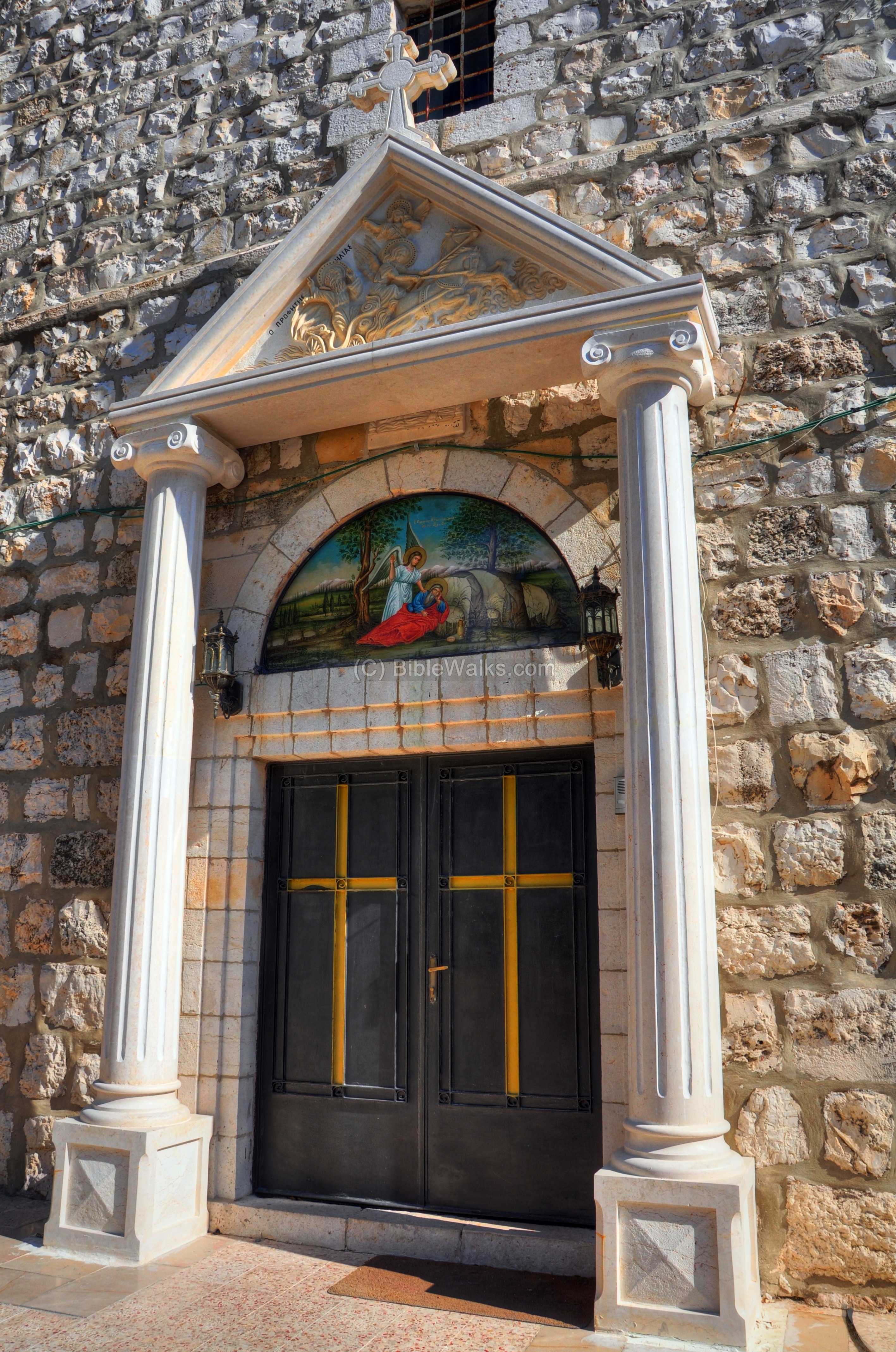
A closer view on the carved illustration, between the horizontal and raking geisa, is based on the Biblical description of the flight on the chariot of fire (2 Kings 2:11): “And it came to pass… that, behold, there appeared a chariot of fire, and horses of fire, and parted them both asunder; and Elijah went up by a whirlwind into heaven.”.
A closer view of the lower painting, just above the entrance, depicts Elijah resting on his way to the Beersheba and then to the desert, with his guarding angel (1 Kings 19): “…And when he [Elijah] saw that, he arose, and went for his life, and came to Beersheba, which belongeth to Judah”.
On the side of the monastery was a rock with a cavity. The cavity had a form of an embedded person. According to tradition this is where Elijah rested, and the painting shows this sacred rock.
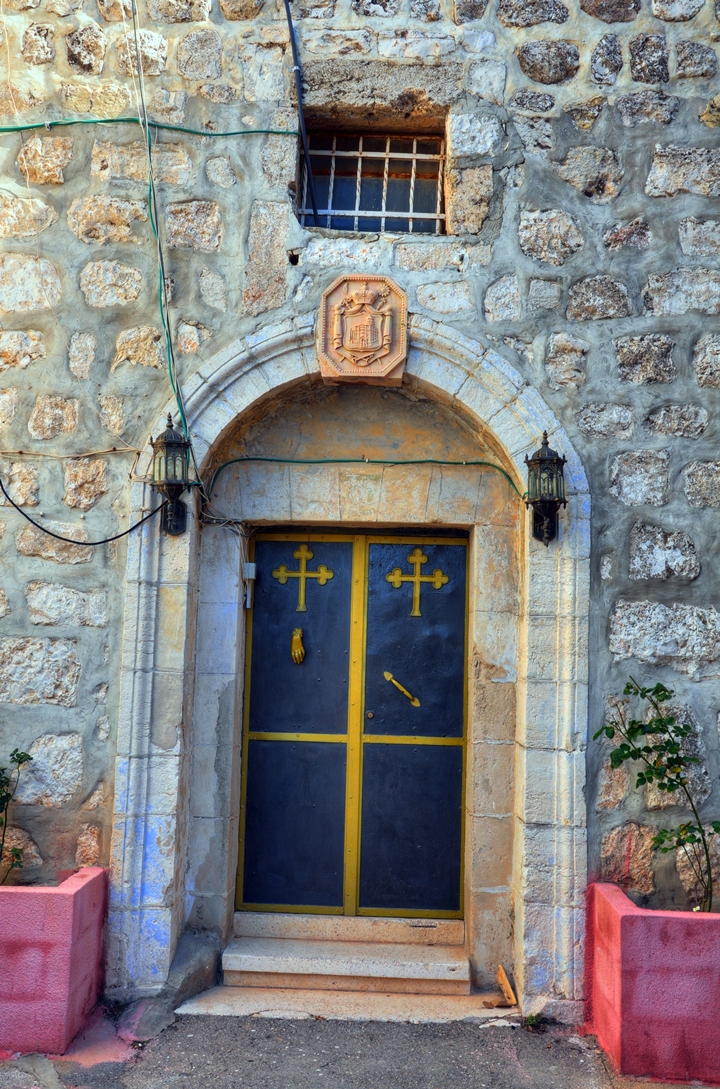
Another side door is shown next.
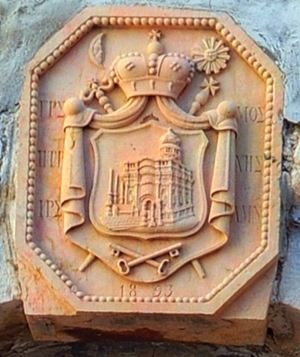
Above the arched door is the seal of the Greek Orthodox patriarchate of Jerusalem.
The illustration in the center of the seal is the Aedicule – the structure of Jesus tomb in the Rotunda within the Holy Sepulcher.
The date – 1893 – is carved below the crossed keys. It is probably the date of a renovation.
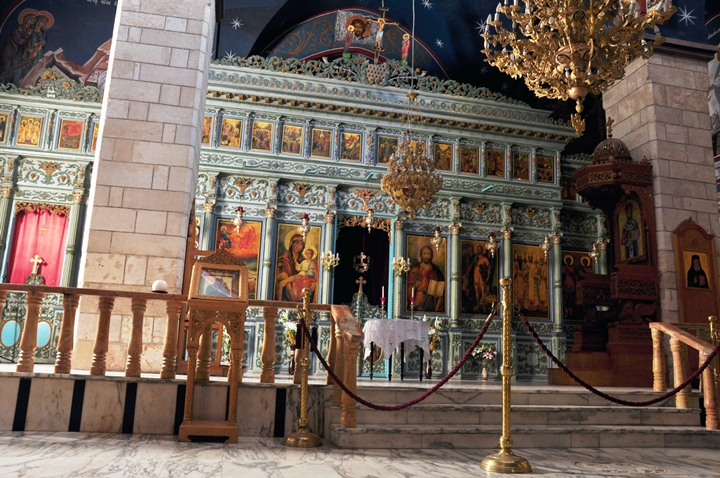
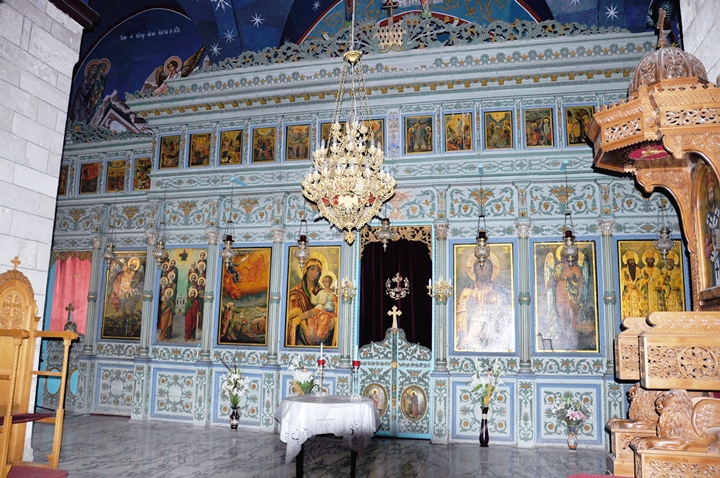
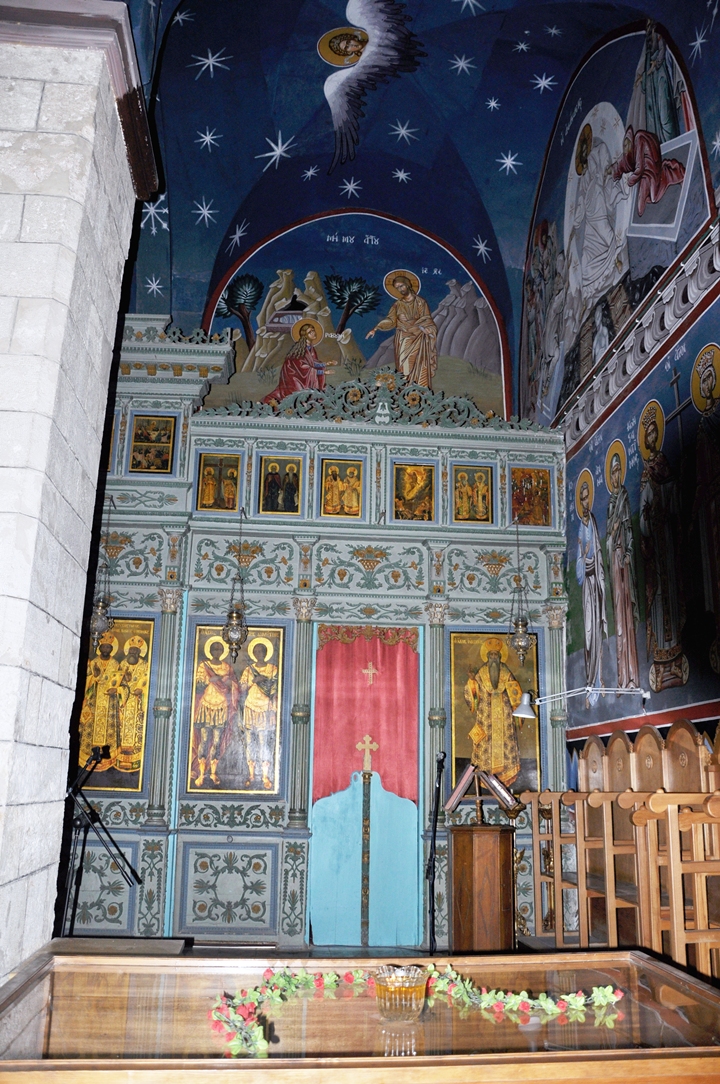
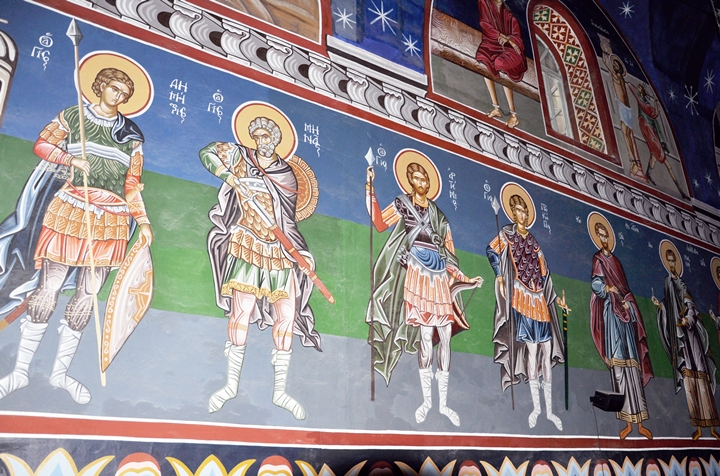
(e) Interior:
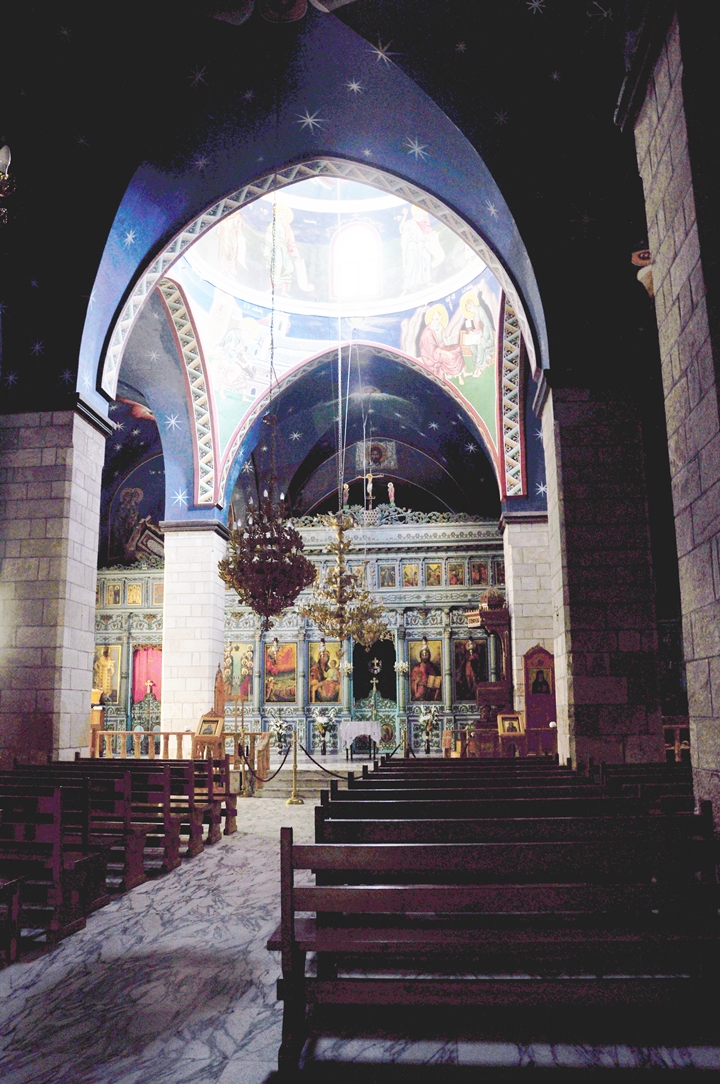
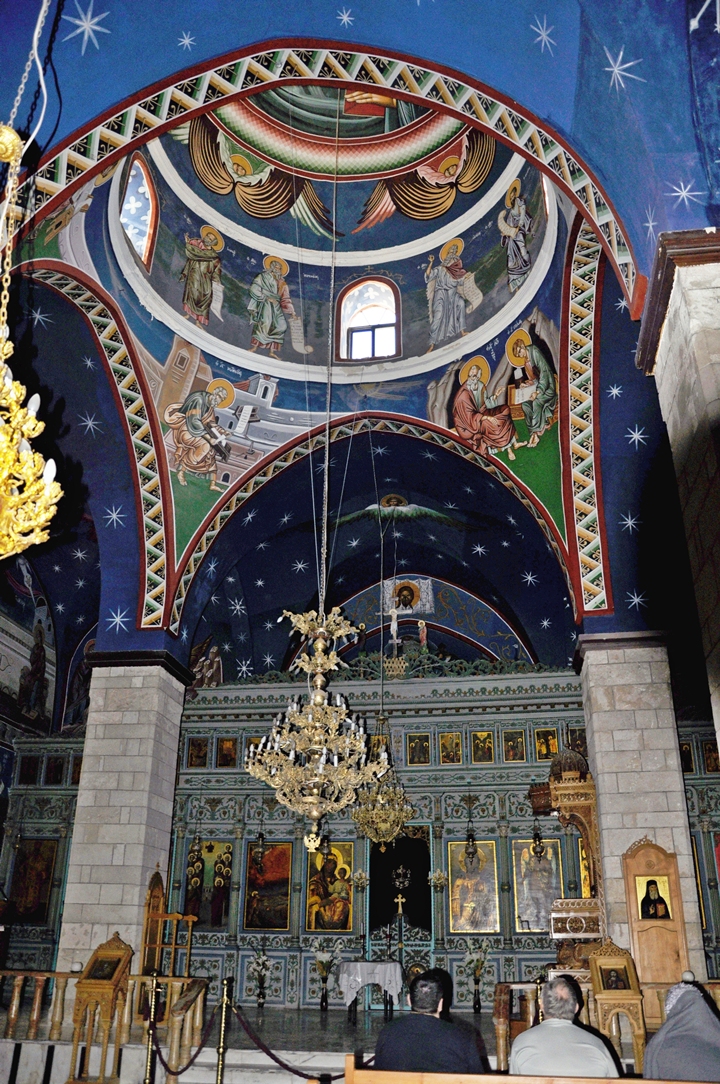
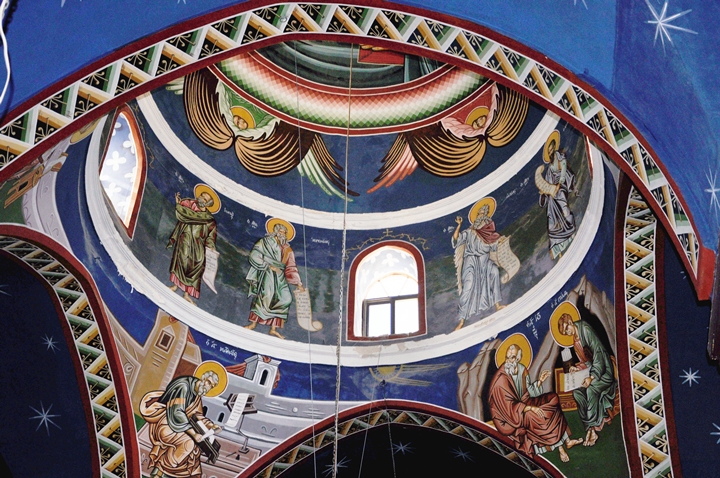
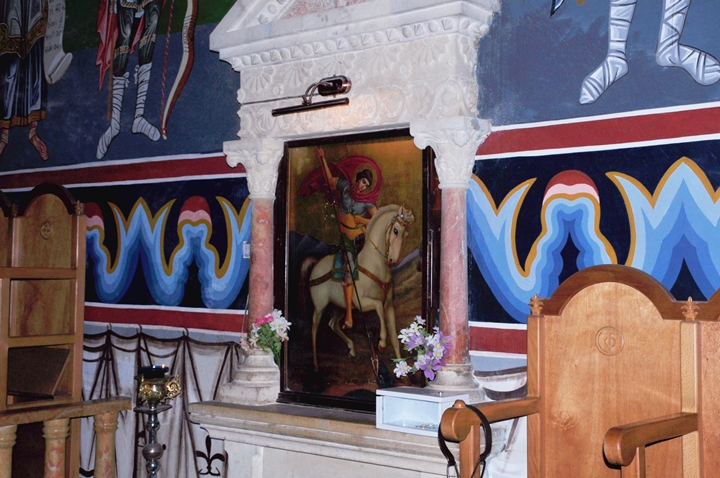
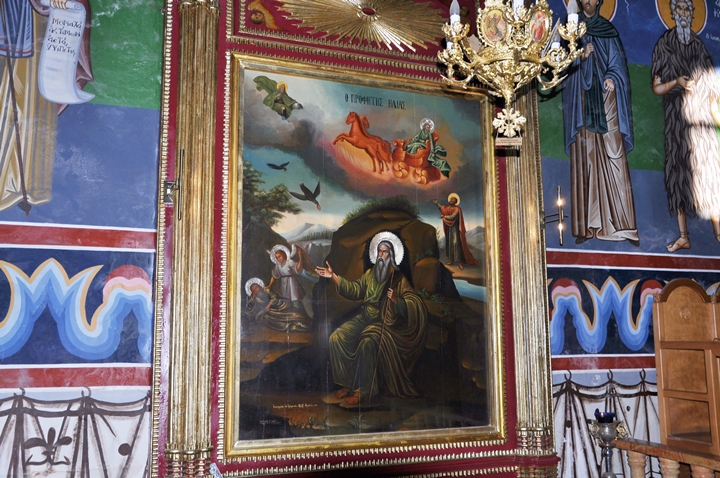
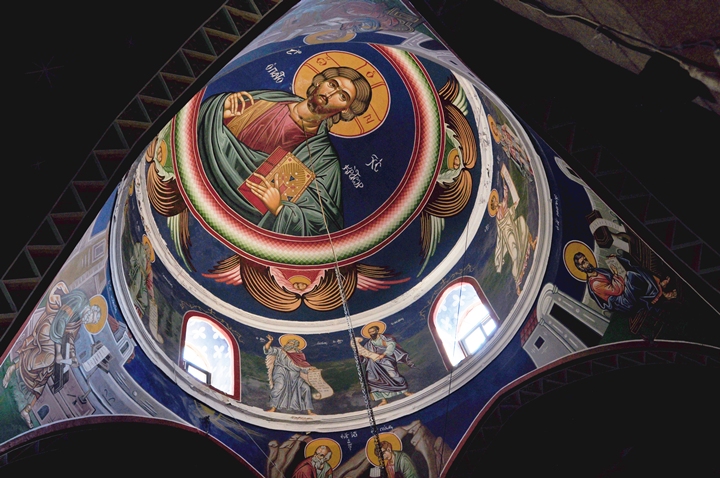
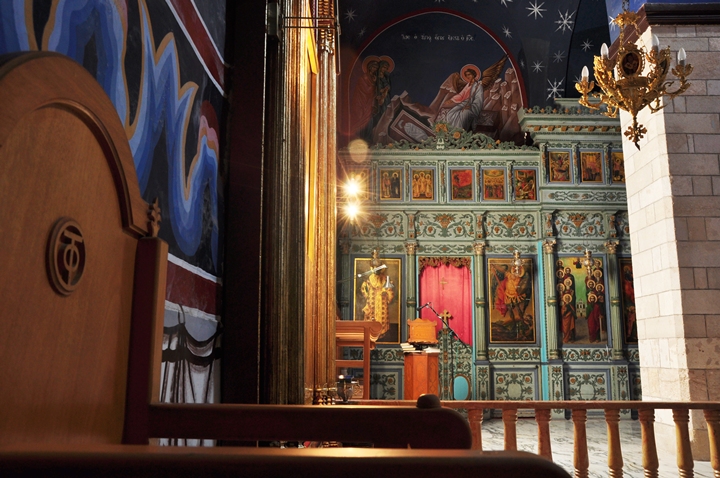
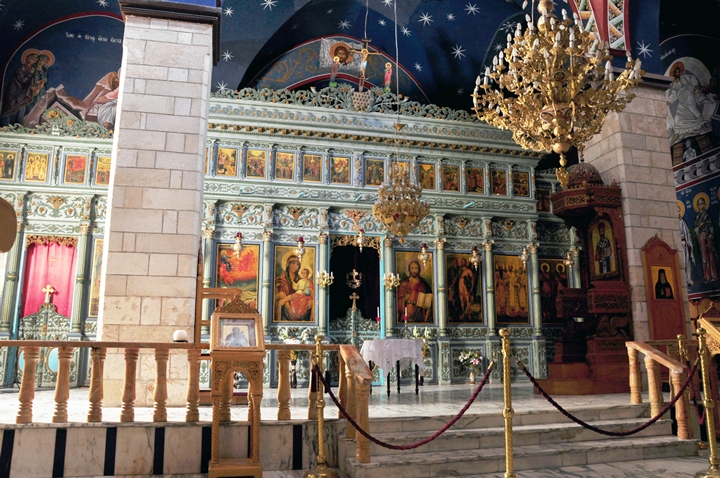
* New photos * description will be added soon *
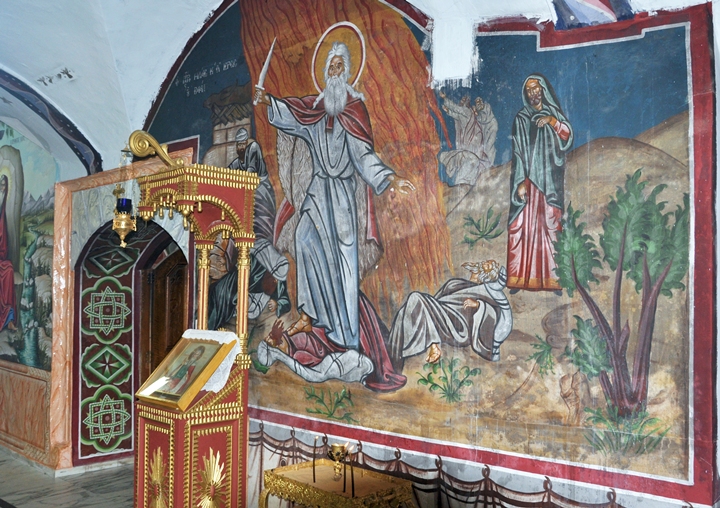
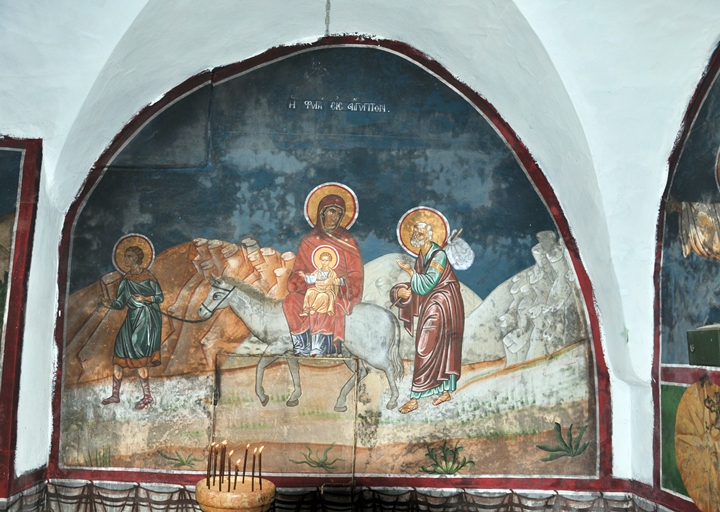
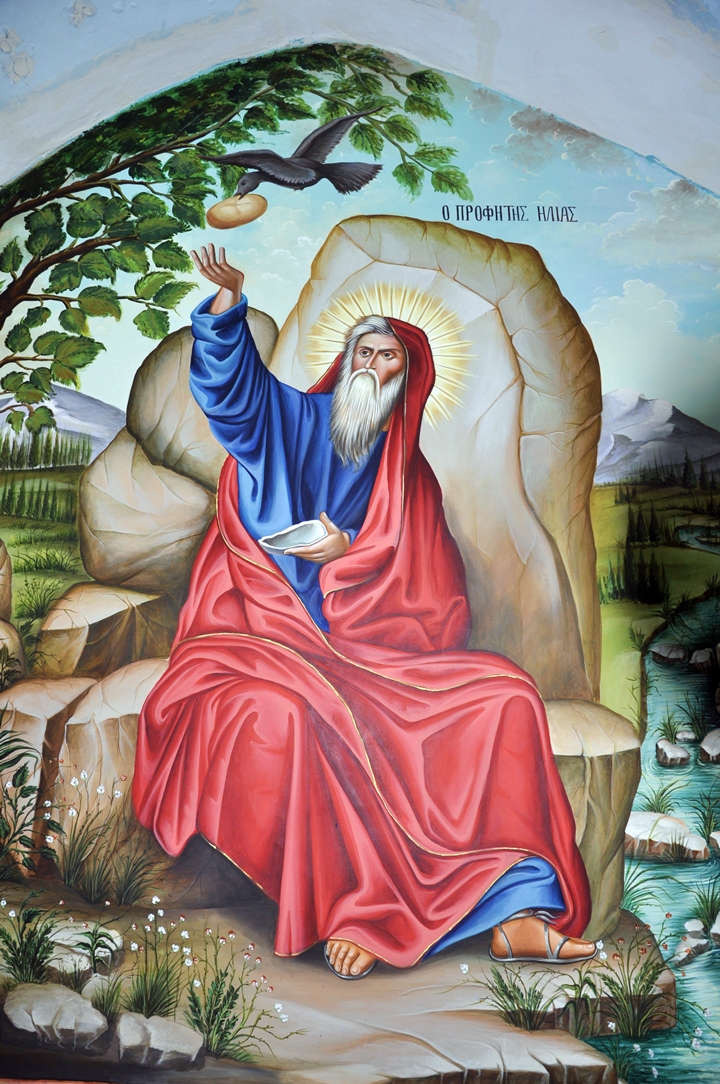
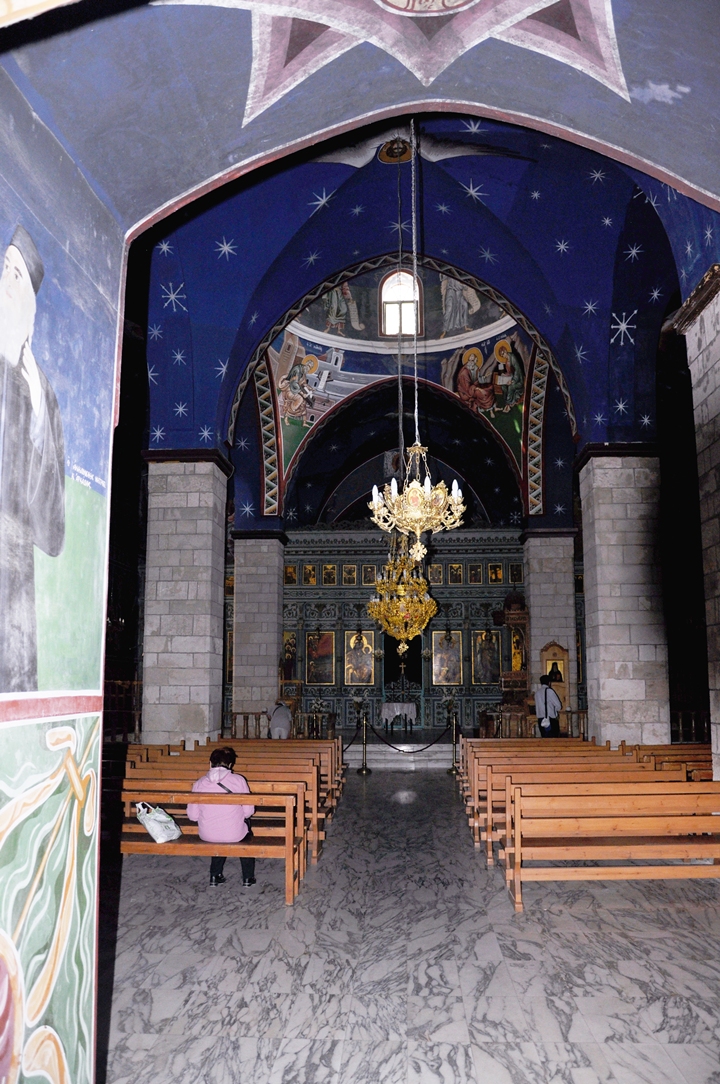
(f) Exterior:
* New photos * description will be added soon *
(g) West hills (“Airplane hill”):
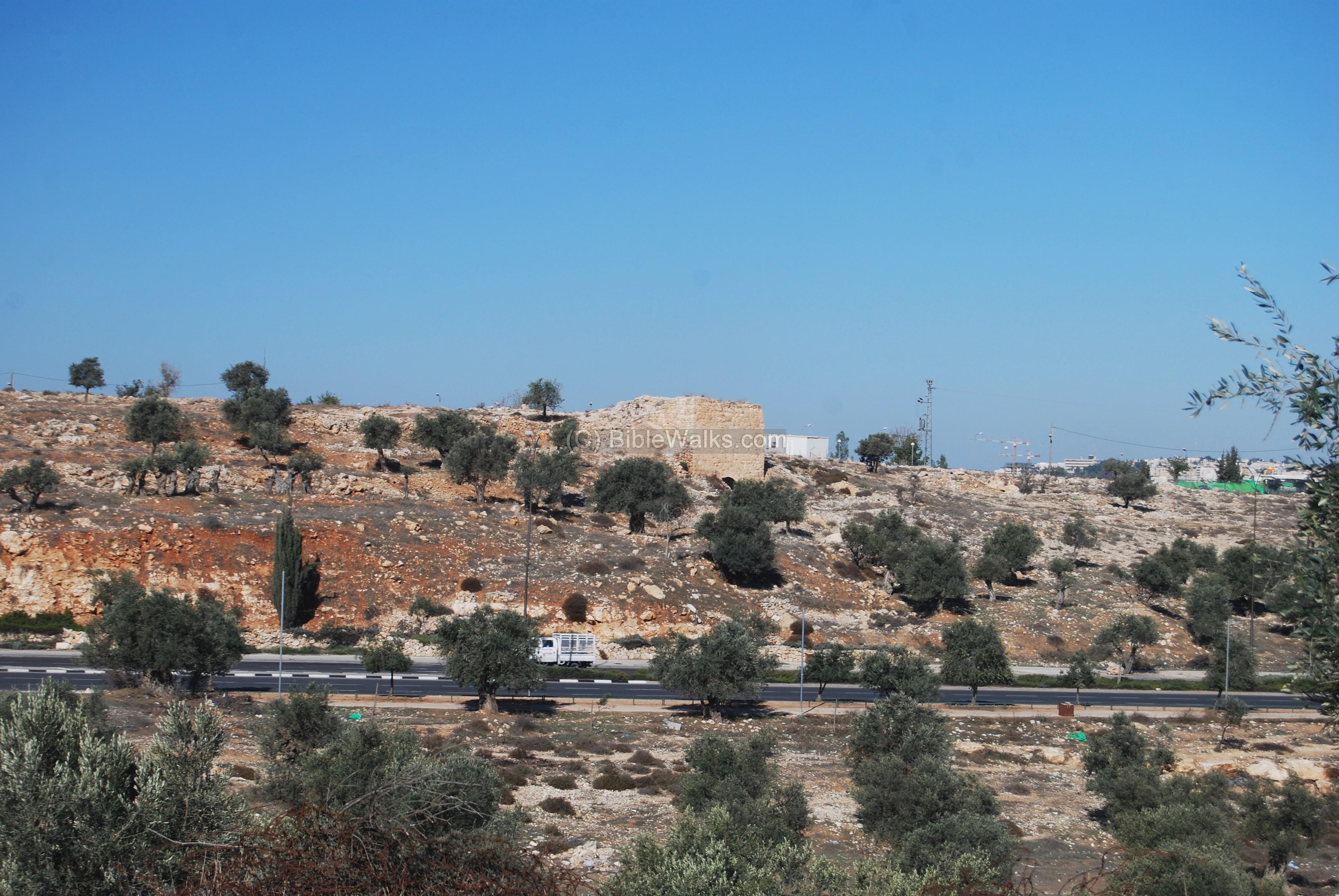
On the west side of the monastery is a hill called the “Airplane hill”, also known as Khirbet Tabaliya. During the independence war (1948) the Egyptians held forces on this hill, and battled with the Israeli forces. Until 1967 six-day-war the Jordanians fortified the hill and installed blocks on the road. In 1967 an Israeli jet crashed into the hill and it is therefore named the “hill of the airplane”.
In the photo below is a view of the west hill. The main ancient structure is a lime kiln.
 Read more on the “Airplane hill“.
(h) East hill (Giv’at Ha’arba’a – “the hill of the Four”):
The hill on the east (rear) side of the Monastery is called “the hill of the four” and also known as “the hill of Elijah”.
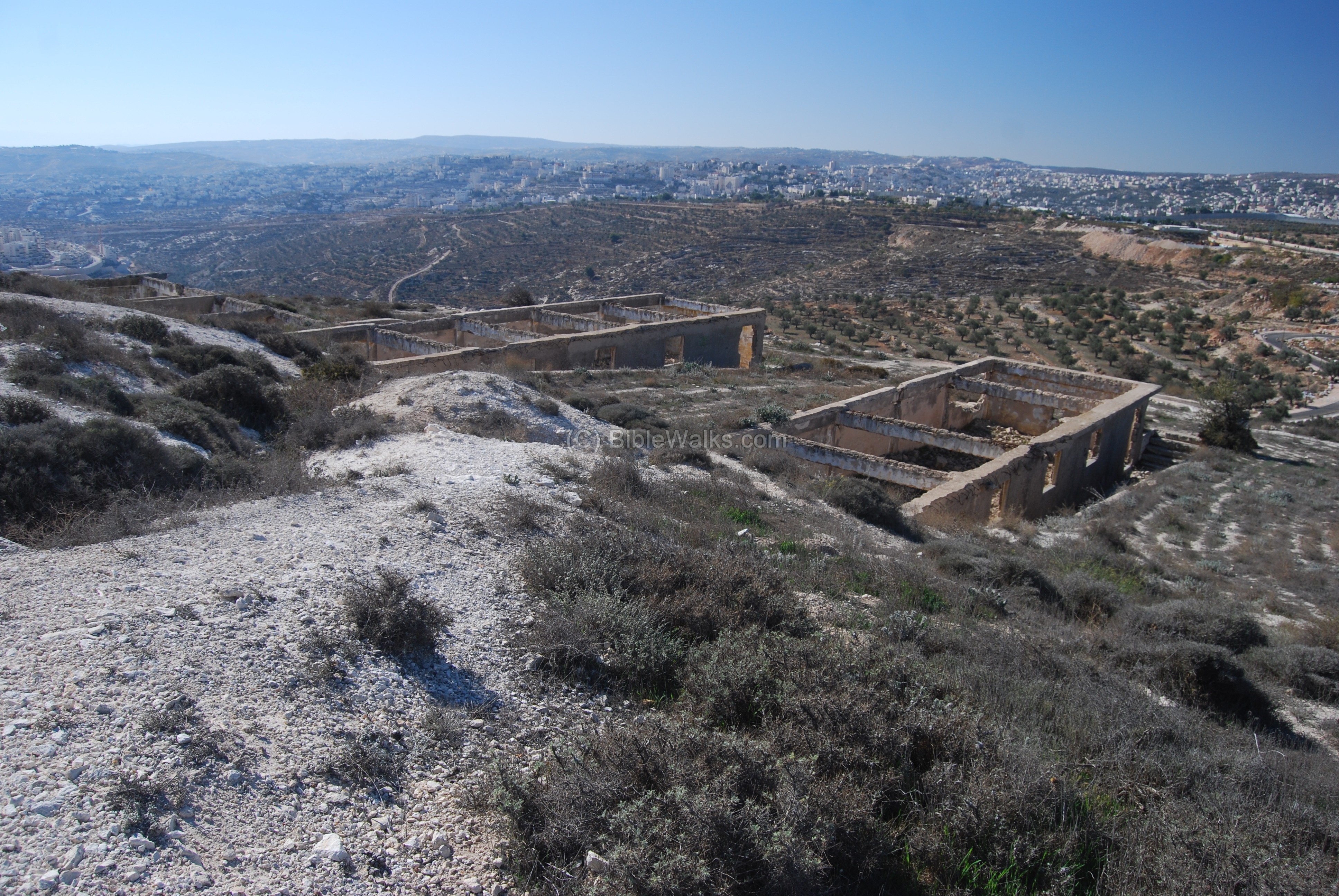
This hill was a Jordanian military post before the 1967 war. A series of bunkers and ruins of these fortifications are cut deep into the top of the hill. In 1956 a conference of archeologists from the Israel Exploration Society was attacked by a Jordanian soldier, positioned on this hill. He opened fire at the crowd, killing four people and wounding 16. The hill is named “the four” honoring their memory.
On its south, east and north foothills are the ruins of the “lower aqueduct”, that brought water to the Temple from the Solomon pools. The aqueduct passes along the height level of 745M on the north side of the hill, along the road to Har-Homa (“wall mountain”, the new south-east neighborhood east of the hill).
Read more on the “Hill of Four“.
Biblical References:
1 Kings 19 1-8:
After Elijah slaughtered the false prophets, he fled to the Judean desert, and – according to the tradition – stopped at this site to rest.
“And Ahab told Jezebel all that Elijah had done, and withal how he had slain all the prophets with the sword. Then Jezebel sent a messenger unto Elijah, saying, So let the gods do to me, and more also, if I make not thy life as the life of one of them by to morrow about this time. And when he saw that, he arose, and went for his life, and came to Beersheba, which belongeth to Judah, and left his servant there. But he himself went a day’s journey into the wilderness, and came and sat down under a juniper tree: and he requested for himself that he might die; and said, It is enough; now, O LORD, take away my life; for I am not better than my fathers. And as he lay and slept under a juniper tree, behold, then an angel touched him, and said unto him, Arise and eat. And he looked, and, behold, there was a cake baken on the coals, and a cruse of water at his head. And he did eat and drink, and laid him down again. And the angel of the LORD came again the second time, and touched him, and said, Arise and eat; because the journey is too great for thee. And he arose, and did eat and drink, and went in the strength of that meat forty days and forty nights unto Horeb the mount of God.”
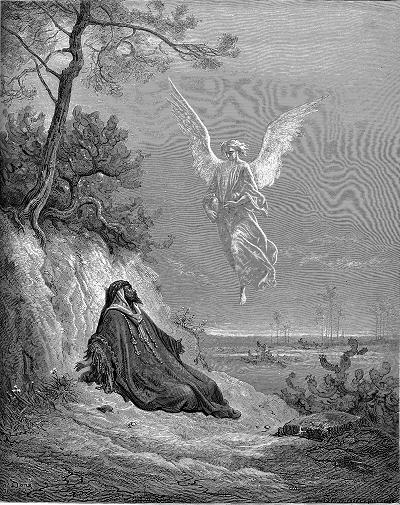
Elijah nourished by an angel- by Gustav Dore (French artist, 1832-1883)
Etymology:
- Mar – Arabic for title of respect (“Holy”, “My Lord”, “Saint”).
- Elias – Greek for “Elijah” the prophet. Elijah plays an important role in the Greek-Orthodox church. According to the tradition and Biblical texts, Elijah gave his spirit and power to John the Baptist, the forerunner of Jesus.
- Mar Elias – used by Arab Christians meaning “Holy Elijah”
- Ramat-Rachel – The Kibbutz on the north side; Hebrew for the “plains of Rachel”, named after the Rachel (wife of Jacob) who according to the Bible is buried in Bethlehem, several KM to the south (Gen 48:7: “And as for me, when I came from Padan, Rachel died by me in the land of Canaan in the way, when yet there was but a little way to come unto Ephrath: and I buried her there in the way of Ephrath; the same is Bethlehem”.). An Iron Age Royal palace was excavated there – see a page on Ramat Rachel archaeological park.
Links:
* External:
- Excavation at Kathisma church ruins located nearby
- From the Jerusalem archaeological appendix:
Giv’at Ha’arba’a (hill of four) – east hill
Giv’at Hamatos (Kh. Tabaliya) – west hill
- History of Earthquakes Mar Elias was seriously damaged in 1066
* Internal:
- Airplane Hill – Givat Hamatos on the west side of Mar Elias
- Giva’at Ha’Arba’a – the Hill of Four on the east side of Mar Elias
- Kathisma ruins of a Byzantine church north of Mar Elias
- Drone Aerial views – collection of Biblical sites from the air
* Other:
- Biblical pictures by Gustave Doré (1832-1883) – public domain
BibleWalks.com – walk with us through the sites of the Holy Land
Herodion<<<—previous Judea site–<<< All Sites >>>—next Judea site—>>> Givat Hamatos
This page was last updated on Sep 18, 2018 (new photos; split to airplane hill page)
Sponsored links: