
Nahal Hever is a desert brook that flows to the Dead sea. On the face of the cliffs above the brook are two caves (caves of “letters” and “horror”) which were hiding places for the Jewish rebels during the Bar-Kochba revolt against the Romans.
Home > Sites > Dead Sea >Nahal Hever
Contents:
Background
Location
History
Photos
* Cave of Letters
* Cave of Horror
Etymology
Links
Overview:
Nahal Hever is a desert river that flows to the Dead sea between Ein Gedi and Masada. On the face of the cliffs above the brook are two caves (cave of letters and cave of horror) which were used as hiding place for the Jewish rebels during the Bar-Kochba revolt against the Romans. Roman siege camps were constructed on the top of the cliffs above each of the caves.
Location:
Nahal Hever flows into the Dead sea, south of Ein Gedi and north of Masada. An aerial map of the Nahal Hever brook is shown below, indicating the major points on interest.

History:
-
Chalcolithic period
The excavations in the caves of Nahal Hever revealed that the caves were in use during that period. This indicated a dense settlement in the area.
A 6,000 years old mummified skeleton of a child, wrapped in cloth, was found in the renewed excavations in 2020/2021.
-
Revolts against the Romans
During the Bar-Kochva revolt (Bar Kokhba 132-135AD) the Jewish rebels hid in the caves of Nahal Hever. The Romans erected siege camps and the rebels and their families died inside the caves.
-
Modern Israel
Surveys in 1953-55 were conducted here and revealed amazing remains from the revolt. Excavations held in 1960-1961 found many remains from this period – skeletons, household tools, weapons, letters and scrolls. New excavations were conducted in 2020/1 with exciting new discoveries.
Photos:
All photos by Shay Shtickgold.
(a) Cave of Letters
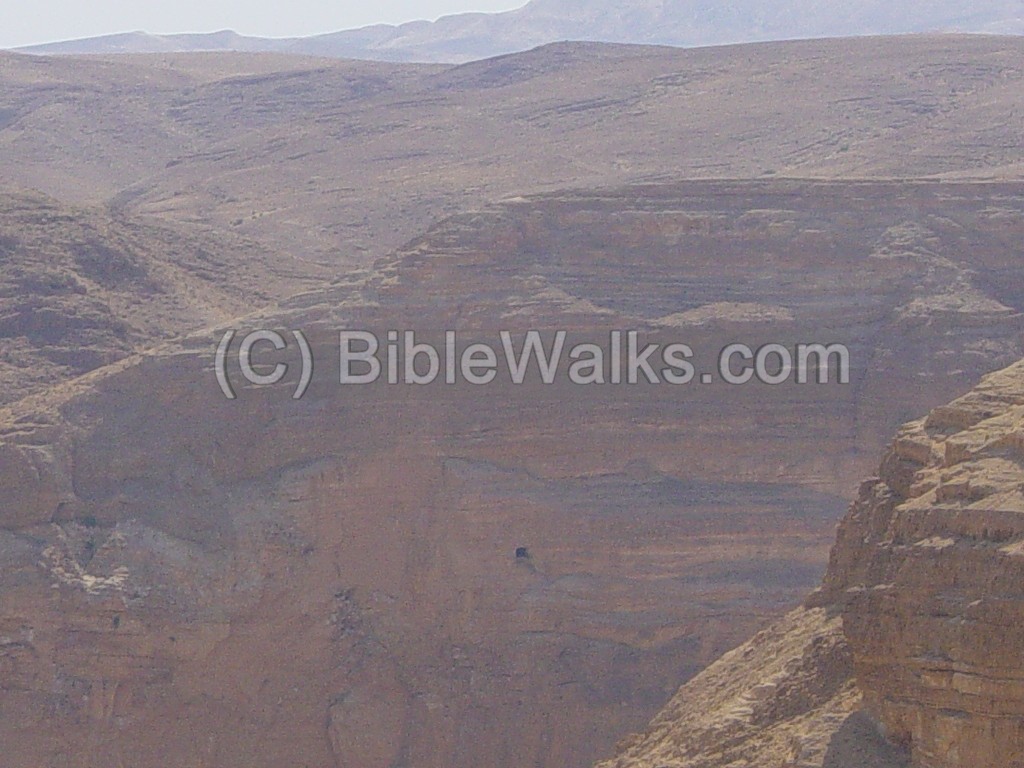
In the northern cave, named as the “cave of letters” (Ma’arat Ha’Igrot) due to the large amount of scrolls and letters that were excavated in the caves. There are three openings to the cave, which merge inside into a 150M long cave.
Click on the photos to view in higher resolution…
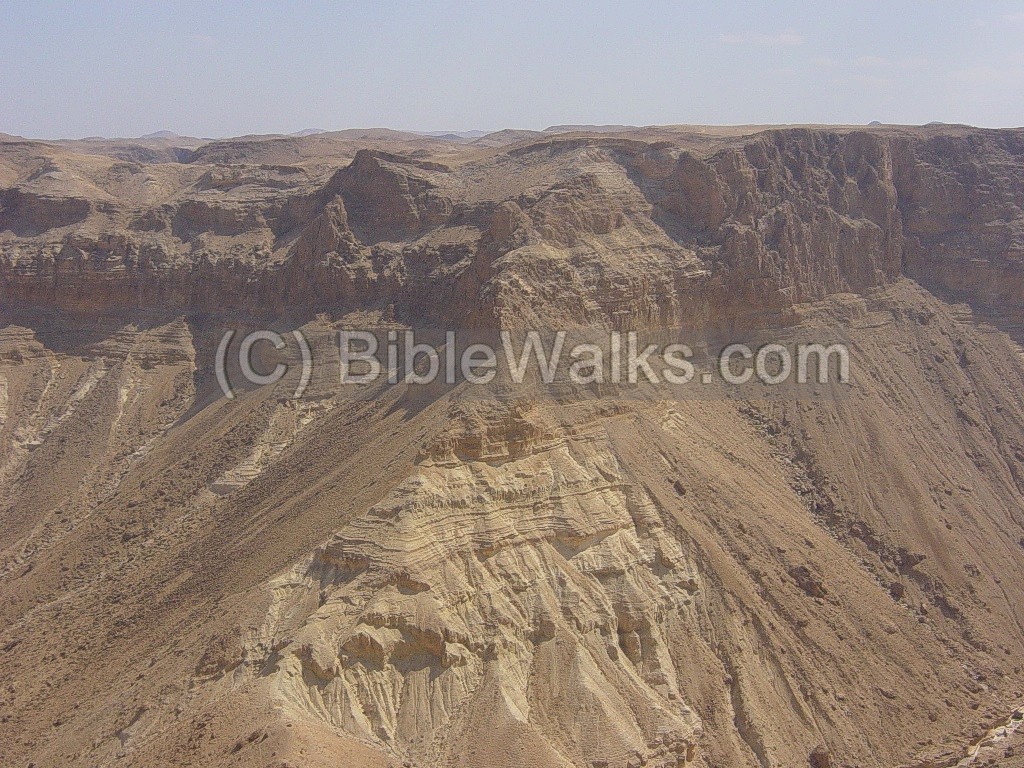
The view from the cliff above the cave of letters is seen below.
(b) Cave of Horror
A cave on the south cliff is called the “Cave of horror” (Ma’arat Ha’Eimim) due to the dozens of skulls and skeletons that were discovered in the cave, dating to the Bar-Kochba revolt (2nd century AD). The bones were of the warrior men, their wives and children, who died here during the siege.
The cave was found in a survey in 1953 using a 100M long ladder rope, and in 1960-1961 the cave was systematically explored. In 2021 the IAA announced that renewed excavations revealed fragments of Biblical scrolls (of the books of Zecharia and Nahum) and Bar Kokhba coins.
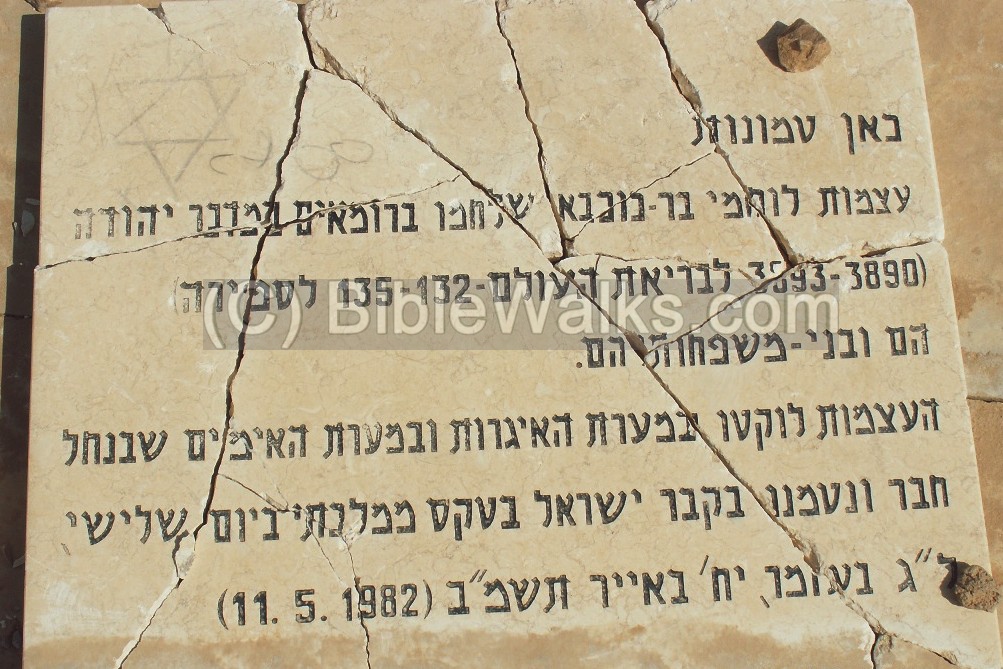
On the top of the hill, above the cave of horrors, is a monument honoring the memory of the warriors and their families who died in the caves during the Bar Kochba revolt. Unfortunately, it was vandalized, as seen in the photo below (taken in 2005).

The smashed monument reads: “Here lay the bones of the warriors of Bar-Kochba who fought the Romans in Judea desert during 132-135AD, them and their families. The bones were collected in the caves of letters and the caves of horror and buried in a ceremony on May 11, 1982.”. Note that the vandalized monument was repaired in 2008.
Remains of the small Roman camp is also located nearby, and was constructed in a form which resembles the Massada Roman siege camps – an area closed by a fence, with bases of rectangular structures and round bases for tents, traces of stoves and other camp elements.
Etymology (behind the name):
-
Nahal – Hebrew for brook or river (Wadi in Arabic). Biblical reference: (Ecclesiastes 1 7): “All the rivers run into the sea; yet the sea is not full”. This verse is very much applicable to the Dead Sea – it is indeed not full…
- Hever – Hebrew for “member” or “friend”. Based on the Arabic name – Hebron brook – since it flows from the area of the city of Hebron. Hebron is derived from Hebrew word for friend – since the patriarch Abraham who is buried there is the “friend of God”.
- Nahal Hever – can therefore be translated to the “brook of the friend”.
- Wady el Khubera – Arabic name of Nahal Hever, as appears on the PEF map. The PEF dictionary translated it as the “Valley of the soft soil”.
- Tzemach Ad – the initials of the 5 main brooks between Masada (in the south) and Ein Gedi (in the north) combine a Hebrew word which means “green plant”. The brooks are: Tseelim, Mishmar, Hever, Arugot and David.
Links:
- Bar Kochba letters
- New Dead Sea Scroll fragments, world’s oldest basket found in desert cave – (Jpost, Mar 2021) – renewed survey in the cave of horror
BibleWalks.com – The Bible from the ground up
Masada<<<—previous site—<<< All Sites >>>—next Dead Sea site—>>> Nahal Arugot
This page was last updated on Mar 18, 2021 (new discovery in cave of horror)
Sponsored links: