
This place, on Mount Zion, is the traditional site of the the location of the Last Supper (“Coenaculum”). The present day hall is a 12th century Crusader structure, built on top of King David’s traditional tomb.
Home > Sites > Jerusalem > Mt Zion> Room of the “Last supper” – Coenaculum
Contents:
Overview
Location
History
Photos
* Entrance
* Interior
* Crusaders
* Muslim
Biblical Refs
Etymology
Links
Overview:
This site is the traditional location of the upper room of the “Last supper” (“Coenaculum” – dining room).
The Last Supper is a significant event in the Christian religion that occurred in Jerusalem. It is a meal that Jesus Christ shared with his disciples on the night before Jesus was captured by the Romans, trialed and crucified. Mark 15 15: “where I shall eat the Passover with my disciples? And he will shew you a large upper room furnished and prepared”
According to the Bible, the Last Supper took place in an upper room in Jerusalem, where Jesus and his disciples gathered to celebrate the Jewish festival of Passover. During the meal, Jesus predicted his betrayal by one of his disciples, Judas Iscariot, and instructed his disciples to remember him by partaking in bread and wine.
The hall of the Last supper is a 12th century Crusader structure, built on the upper level above the traditional place of the tomb of King David. The archaeological evidence on the lower floor, which revealed an Early Roman level, supports the possibility that this area was indeed the location of the room of the Last Supper.
The Last Supper has become a central ritual in the Christian religion, known as the Eucharist or Communion, where believers partake in bread and wine as a symbol of Jesus’ sacrifice.
Location:
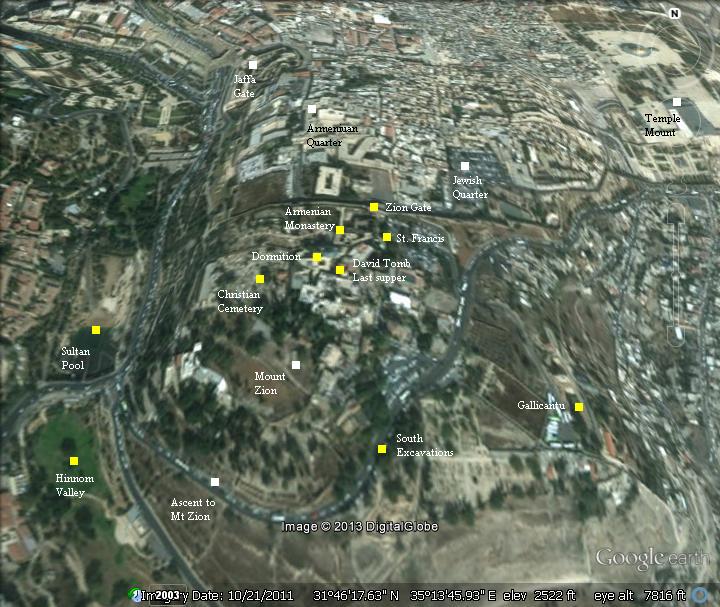
The site is located on Mount Zion, outside of the old city walls and 100M south-west to Zion gate. It is easily accessed from the parking lot near the Zion gate; Walk through the alley towards Dormition abbey, and on its corner turn to the left side.
History :
- Roman period
Mount Zion was also the site where some of the events of the last days of Jesus have happened. The “Last supper” is one of these most important events which, according to tradition, happened in the upper floor of the building where the tomb of David is located. As per Mark 15 15: “where I shall eat the Passover with my disciples? And he will shew you a large upper room furnished and prepared”.
St. Peter and the other apostles also talk about David’s tomb in Acts 2 29:
“…the patriarch David, that he is both dead and buried, and his sepulchre is with us unto this day.” This text may relate to the original site of the tombs of the house of David, or the new location on Mount Zion.
Another tradition holds that the Holy Ghost descended here as per Acts 2 1-4, and Apostle Peter conducted the sermon:
“And when the day of Pentecost was fully come… And suddenly there came a sound from heaven as of a rushing mighty wind, and it filled all the house where they were sitting…”.
- Byzantine period
Several hundred years later, during the Byzantine period, the early Christians built several churches around Mount Zion.
The second level in this site was a Byzantine building, as determined by an archaeological survey that was conducted beneath the tomb of David, on the lower floor.
- Persian and Arab conquest
After the Persian or Arab conquest in the 7th century, the structure was destroyed, and the area remained in ruins from the 7th century until the 12th century.
- Crusaders
The Crusaders rebuilt some of the structures on Mount Zion, as well as many sections of Jerusalem. The present day Coenaculum hall is one of these 12th century Crusaders structures. After the Crusaders retreated (1187) the structure was cared by Franciscan Monks, the official custodians of the Holy places.
- Middle ages
The Ottomans did not include the area inside the 16th century wall, but regarded the site as a Holy place – the site of the King David’s tomb. They banished the monks, and transformed it into a mosque (1524 AD), as attested by the stone inscription embedded into the eastern wall. The Ottomans, under Sultan Suleiman the Magnificent, added changes which included a prayer corner, colorful windows and a Muezzin tower on the roof. The mosque was named E-Nebi Daud, or: the prophet David.
In the building around the site lived a Muslim family, who held the keys to the site.
- Modern times
On the ground level are several Jewish synagogues, and the site is one of the most Holiest Jewish places – the traditional tomb of King David. The upper level is a holy place for Christians.
The place is open to the public and is a extremely popular place, receiving hundreds of thousands visitors year round. Pope Benedict XVI visited here on May 12, 2009.
Photos:
Entrance:
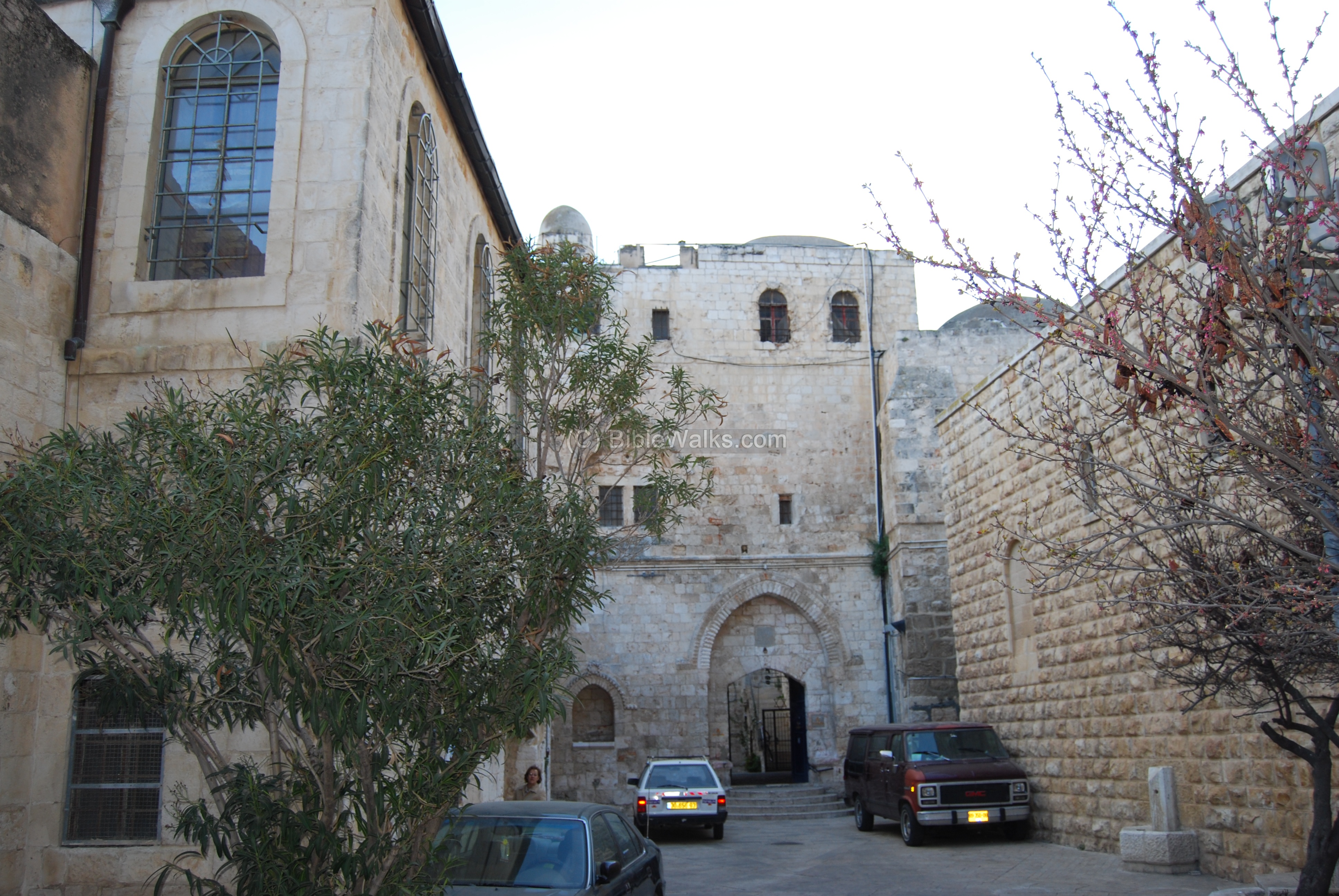
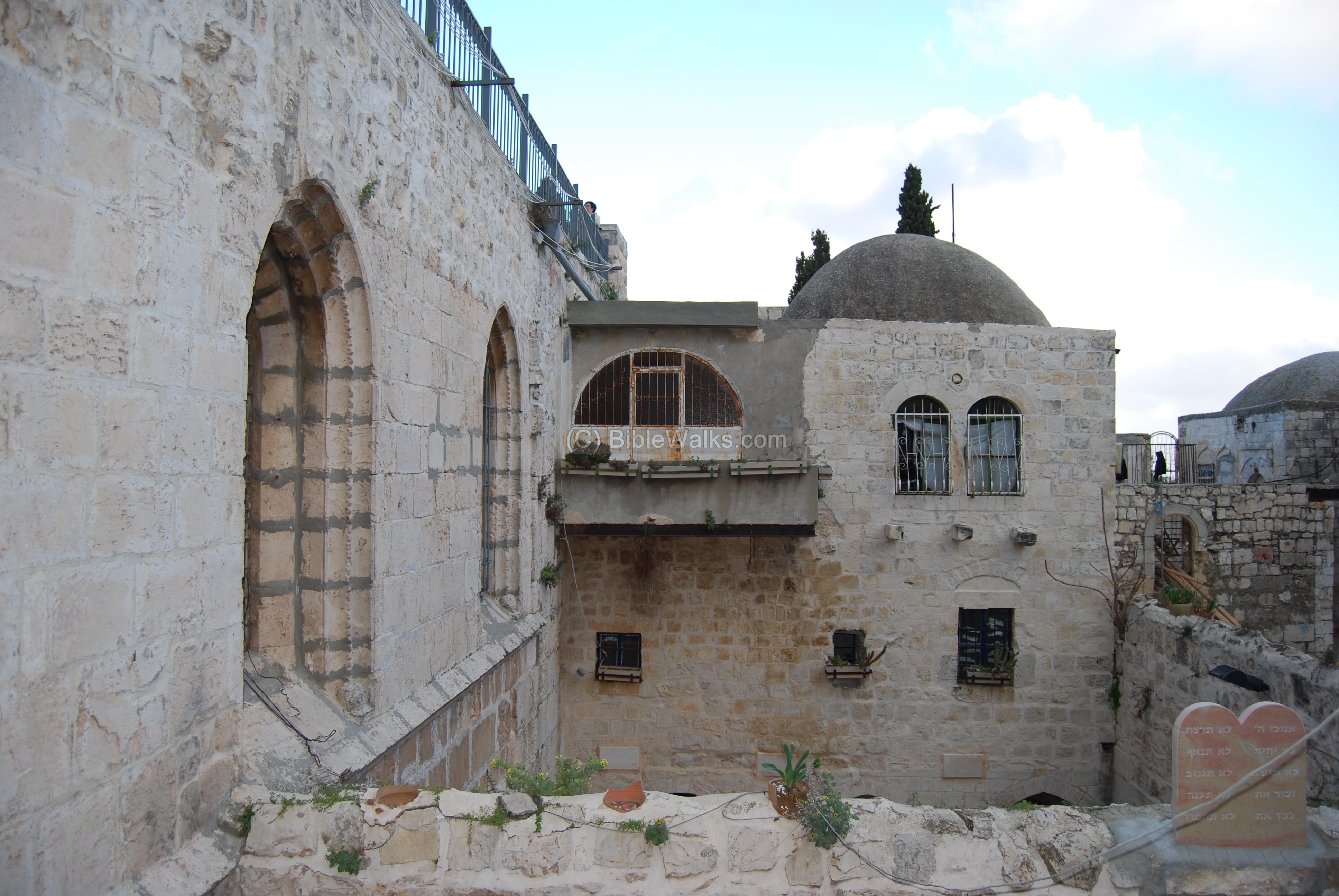
The entrance to the complex of King David’s traditional tomb and the place of the Last supper is seen below – on the left side, where the synagogues are located on the lower level, the Christian site is on the second level, and the Muslim on the roof. The wall on the right is part of the Dormition abbey.
Click on the photos to view in higher resolution…
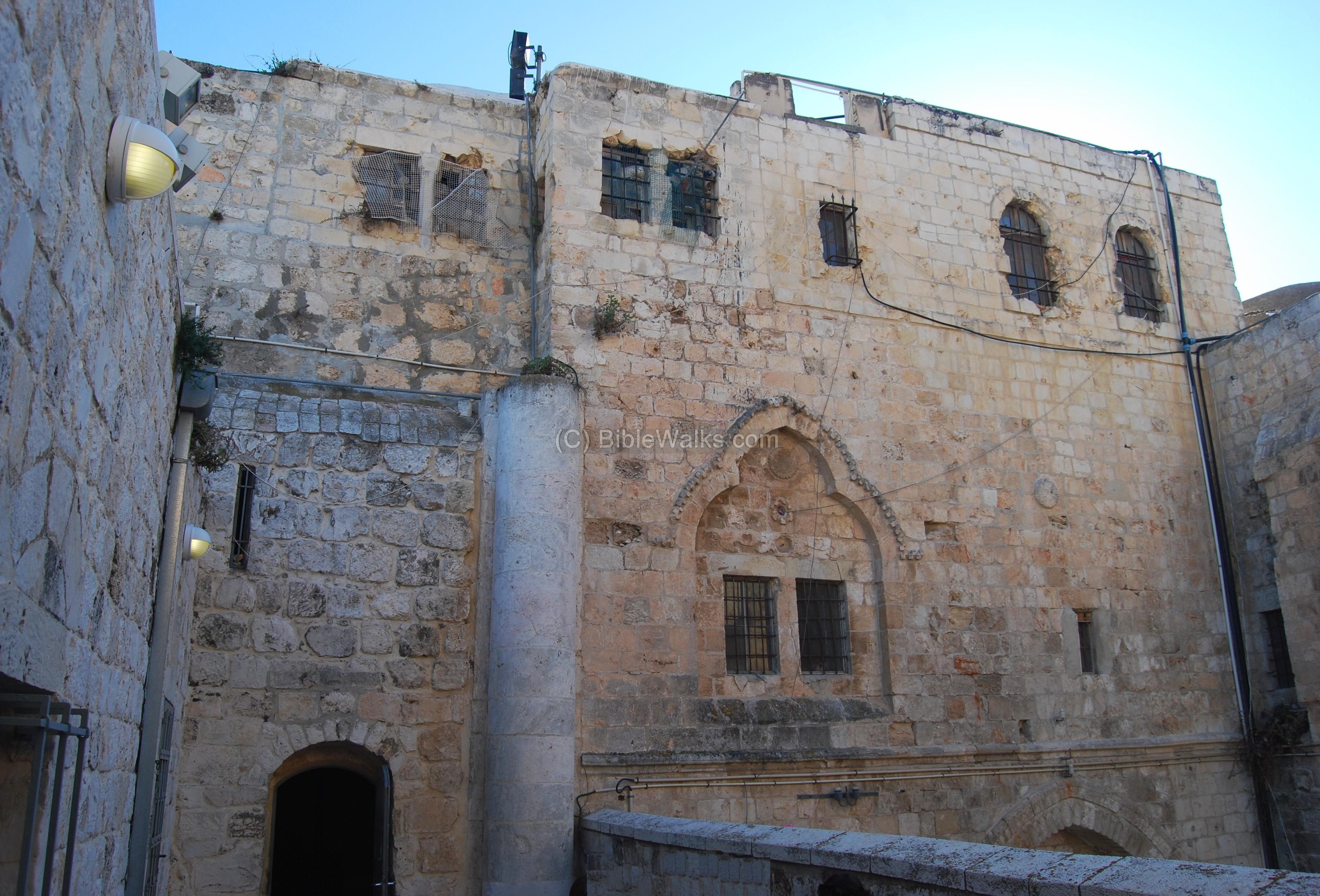
Up, on the second floor, is the entrance to the Last Supper hall from the second floor balcony.
A detail of the entrance is seen below.

On the photo below is the view from the entrance from the balcony on the south side. The two windows of the hall are seen on the left side.
Interior:
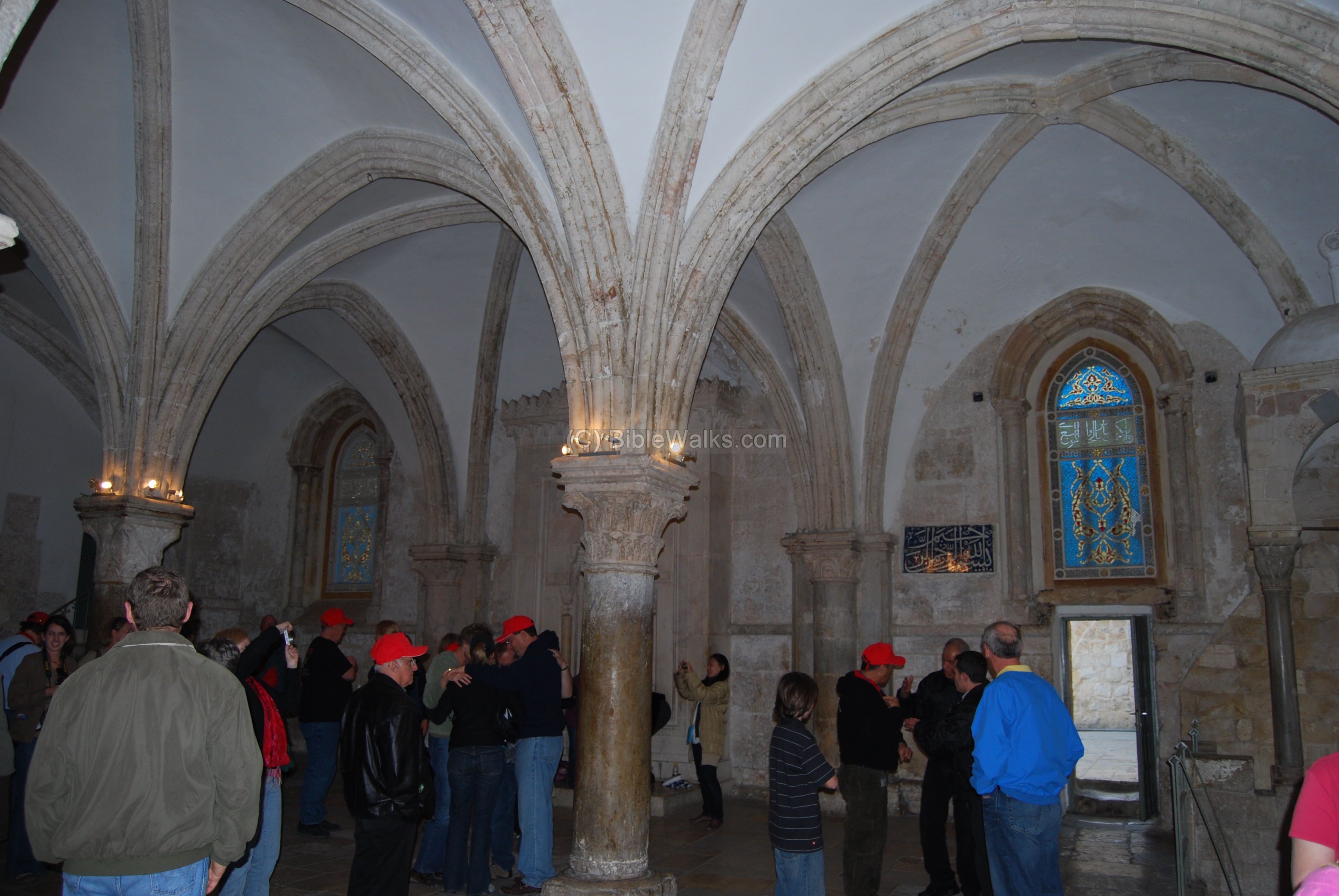
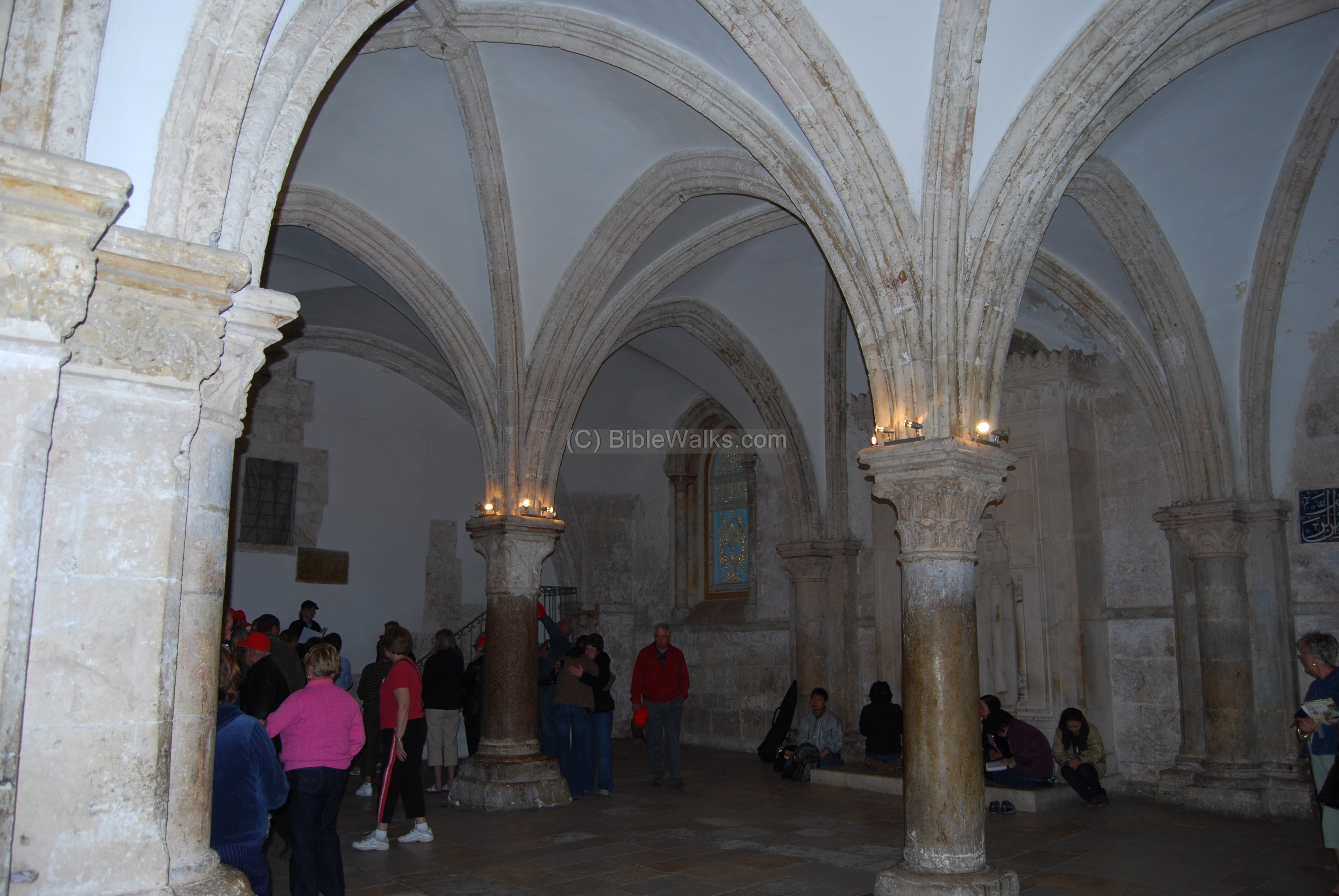
Inside, is the Last Supper hall, seen below. The structure, in the form of a large rectangular arched room, dates back to the Crusaders times (12th century). The was built over an earlier Byzantine building.
Another view of the Holy place is seen below. The pilgrims are very excited – they dance, chant and pray. Some totally loose control, and the guards occasionally try to cool down the enthusiastic crowd.
A Royal Ottoman Arabic inscription is seen on the wall at the left background, installed by the Ottoman Sultan Suleiman in 1524 AD. It narrates the conversion of the church into a mosque.
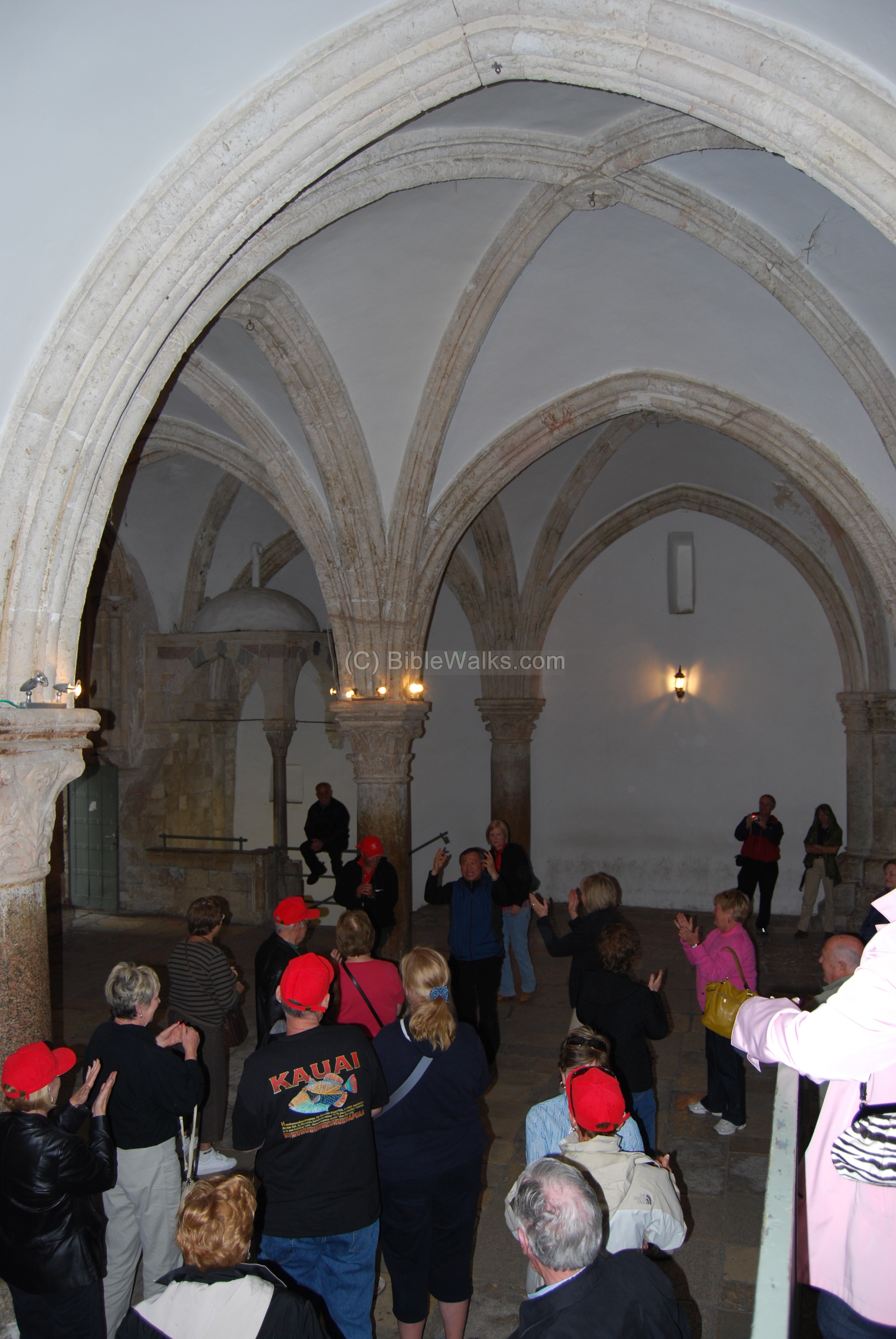
The photo below shows a view of the Last Supper hall towards the south-west corner. The staircase in the left side leads to the first floor (but is closed), while the door on the left is an exit to the balcony overlooking the court yard.
South-west corner, Crusaders remains:
The hall and ceiling are remains of the Crusader hall, dated to the 12th century. Interesting details can be seen around the caped structure on the south-west, which is located above a staircase.
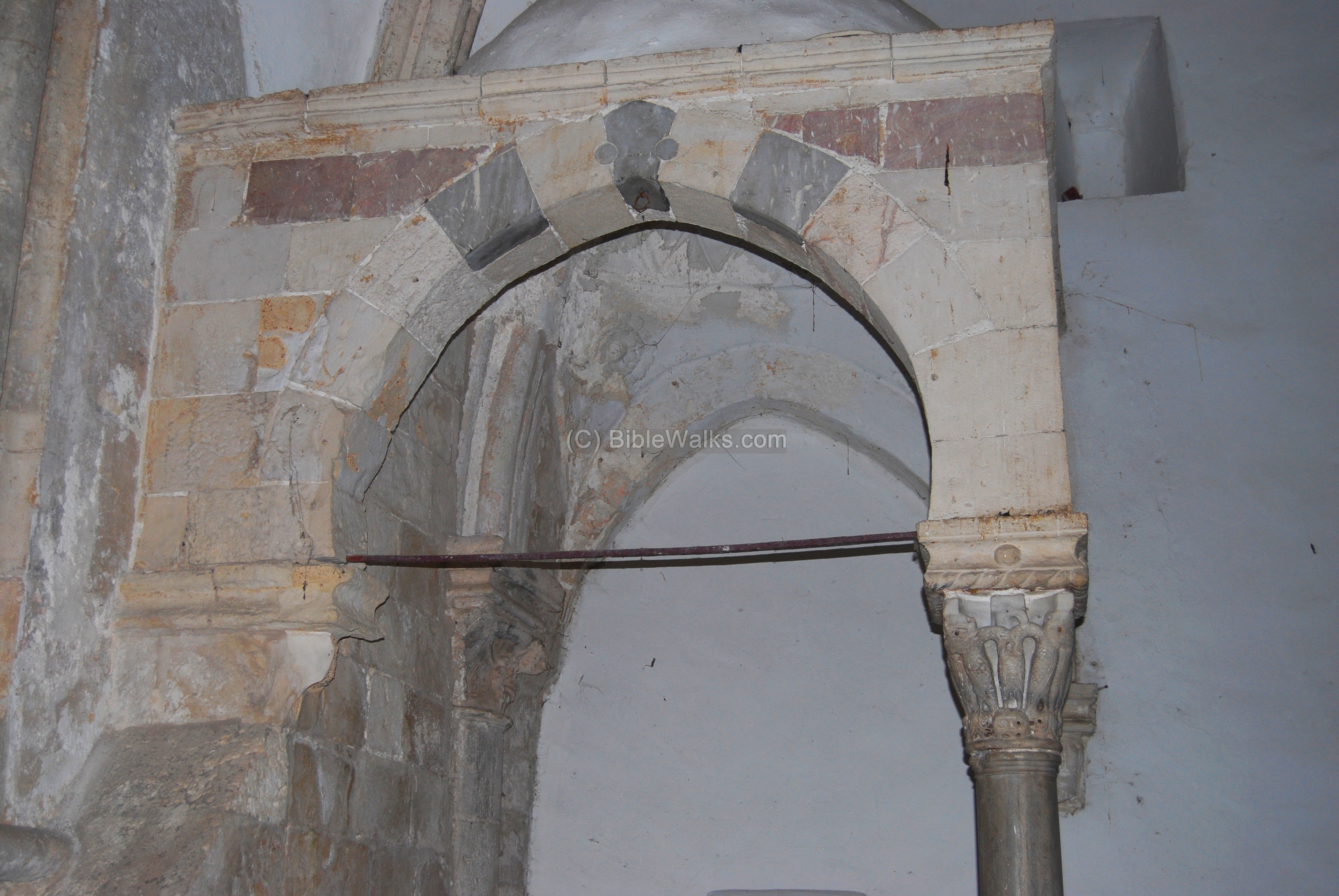
The photo below shows the capitol above the marble column on the right side, with group of three pelicans sculpted into the stone. In this scene is a mother bird with its young birds standing on her left and right; they are picking her heart, eating her flesh and sucking her blood. This symbolizes Jesus and his sacrifice to his disciples, as in Matthew 26:”Take, eat; this is my body…. Drink ye all of it; For this is my blood of the new testament…”.
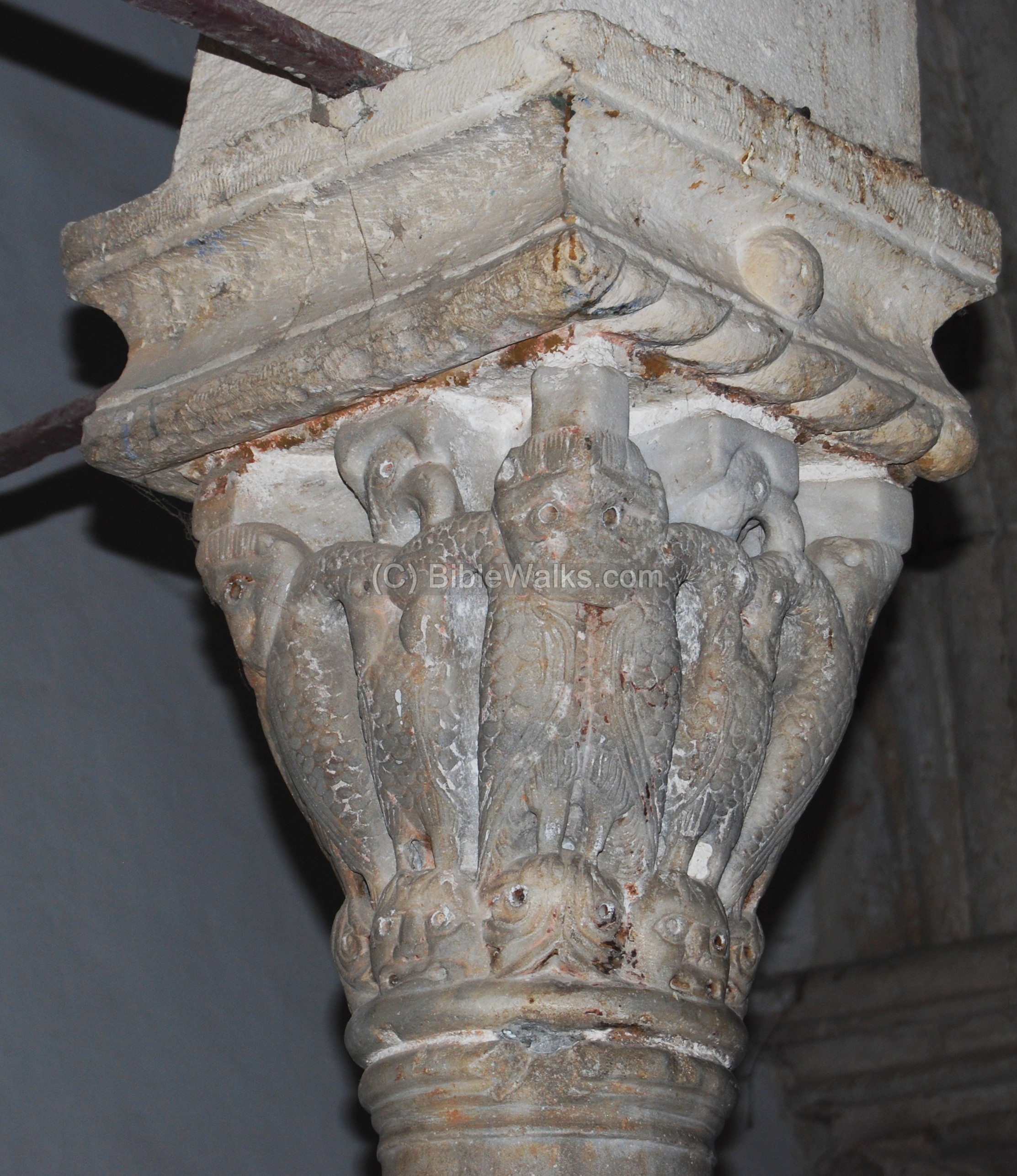
Beneath the dome is a staircase that leads down to the tomb of King David, but this passage is closed.

Mosque inside the hall:
In the 16th century, the Ottomans transformed the structure to a mosque, and replaced its windows with these beautiful vitrages, as seen below. The Arabic text includes verses from the Koran, including a praise to King David (whom Islam regards also as a prophet).

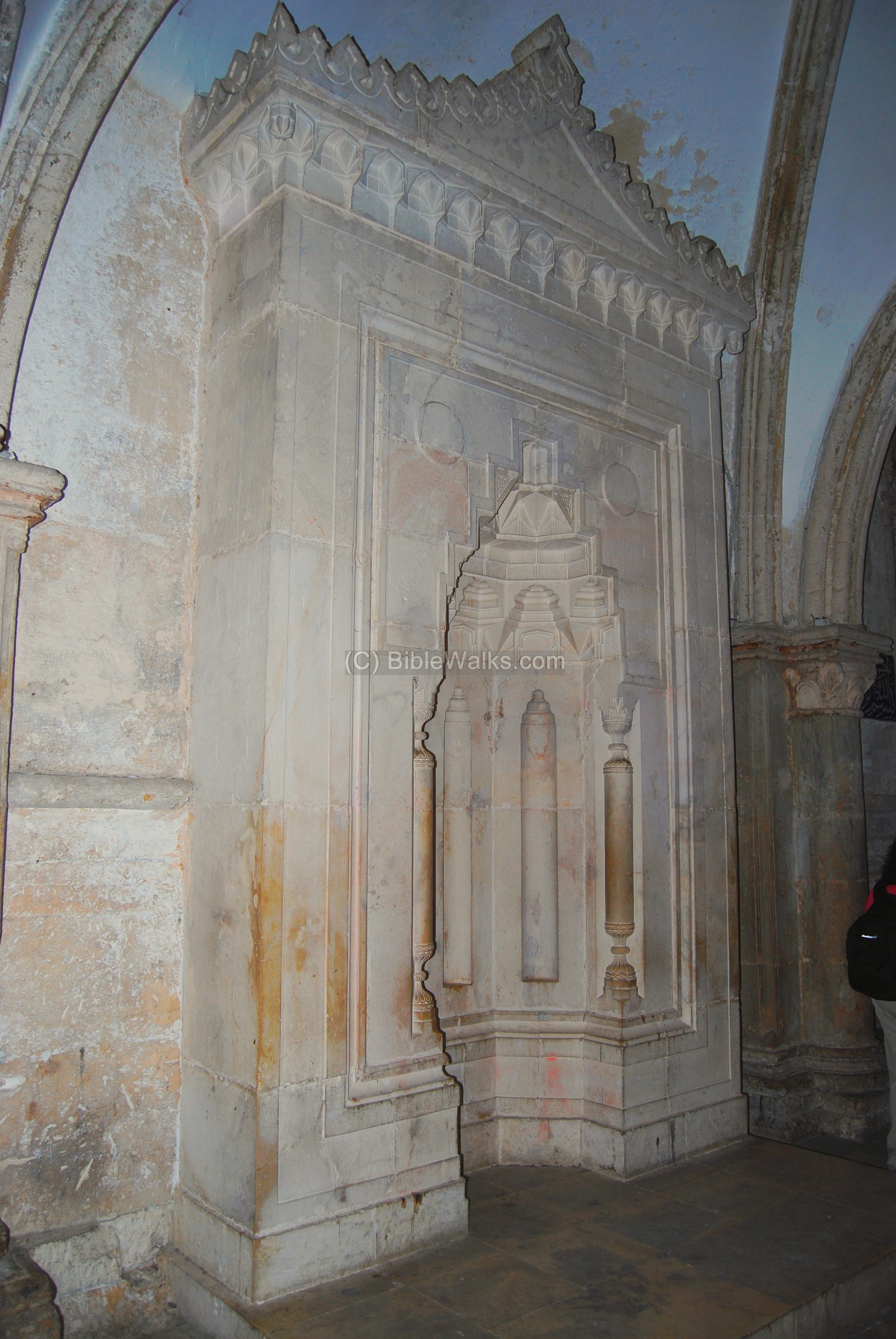
A prayer niche – Mihrab – is embedded on the south wall, directed towards the Islam Holy cities of Mecca and Medina.
Biblical References:
(a) Mark 14:12-26
The Last supper was held, according to tradition, in the upper floor above the present location of the tomb of David:
“And the first day of unleavened bread, when they killed the passover, his disciples said unto him, Where wilt thou that we go and prepare that thou mayest eat the passover? And he sendeth forth two of his disciples, and saith unto them, Go ye into the city, and there shall meet you a man bearing a pitcher of water: follow him. And wheresoever he shall go in, say ye to the goodman of the house, The Master saith, Where is the guestchamber, where I shall eat the passover with my disciples? And he will shew you a large upper room furnished and prepared: there make ready for us. And his disciples went forth, and came into the city, and found as he had said unto them: and they made ready the passover. And in the evening he cometh with the twelve. And as they sat and did eat, Jesus said, Verily I say unto you, One of you which eateth with me shall betray me. And they began to be sorrowful, and to say unto him one by one, Is it I? and another said, Is it I? And he answered and said unto them, It is one of the twelve, that dippeth with me in the dish. The Son of man indeed goeth, as it is written of him: but woe to that man by whom the Son of man is betrayed! good were it for that man if he had never been born.
And as they did eat, Jesus took bread, and blessed, and brake it, and gave to them, and said, Take, eat: this is my body. And he took the cup, and when he had given thanks, he gave it to them: and they all drank of it. And he said unto them, This is my blood of the new testament, which is shed for many. Verily I say unto you, I will drink no more of the fruit of the vine, until that day that I drink it new in the kingdom of God. And when they had sung an hymn, they went out into the mount of Olives”.
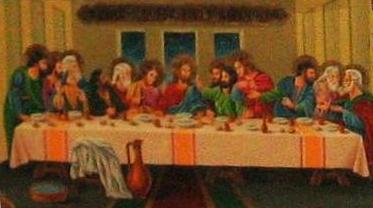
Last supper -a painting in Mary’s tomb
(b) Matthew 26: 17-30
A parallel text from Matthew:
“Now the first day of the feast of unleavened bread the disciples came to Jesus, saying unto him, Where wilt thou that we prepare for thee to eat the passover? And he said, Go into the city to such a man, and say unto him, The Master saith, My time is at hand; I will keep the passover at thy house with my disciples. And the disciples did as Jesus had appointed them; and they made ready the passover. Now when the even was come, he sat down with the twelve.
And as they did eat, he said, Verily I say unto you, that one of you shall betray me. And they were exceeding sorrowful, and began every one of them to say unto him, Lord, is it I? And he answered and said, He that dippeth his hand with me in the dish, the same shall betray me. The Son of man goeth as it is written of him: but woe unto that man by whom the Son of man is betrayed! it had been good for that man if he had not been born. Then Judas, which betrayed him, answered and said, Master, is it I? He said unto him, Thou hast said. And as they were eating, Jesus took bread, and blessed it, and brake it, and gave it to the disciples, and said, Take, eat; this is my body. And he took the cup, and gave thanks, and gave it to them, saying, Drink ye all of it; For this is my blood of the new testament, which is shed for many for the remission of sins. But I say unto you, I will not drink henceforth of this fruit of the vine, until that day when I drink it new with you in my Father’s kingdom. And when they had sung an hymn, they went out into the mount of Olives”.
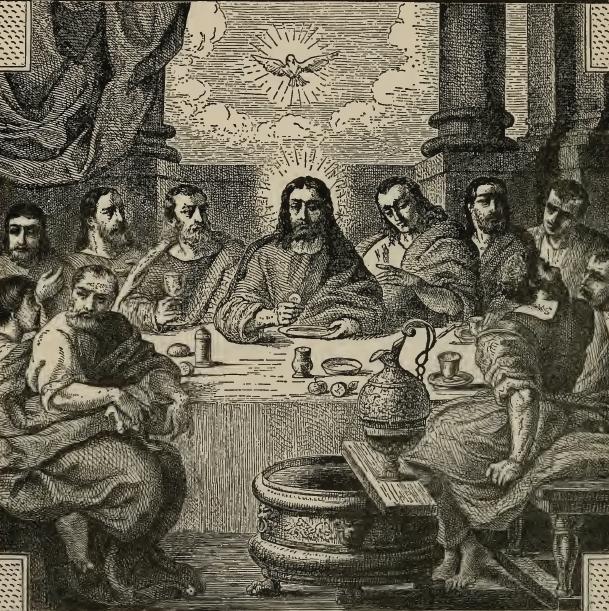
Painting by de Cespedes
(c) Acts 2:1-4, 29
According to tradition this is the site where The Holy Ghost descended on Pentecost:
“And when the day of Pentecost was fully come, they were all with one accord in one place. And suddenly there came a sound from heaven as of a rushing mighty wind, and it filled all the house where they were sitting. And there appeared unto them cloven tongues like as of fire, and it sat upon each of them. And they were all filled with the Holy Ghost, and began to speak with other tongues, as the Spirit gave them utterance”.
The Tomb of David is referred in this chapter, by Apostle Peter, who also spoke the Pentecost sermon:“Men and brethren, let me freely speak unto you of the patriarch David, that he is both dead and buried, and his sepulchre is with us unto this day”.
Links:
- Church of the Apostles – marks the site of Peter’s Pentecost sermon
- Turkish inscriptions in Jerusalem (pdf)
- Jesus-walks – the pictorial presentation of the life of Jesus. The last supper event is #96.
Etymology (behind the name):
- Coenaculum, Cenaculum – In Latin: dining room, derived from Coena – “supper” or “dinner”. In Rome this referred to a small, informal, dining room. As in the Biblical text, the room was located at the upper floor.
- Cenacle – same – in French
BibleWalks.com – walk with us through the sites of the Holy Land
David’s Tomb <—previous Jerusalem site–<<< All Sites >>>—> Armenian Church, Mt Zion
This page was last updated on Mar 19, 2023 (new overview)
Sponsored links: