
This page summarizes the sites that are reviewed in the area of the old city of Jerusalem.
Home > Sites > Jerusalem > Sites Gallery
Contents:
This page is a sites gallery of the old city of Jerusalem, the Holiest city in the world. On each site below you can:
- read a short summary (above the picture)
- read the biblical reference (below the picture)
- click on the title to get to the review of that site.
- click on the photo to see the picture at full resolution.
For an overview of Jerusalem, click here.
You can also see the list of sites on a map of the region, and use it to navigate among the places.
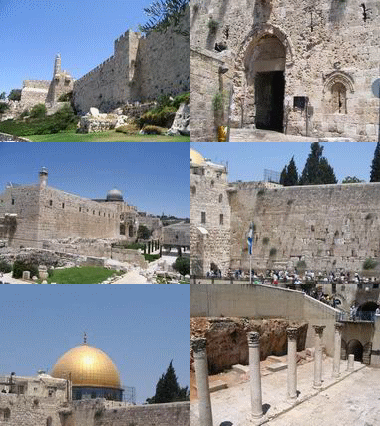
- The temple mount is the place where the Jewish temple was built, starting from King Solomon almost 3,000 years ago. The temple was destroyed by the Romans and never rebuilt again by the Jews. It was replaced by the Muslim shrines in the 8th century AD which stand there today, with the Golden Dome of the Rock – the city’s symbol.
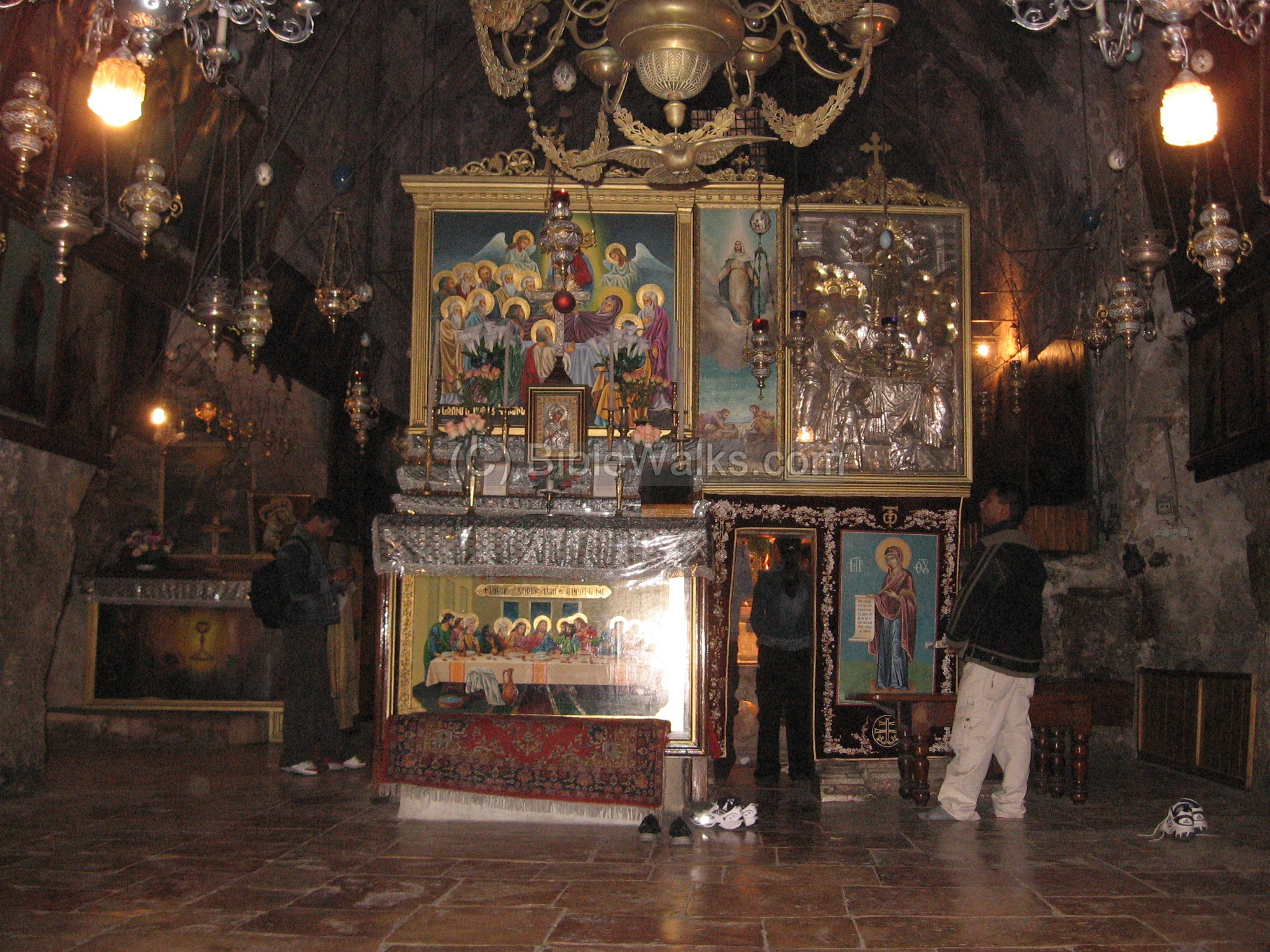
- A church at the traditional place of the tomb of the virgin Mary. The church is cut into the rock and has a form of a cross, with a wide staircase leading down into the church and tomb. The structure is mostly from the Crusaders period.
- Mount of Olives is the hill facing the old city of Jerusalem, on the eastern side of Kidron valley. It is a Holy place, referred in the Old and New Testaments. It is dominated by a large cemetery on its slopes.
- 2 Samuel 15: 30: And David went up by the ascent of mount Olivet, and wept as he went up…”
- The holiest site for the Jewish religion and the heart of the Israeli nation. The wall was part of the great temple of Herod, over 2,000 years ago.
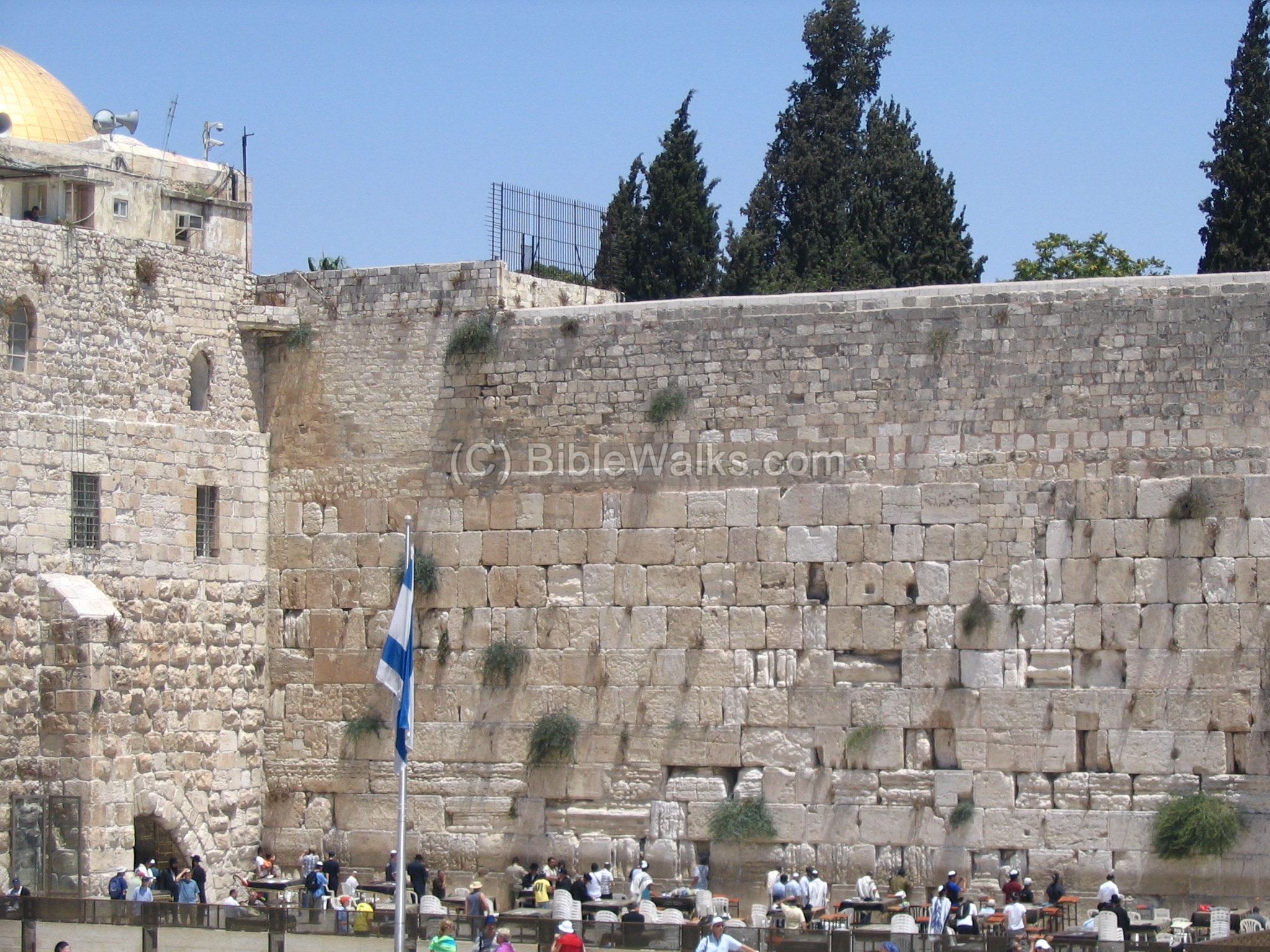
- Song of Solomon 2:9: “My beloved is like a roe or a young hart: behold, he standeth behind our wall, he looketh forth at the windows, shewing himself through the lattice”.
- Tower of David is Jerusalem’s citadel, located near Jaffa gate on the western side of the old city wall. The walls and tower were repeatedly built and destroyed over the past 2,100 years, and protected the north-west corner of the “upper” city.
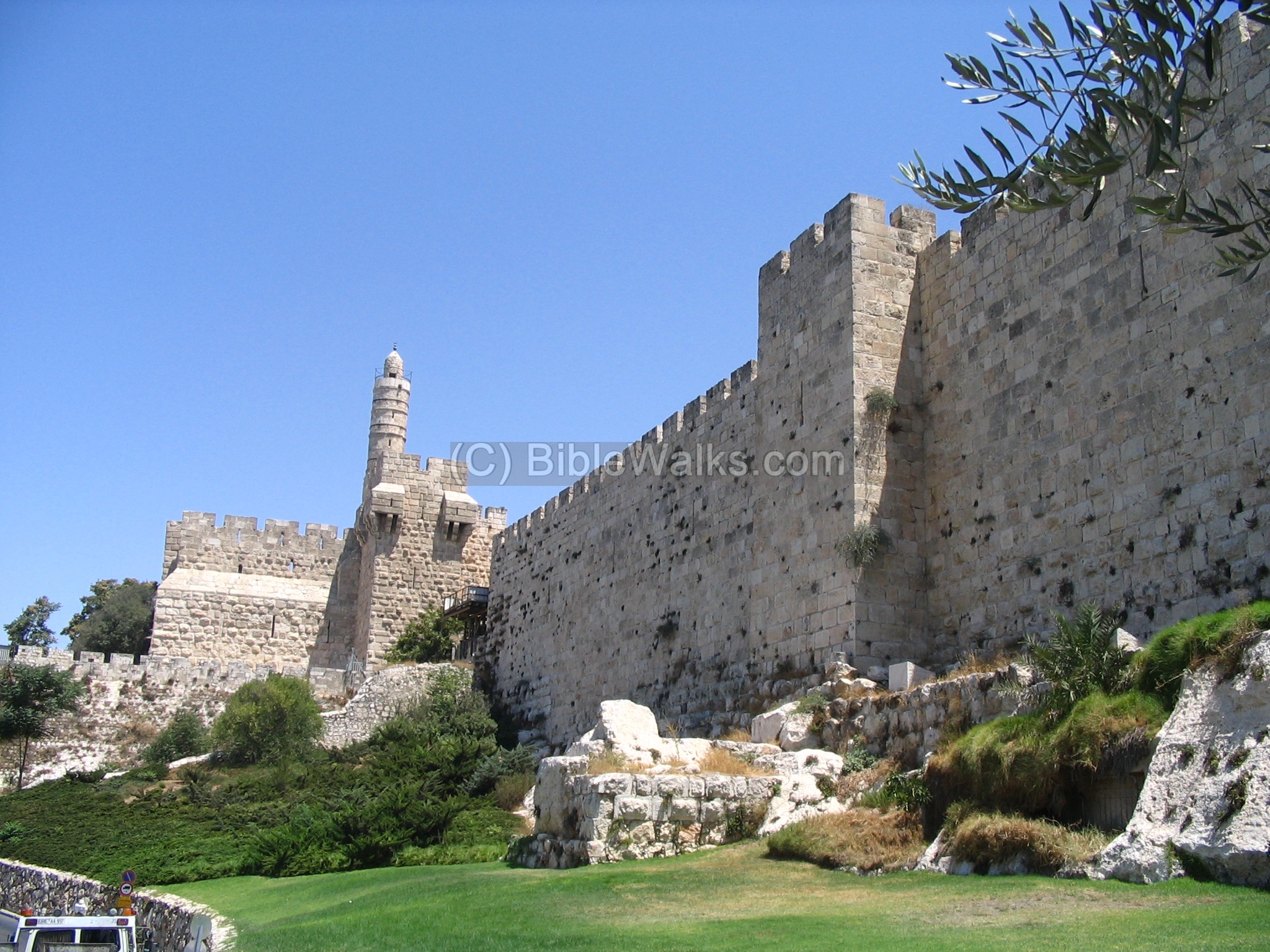
- Psalms 48:12:“Walk about Zion, and go round about her: tell the towers thereof”.
- The gate is located on the south-west side of the old city.
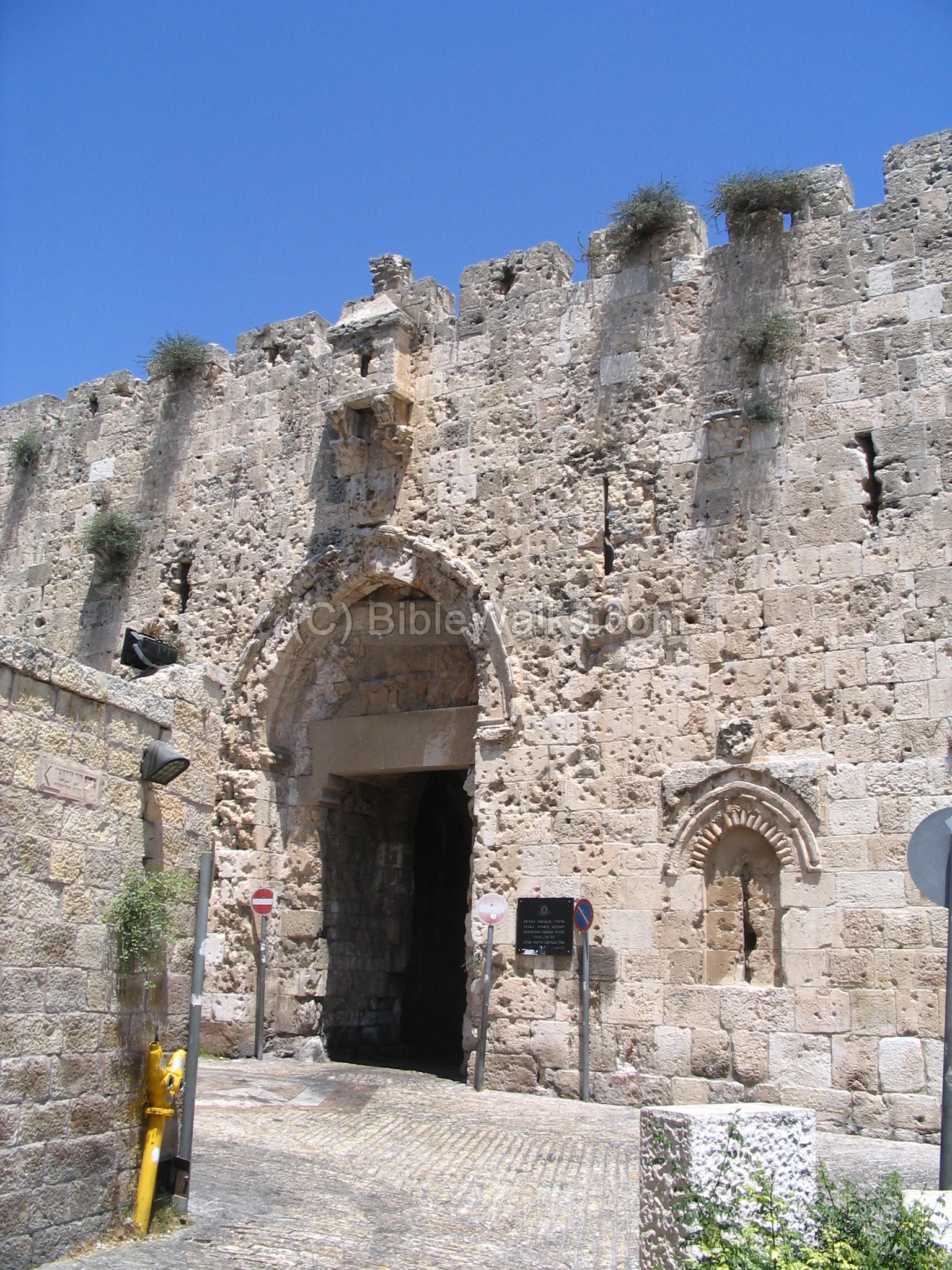
- Psalms 9:14:“That I may shew forth all thy praise in the gates of the daughter of Zion”
- Mount Zion is located on the south-west side of the old city, outside of the present walls. In Greek and Roman times this was part of the walled city, the place of the Jesus last supper and the home of the high priest high priest Caiaphas.
- Psalms 48:2: “Beautiful for situation, the joy of the whole earth, is Mount Zion, on the sides of the north, the city of the great King”.
- Excavations on the south side of the temple mount revealed important Herodian findings, including “Robinson” arch, a paved street, Hulda gates and monumental staircase to the temple.
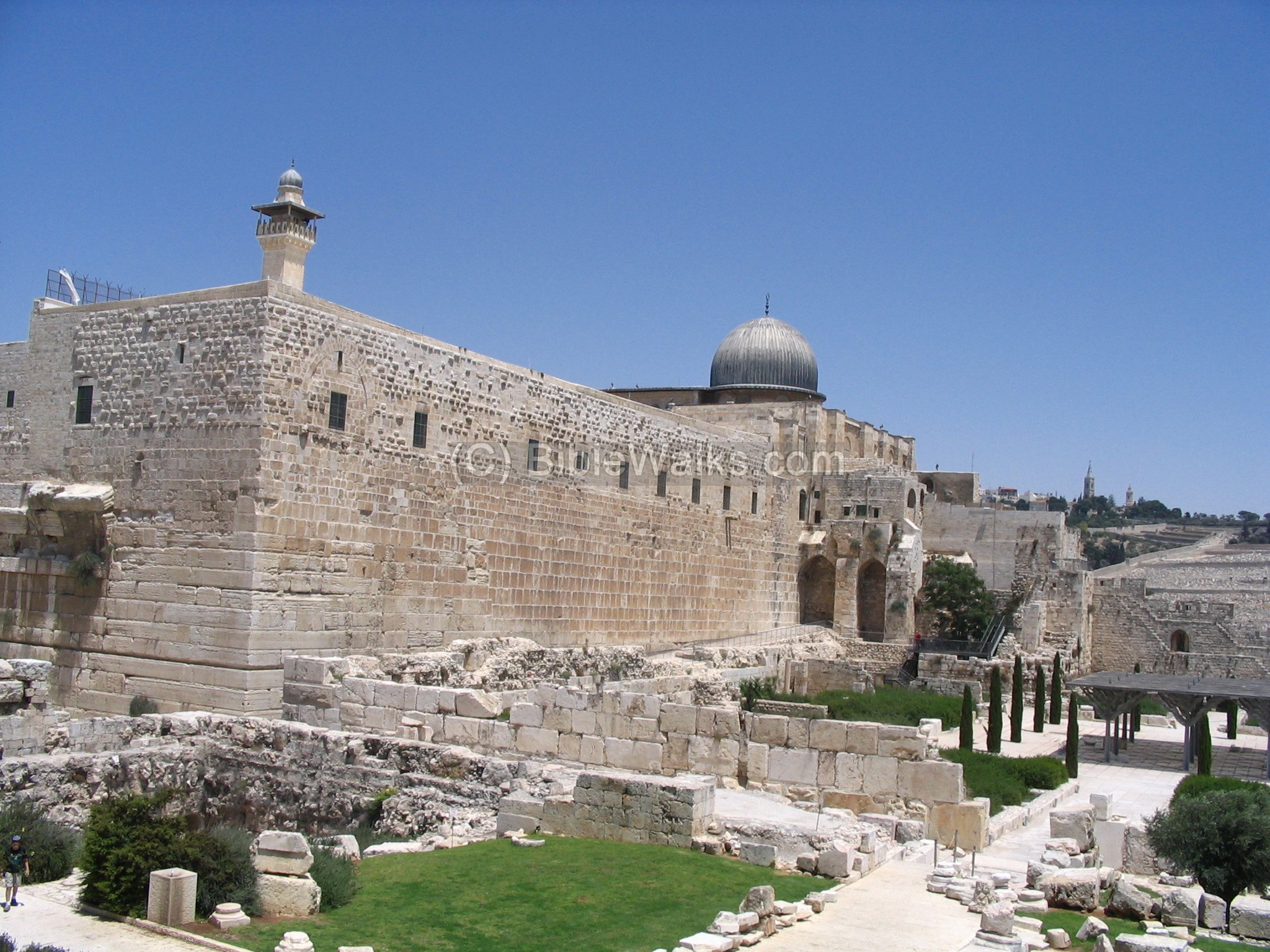
- 1 Kings 2: 10: “So David dwelt in the fort, and called it the city of David. And David built round about from Millo and inward. And David went on, and grew great, and the LORD God of hosts was with him”.
- Cardo maximus (“the main line”) was the main North-South royal road in the Roman and Byzantine Aelia Capetalina (Jerusalem). A small section of this grand and wide road was excavated in the Jewish quarter, which was probably built in the 6th century AD.
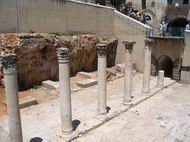
- The road is emphasized in the Madaba map, showing that it played a central role in the urban design of the city.
- A Catholic Franciscan church, built in 1924, and one of the most magnificent churches with a large mosaic picture on the front. This place, Gethsemane, was the site where Jesus and his disciples hid from the Romans, had his last prayer, but was betrayed and arrested.
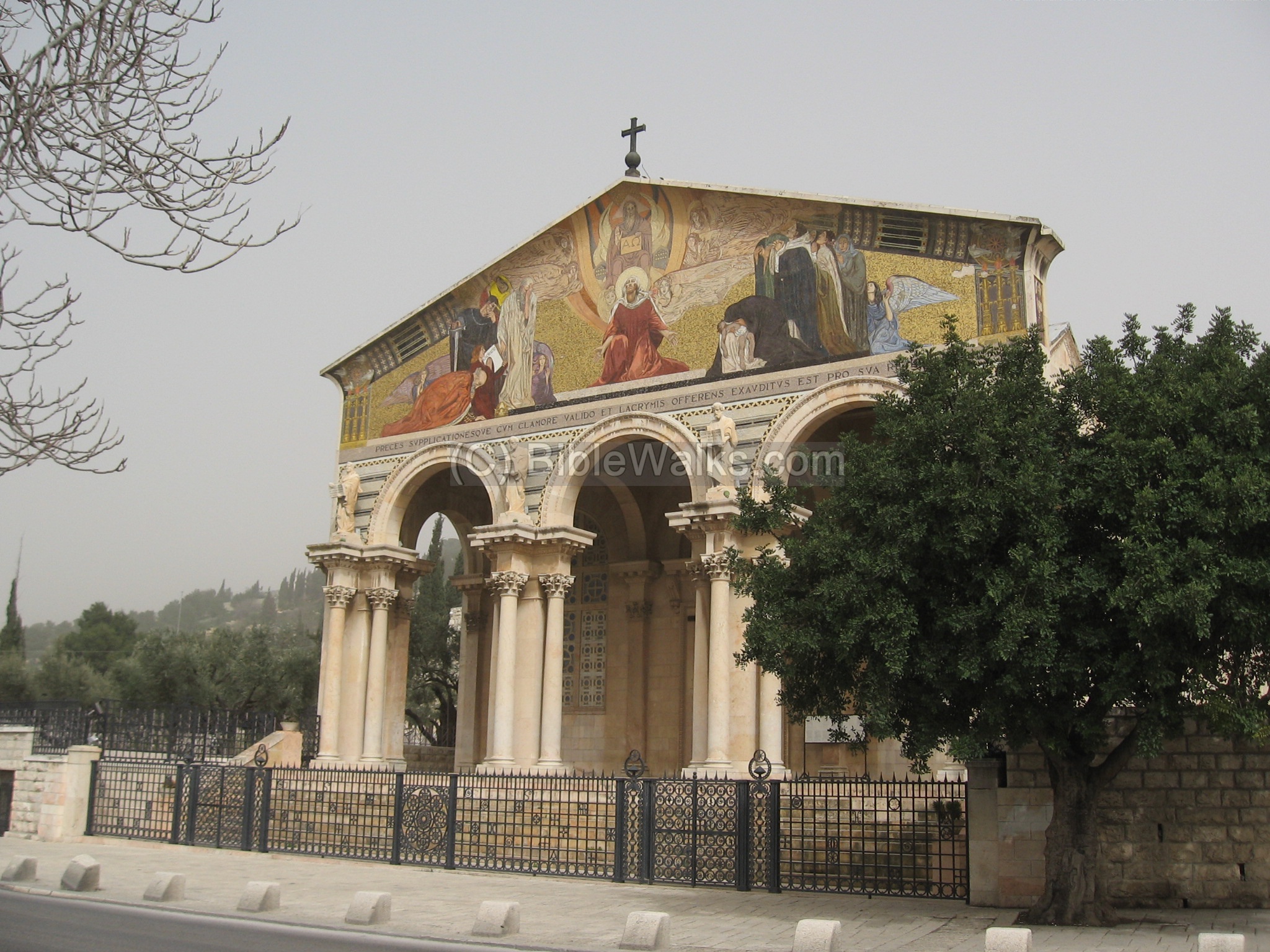
- Mark 14: 32: “And they came to a place which was named Gethsemane: and he saith to his disciples, Sit ye here, while I shall pray”.
- This grand monument is built into the rock on the foothills of Mount of Olives. The bible tells us that this is the tomb of Avshalom (Absalom), son of David, who was killed by David’s men after a failed mutiny.

- 2 Samuel 18:18: “…and he called the pillar after his own name: and it is called unto this day, Absalom’s place”
- This grand monument is built into the rock on the foothills of Mount of Olives. According to tradition it is the tomb of the prophet Zechariah.
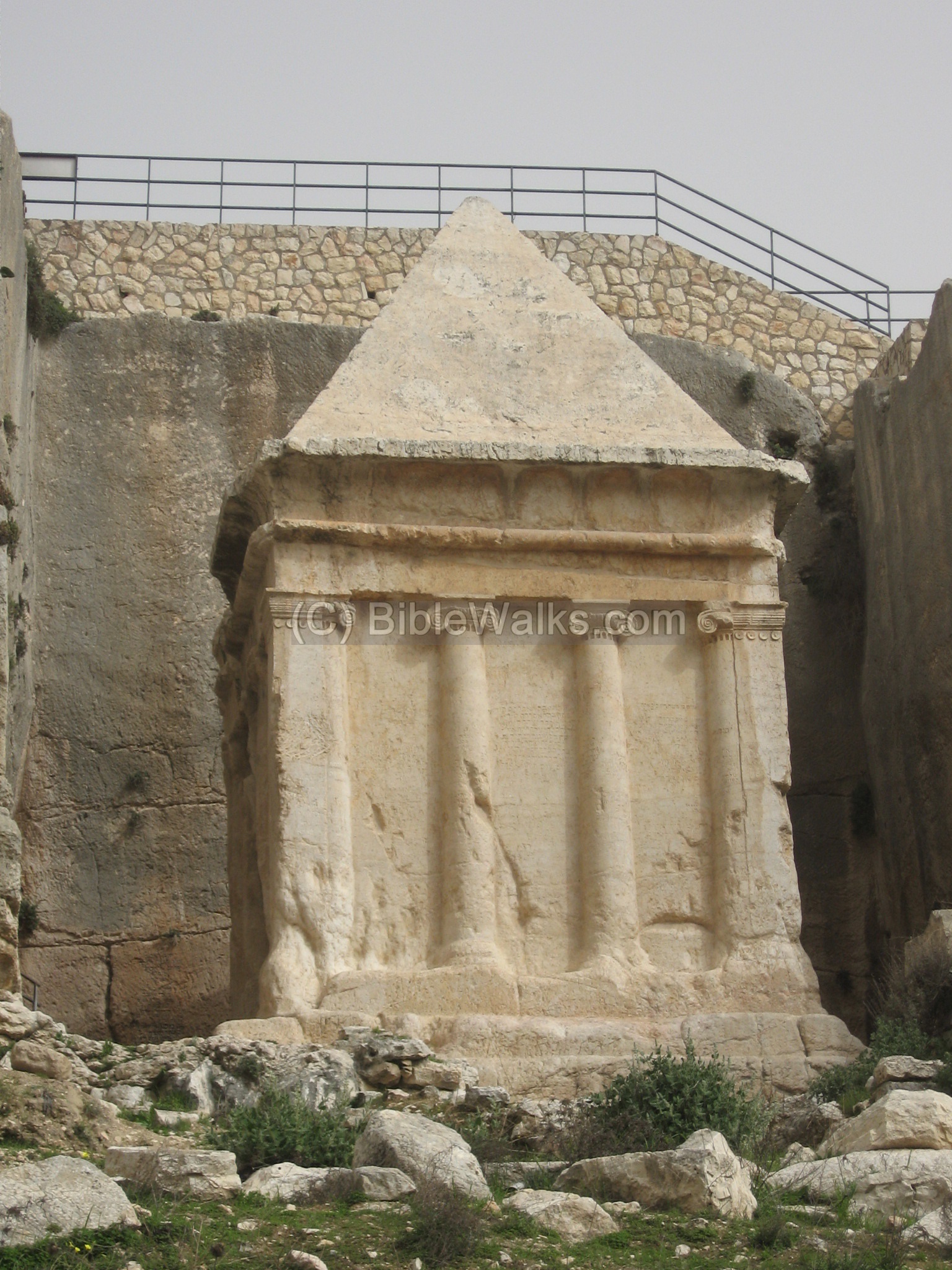
- Zechariah 1: 1-2: “In the eighth month, in the second year of Darius, came the word of the LORD unto Zechariah, the son of Berechiah, the son of Iddo the prophet, saying, The LORD hath been sore displeased with your fathers”.
- A cluster of tombs built into the rock on the foothills of Mount of Olives, resting place of the Cohen family of Bnei-Hezir.

- Nehemiah 9: 38 ; 10: 21: “And because of all this we make a sure covenant, and write it; and our princes, Levites, and priests, seal unto it….Magpiash, Meshullam, Hezir,”
- The fabulous Saint Peter in-Gallicantu Church is built in the slopes of mount Zion. According to tradition, this was the place of the palace of high priest Caiaphas. Its name is given after the story of Peter’s triple denial of Christ and the cock crowing twice.

- Mark 14: 72: “And the second time the cock crew. And Peter called to mind the word that Jesus said unto him, Before the cock crow twice, thou shalt deny me thrice. And when he thought thereon, he wept”.
- The south-east side of the temple mount. Excavations revealed the Hulda gates, monumental staircase to the temple, cisterns, residential houses and fortifications.
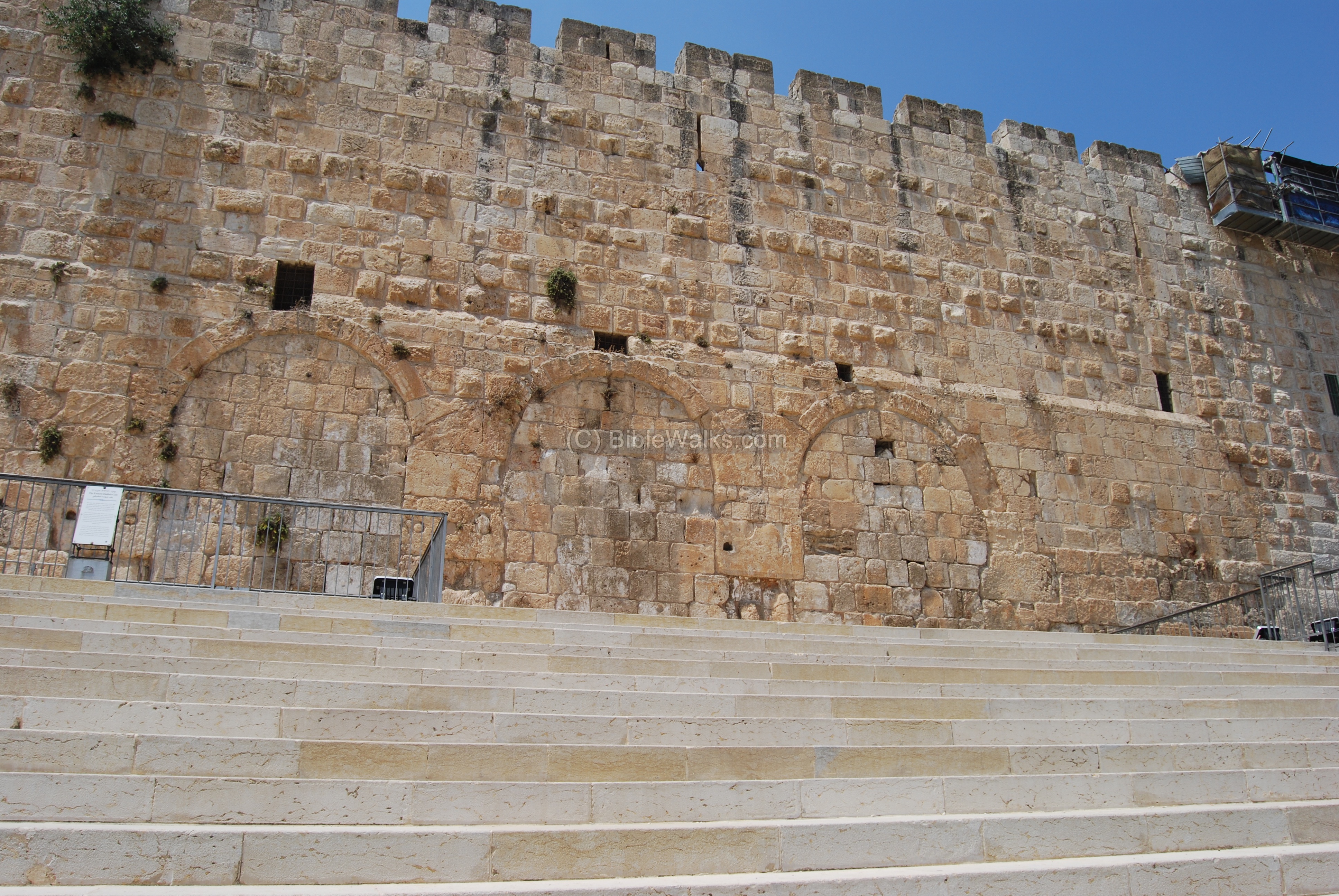
- 2 Chronicles 27:3: “He built the high gate of the house of the LORD, and on the wall of Ophel he built much”.
- Via Dolorosa (“Way of Grief” in Latin) is a road in the old city of Jerusalem, a path where Jesus was lead in agony, carrying the crucifixion cross. There are a total of 14 stations along this path.
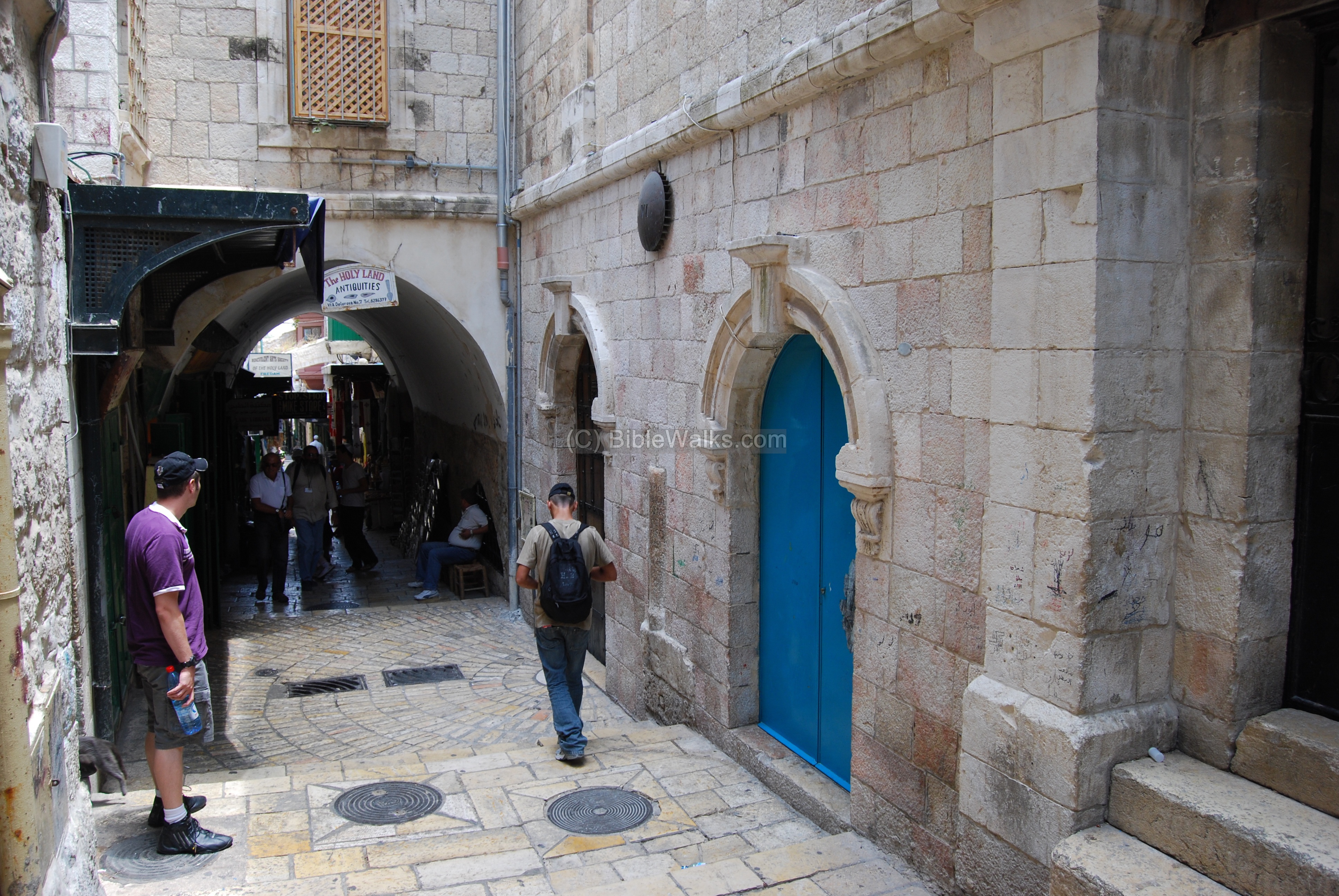
- Luke 23, 26: “And as they led him away…”
- One of the most holiest churches, located in Jerusalem at the traditional site of Golgotha – the place of Jesus Crucifixion and burial.
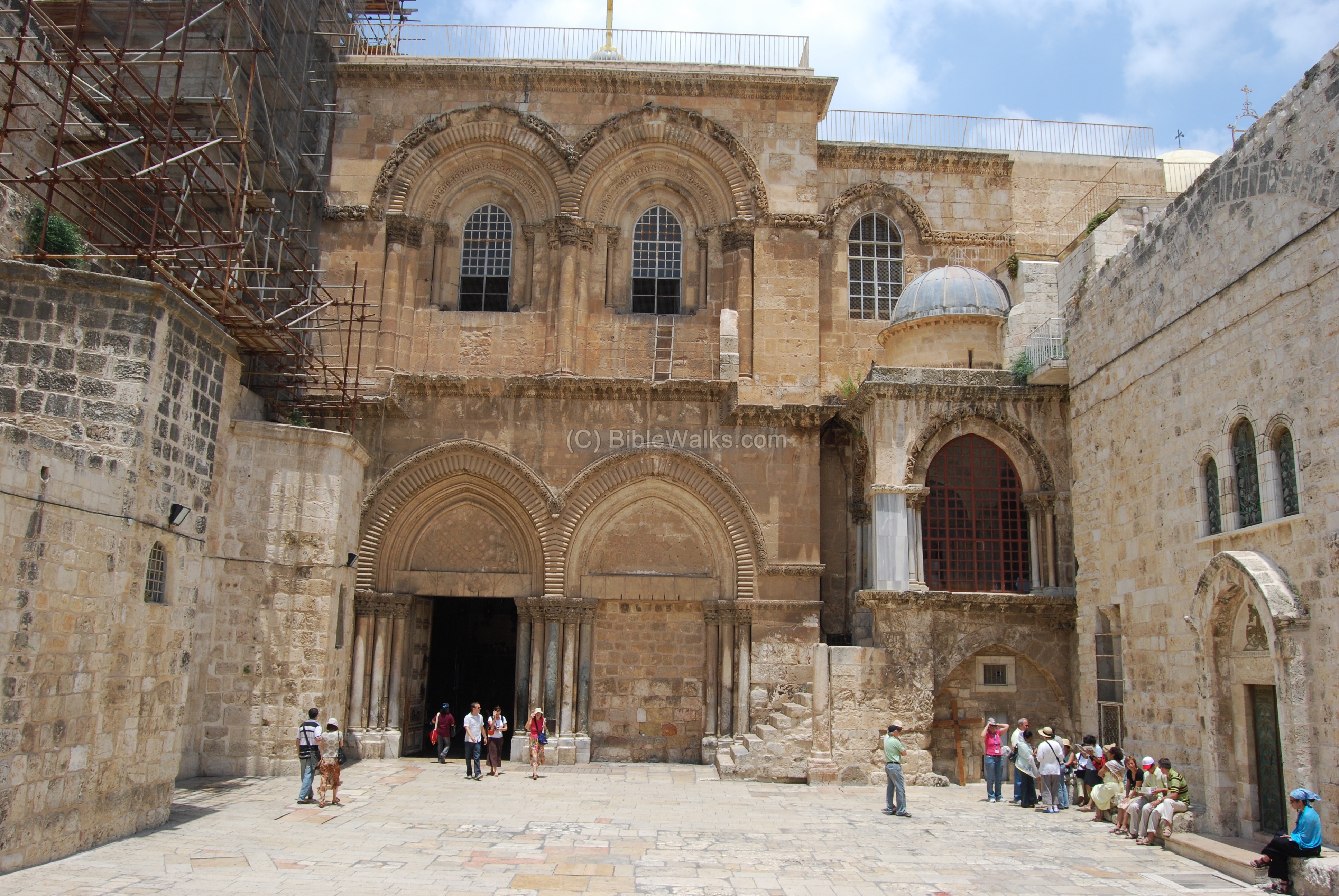
- Matthew 27: 33, 60: “And when they were come unto a place called Golgotha….And laid it in his own new tomb, which he had hewn out in the rock: and he rolled a great stone to the door of the sepulchre, and departed”
- The burnt house was excavated in the Jewish quarter, and is believed to be destroyed, set on fire, by the Roman legions in 70AD. An audio-visual presentation and the display serve as a time capsule of these tragic events.
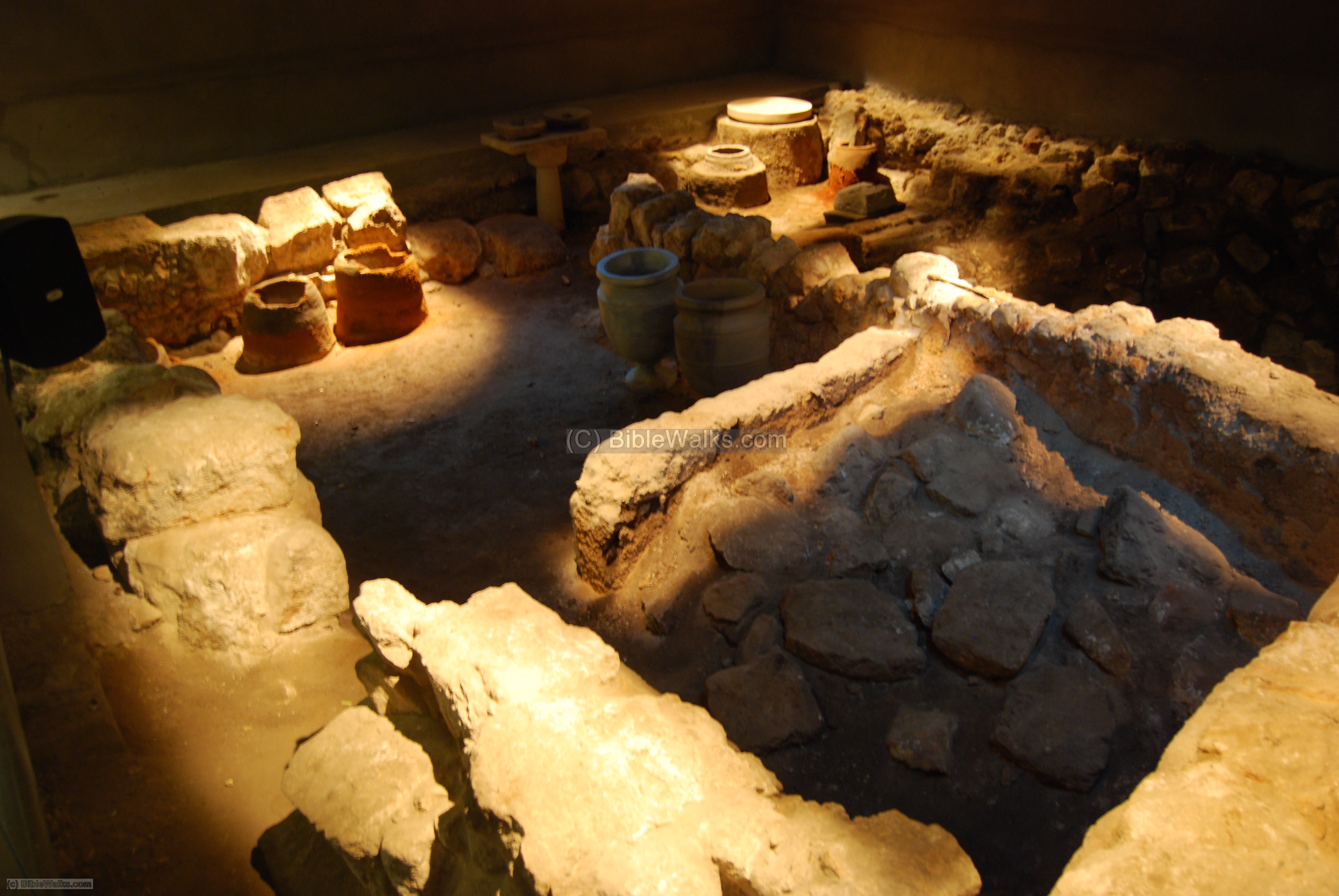
- Josephus Flavius, War VI 8 5: “… set fire to the houses whither the Jews were fled, and burnt every soul in them, and laid waste a great many of the rest;”
- Excavations in the Jewish quarter in the old city of Jerusalem unearthed a section of the 1st temple wall, built by Hezekiah, during the 8th century BC.
- Nehemiah 3 8; “and they fortified Jerusalem unto the broad wall.”
- Hospital and church (“Evangelical Lutheran Church of the Ascension”) on the north side of Mount of Olives.

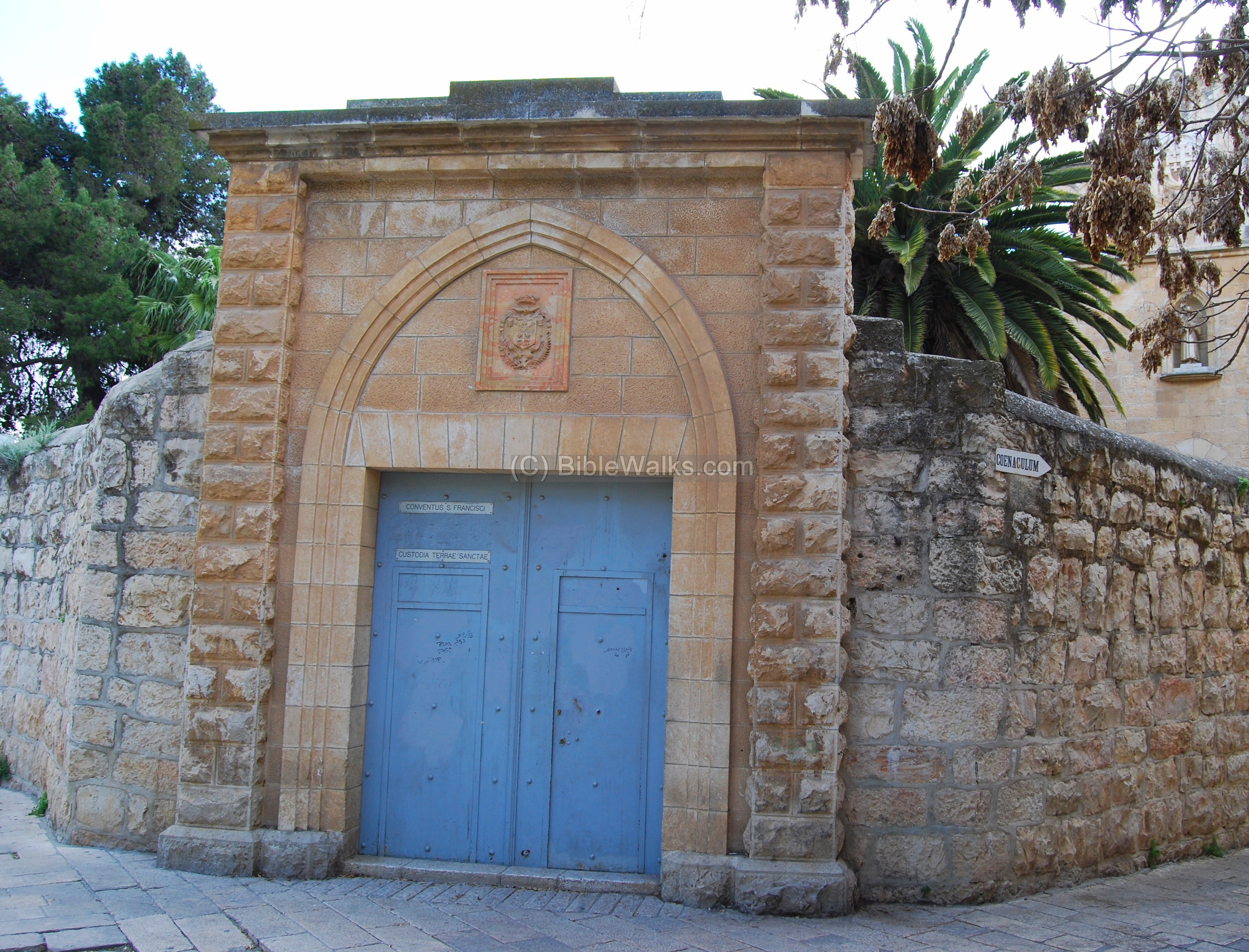
Franciscan “Terra Santa” Monastery, Jerusalem
- St. Francis convent is located on the south side of the Zion Gate, outside the walls of the old city of Jerusalem.
- A grand German Benedictine Abbey located on top of Mount Zion, commemorating the memory of Virgin Mary, in the traditional site of her death.
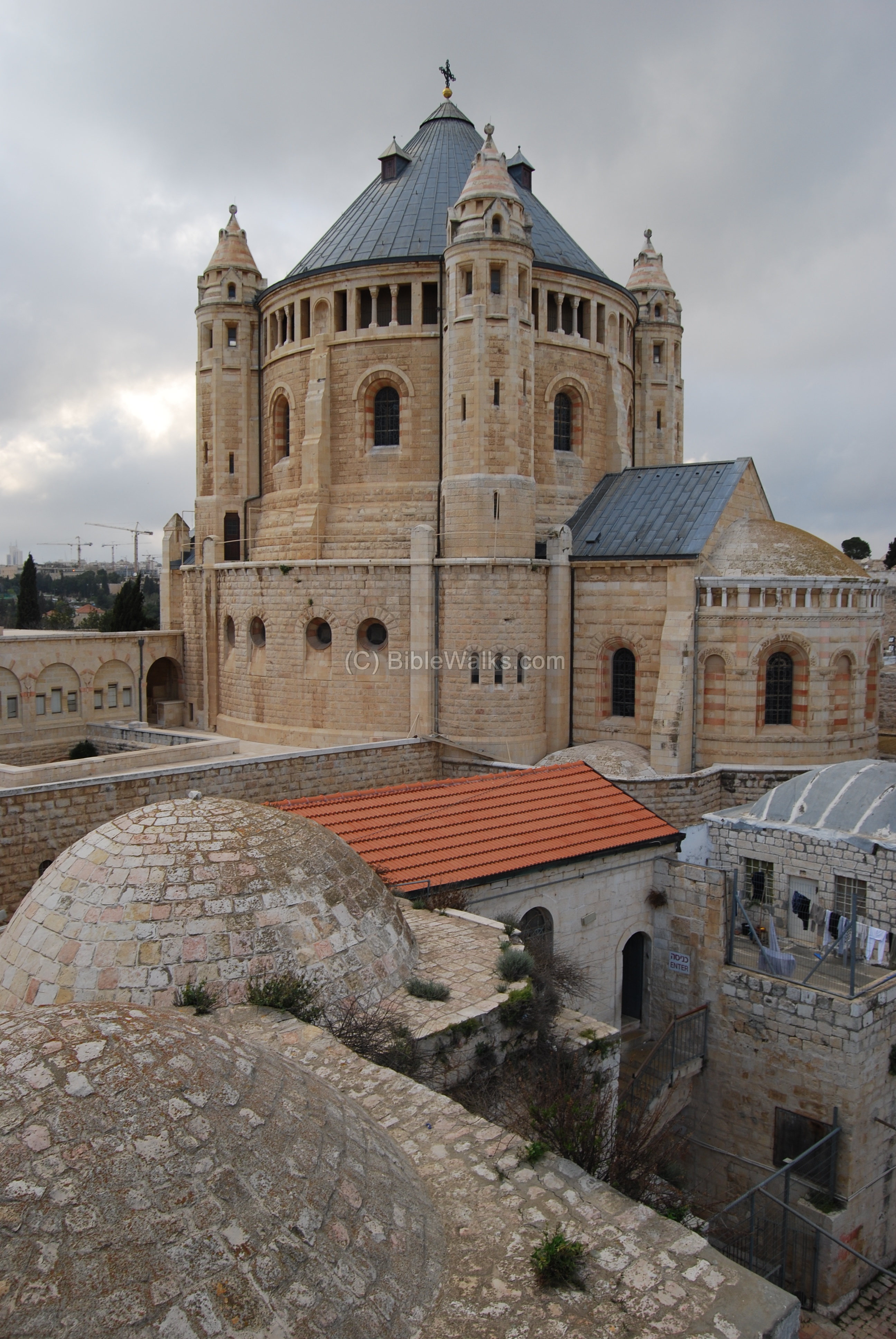
- John 8, 12: “I am the light of the world”
- The site, located on Mount Zion, is the traditional site of the tomb of King David, and one of the most holiest places for Jews, Christians and Muslims. It is one of the few sites in the world that is shared by the 3 religions.

- 1 Kings 2: 9: “So David slept with his fathers, and was buried in the city of David”.
- This place, on Mount Zion, is the traditional site of the the location of the Last Supper (“Coenaculum”). The present day hall is a 12th century Crusader structure, built on top of King David’s tomb.
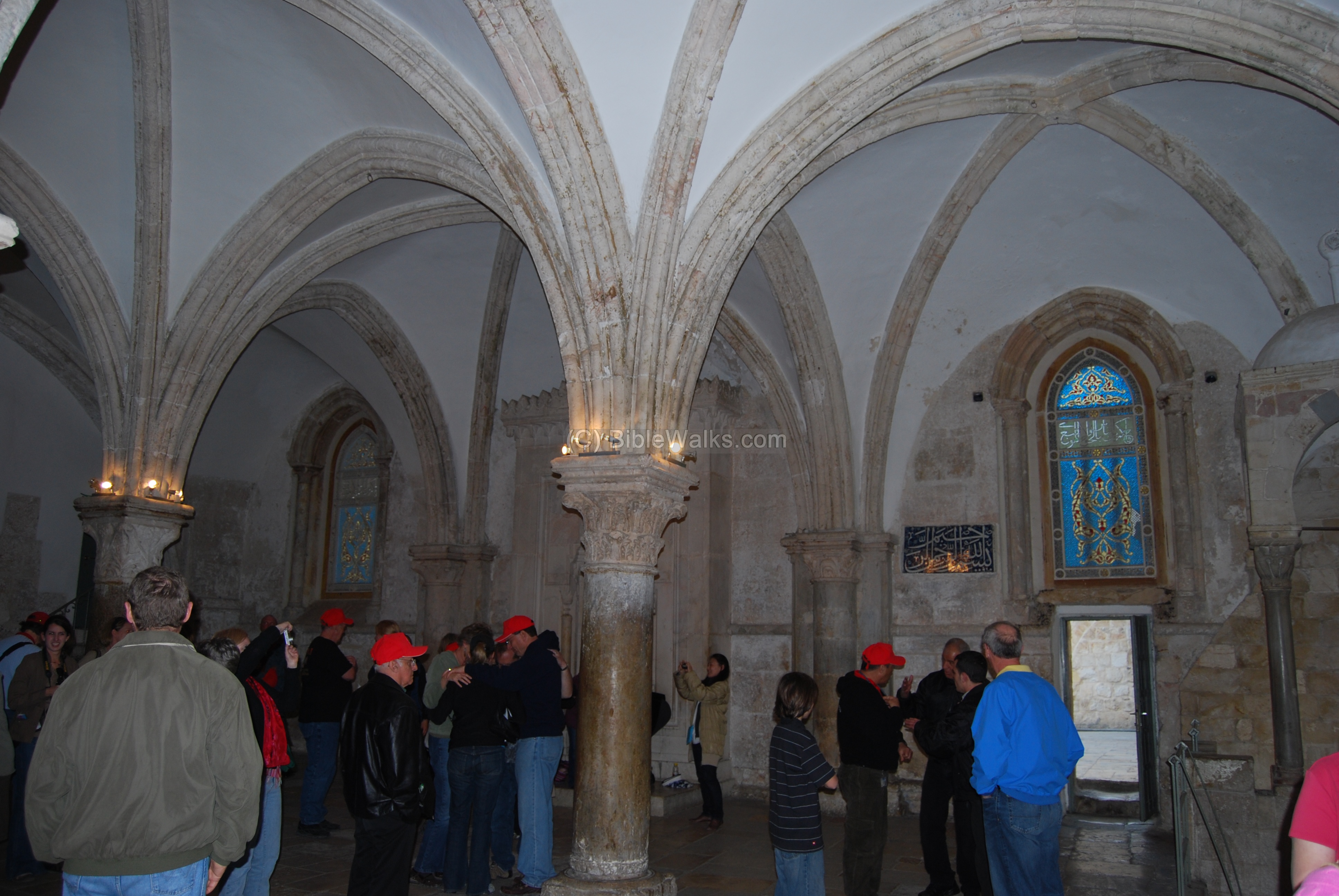
- Mark 15 15: “where I shall eat the Passover with my disciples? And he will shew you a large upper room furnished and prepared”
Armenian Church – St. Saviour – Mount Zion (house of Caiaphas)
- This place, on Mount Zion, is an Armenian Church, convent and cemetery. According to the Armenians, this was the house of Caiaphas, where Jesus was arrested before being trialed.
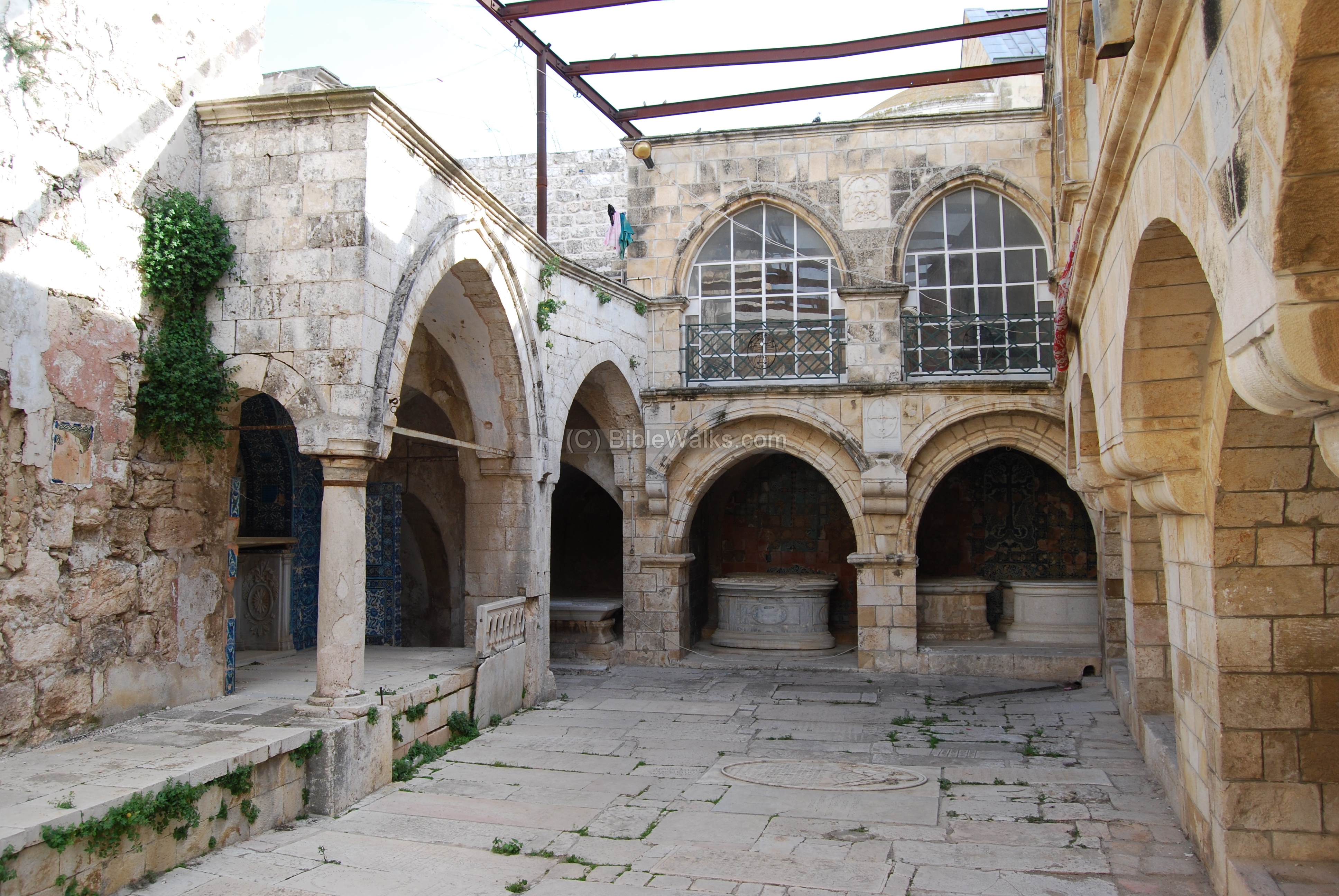
- John 18: 24: “Now Annas had sent him bound unto Caiaphas the high priest”
- A Basilica, monastery, library and structures belonging to the Armenian Patriarchate, located on the western side of the old city. According to tradition, James the apostle was killed here by Herod.
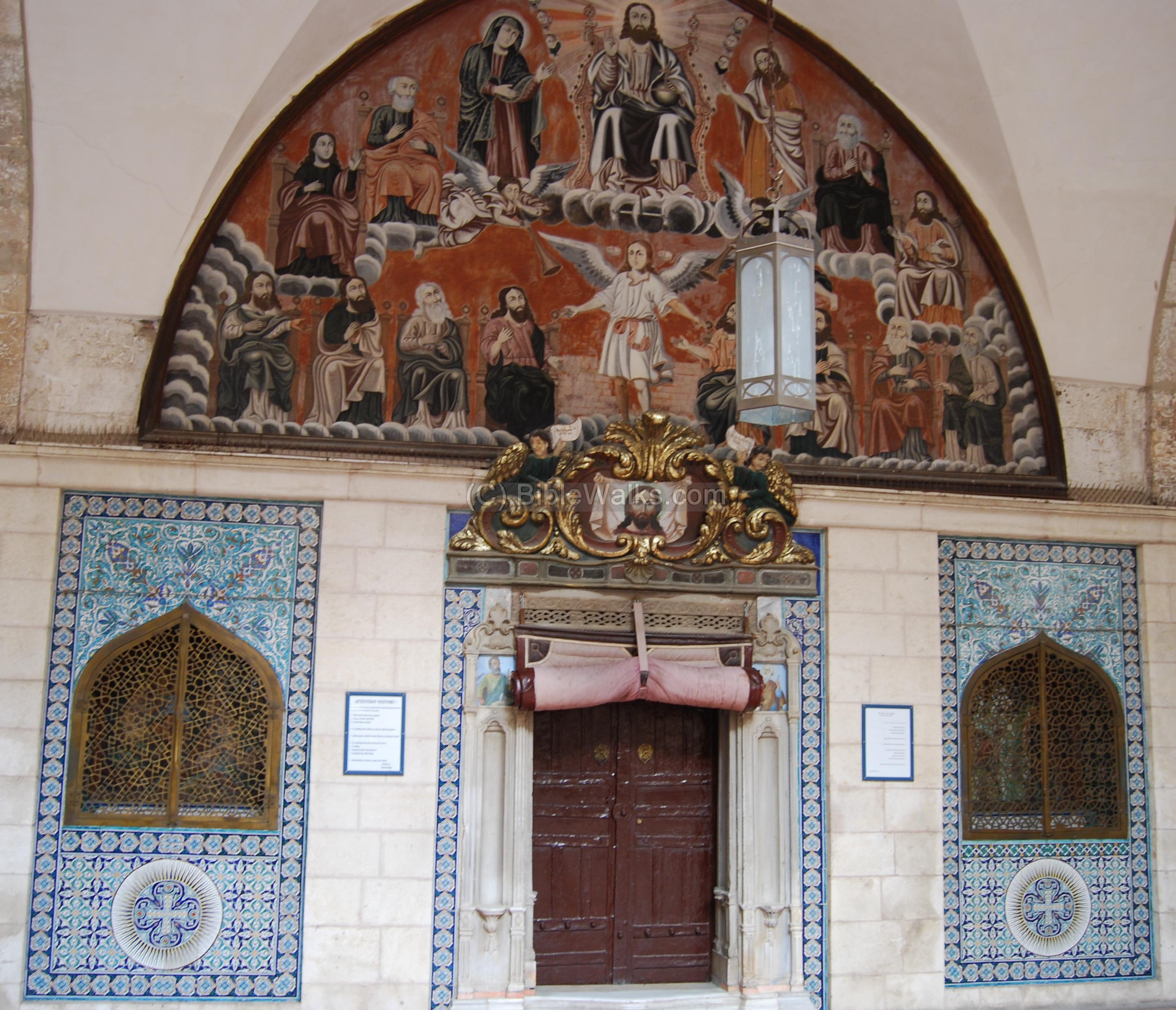
- Acts 12:2: “And he killed James the brother of John with the sword”
St. John the Baptist, Christian quarter
- A Greek-Orthodox church and monastery, located in the Christian quarter. It was built in the 11th C over the ruins of an earlier 5th century Byzantine church, which is located on a lower level.

- John 3:28: “I am not the Christ, but that I am sent before him”.
- Sebil is a Turkish public drinking fountain. There are several such fountains in the city.

- This large and beautiful church is near the Lions gate, and adjacent to the site of the pools of Bethesda. It is one of the few surviving large structures from the Crusaders period.
- Ruins of twin pools, healing center, Byzantine basilica and Crusader chapel located near St. Anna. The site of Jesus’ healing miracle, referred as the sheep market pools.
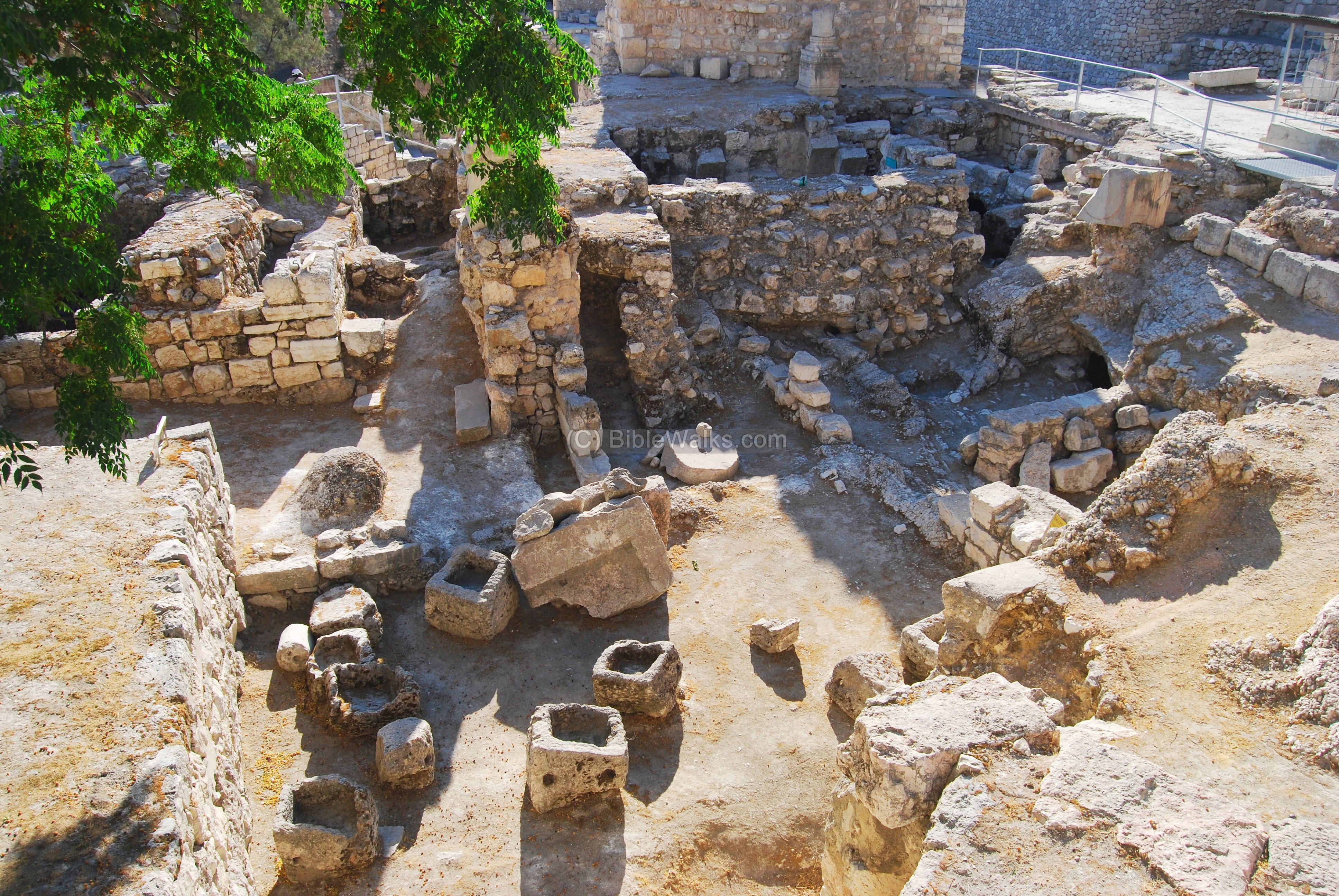
- John 5:2: “Now there is at Jerusalem by the sheep market a pool, which is called in the Hebrew tongue Bethesda, having five porches”.
- An octagon chapel on Mt Olives, built over ancient structures. According to tradition, this sacred site is where Jesus ascended to heaven 40 days after resurrection.
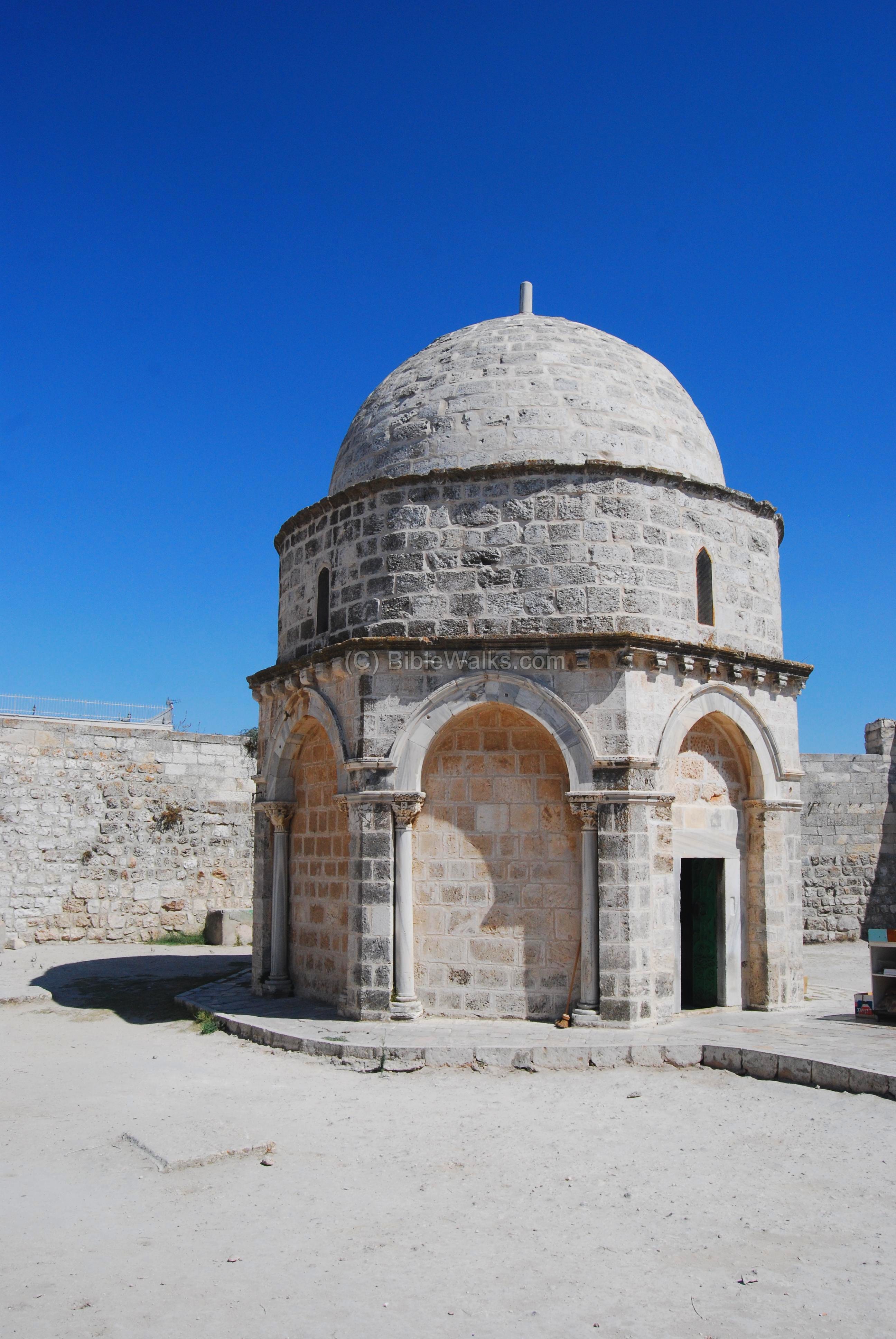
- Luke 24 51: “And it came to pass, while he blessed them, he was parted from them, and carried up into heaven”.
- According to the Russian Orthodox tradition, this sacred site is where Jesus ascended to heaven 40 days after resurrection. Another tradition marks the site where the head of John the Baptist was found.
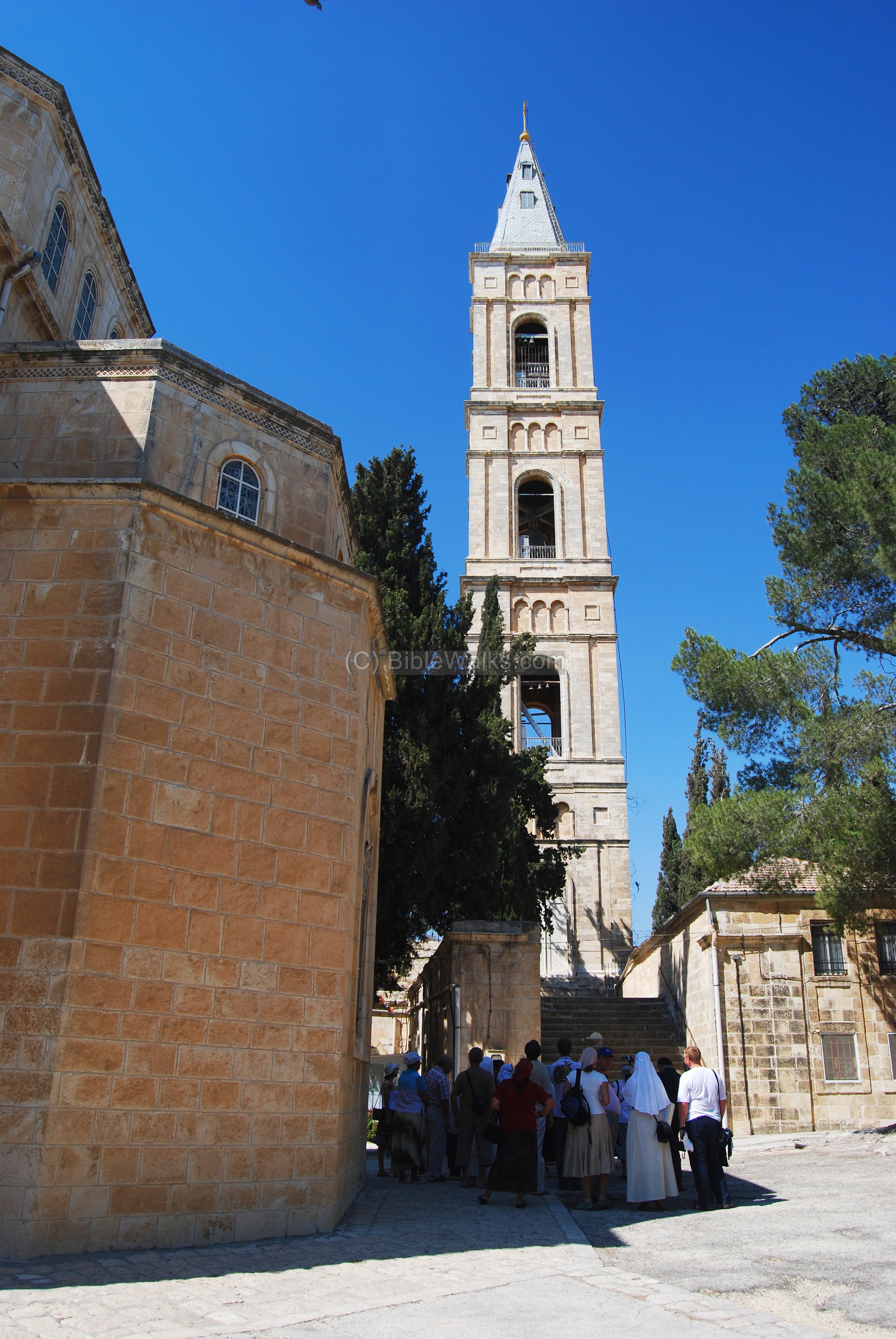
- Acts 1:9: “And when he had spoken these things, while they beheld, he was taken up.”
- The convent is located at the site of the ruins of the Byzantine Eleona Basilica, which was built over a cave where according to tradition was the place where Jesus hid with his disciples and taught the “Our Father” (Pater Noster) prayer.
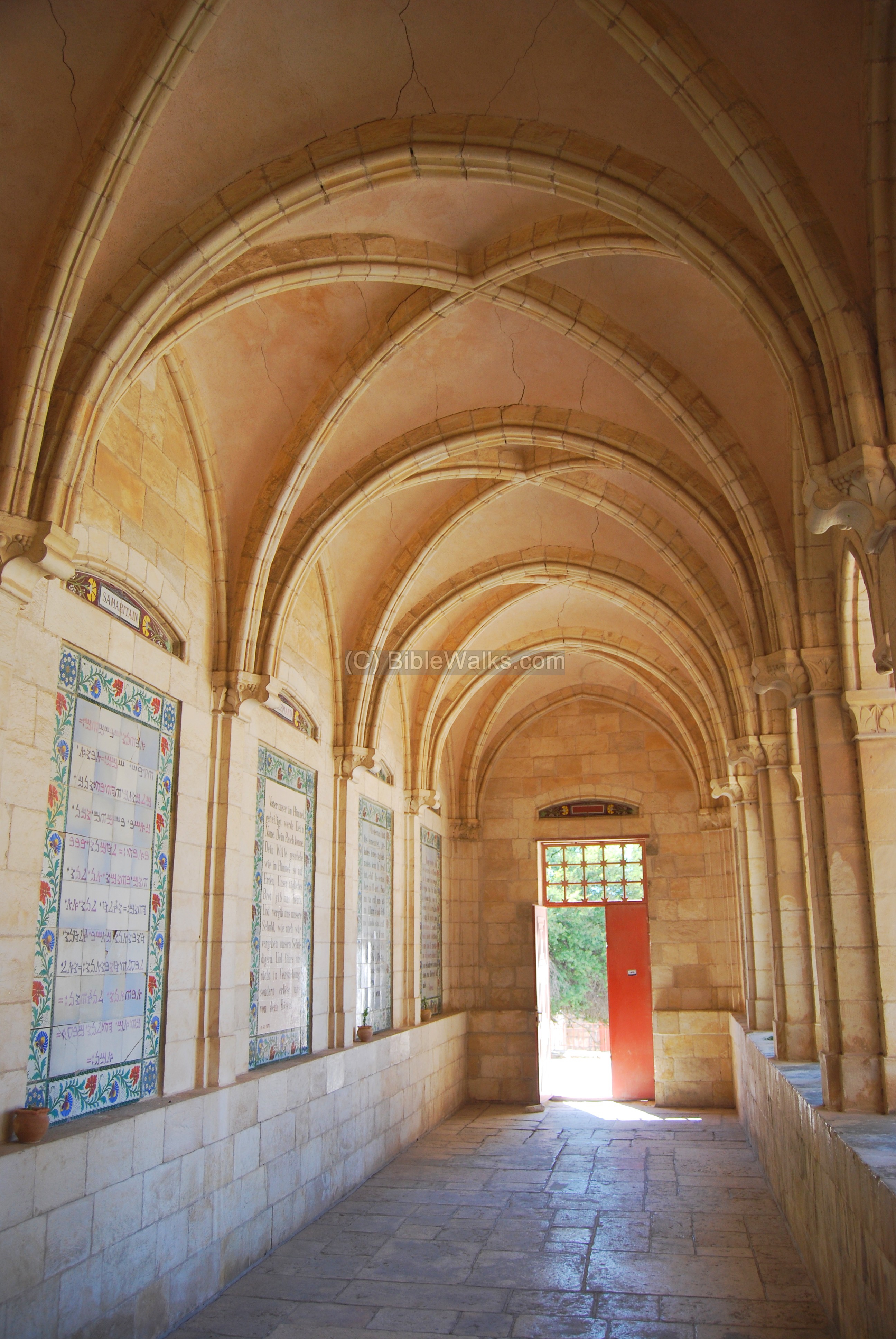
- Luke 11: 2: “And he said unto them, When ye pray, say, Our Father which art in heaven, Hallowed be thy name”.
- The gate is located on the east side of the old city, leading to the temple, and regarded as the Holiest gate for all faiths. The gate was built in the 6th/7th century AD over the ruins of an ancient gate, and was sealed since the 16th century.
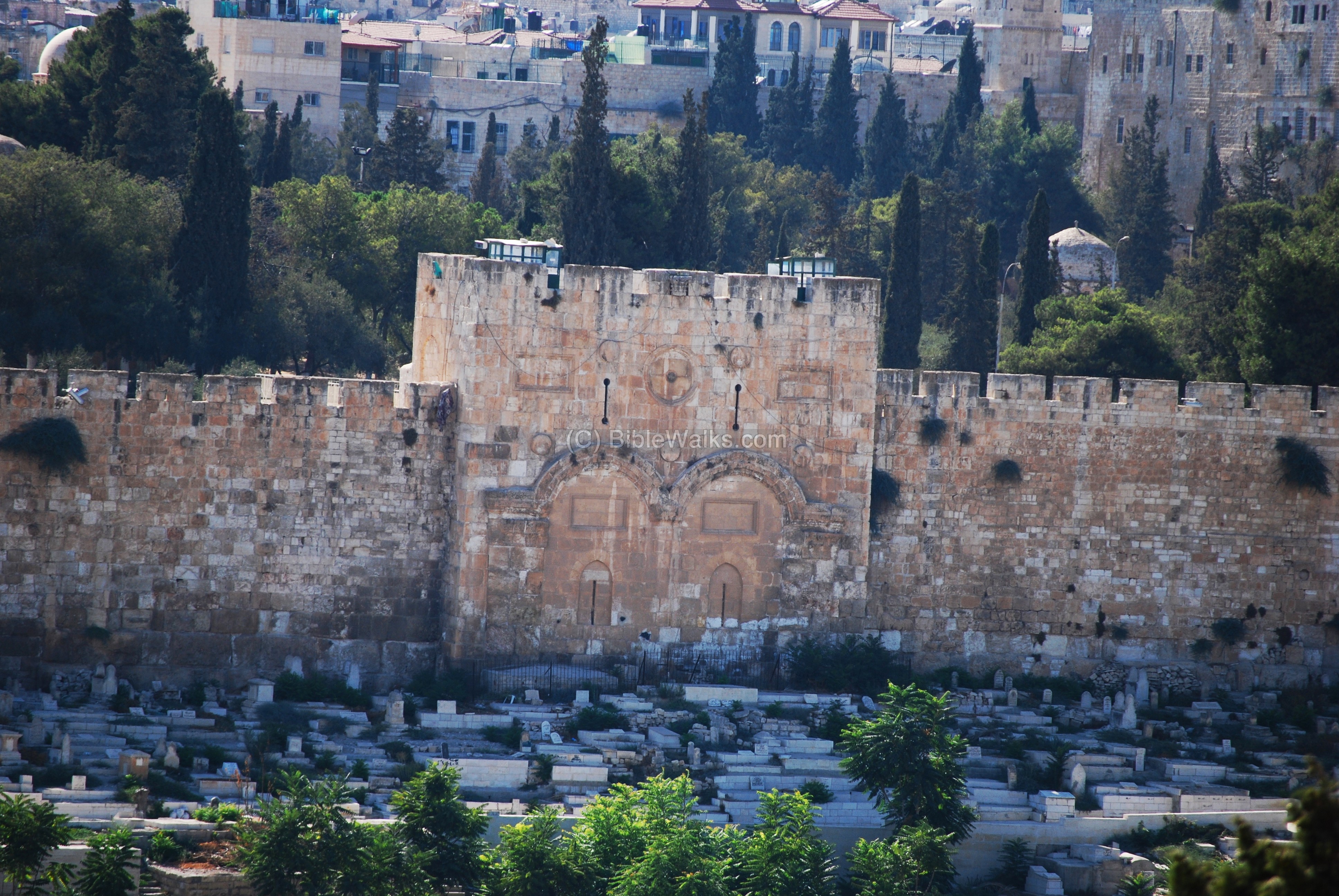
- Ezekiel 44 2: “This gate shall be shut, it shall not be opened, and no man shall enter in by it; because the LORD, the God of Israel, hath entered in by it, therefore it shall be shut”.
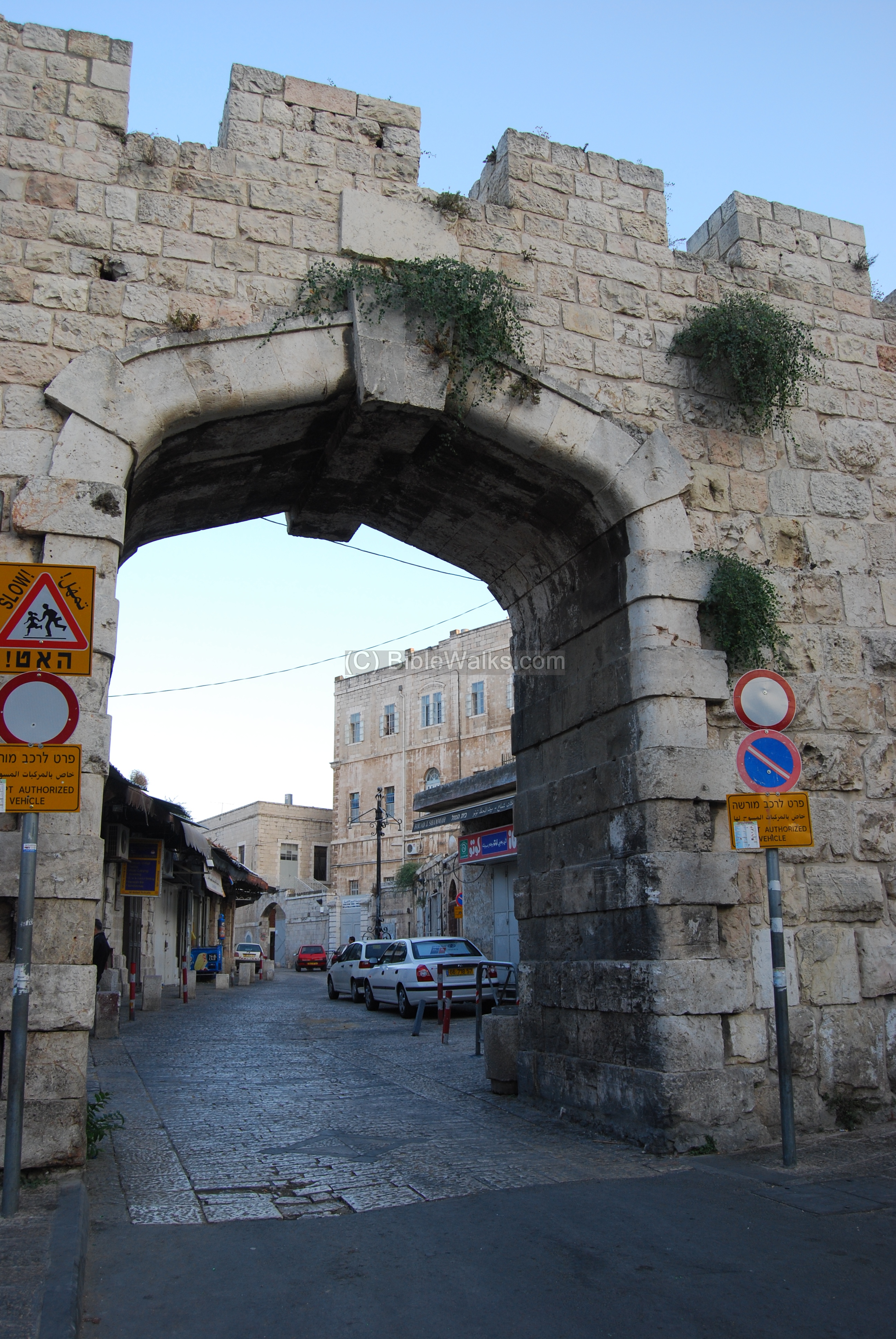
- The gate is located on the west side of the old city . It was opened in 1889 to allow an easier access to the Christian quarter.
- The gate is located on the north-east side of the old city, leading to via Dlorosa.
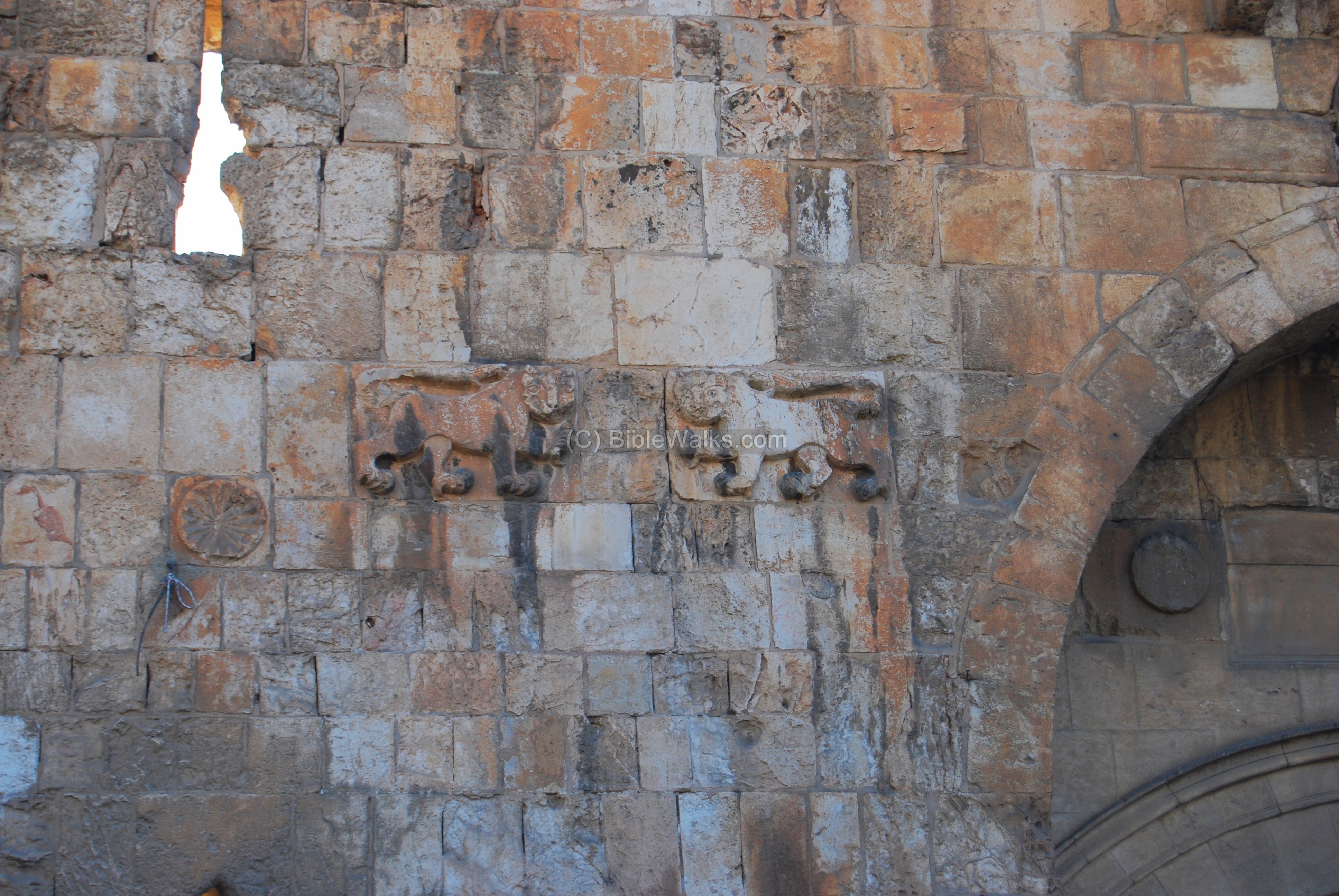
- Genesis 49 9: “Judah is a lion’s whelp: from the prey, my son, thou art gone up: he stooped down, he couched as a lion, and as an old lion; who shall rouse him up?”
- A Franciscan monastery and the Church on Via Dolorosa. According to tradition, this was the site where the Roman soldiers flogged Jesus after he was convicted and sentenced to death.
- John 19 1-3: “And the soldiers platted a crown of thorns, and put it on his head, and they put on him a purple robe, And said, Hail, King of the Jews! and they smote him with their hands”.
- This page describes the ancient roads to Jerusalem.
“All roads lead to Jerusalem.”
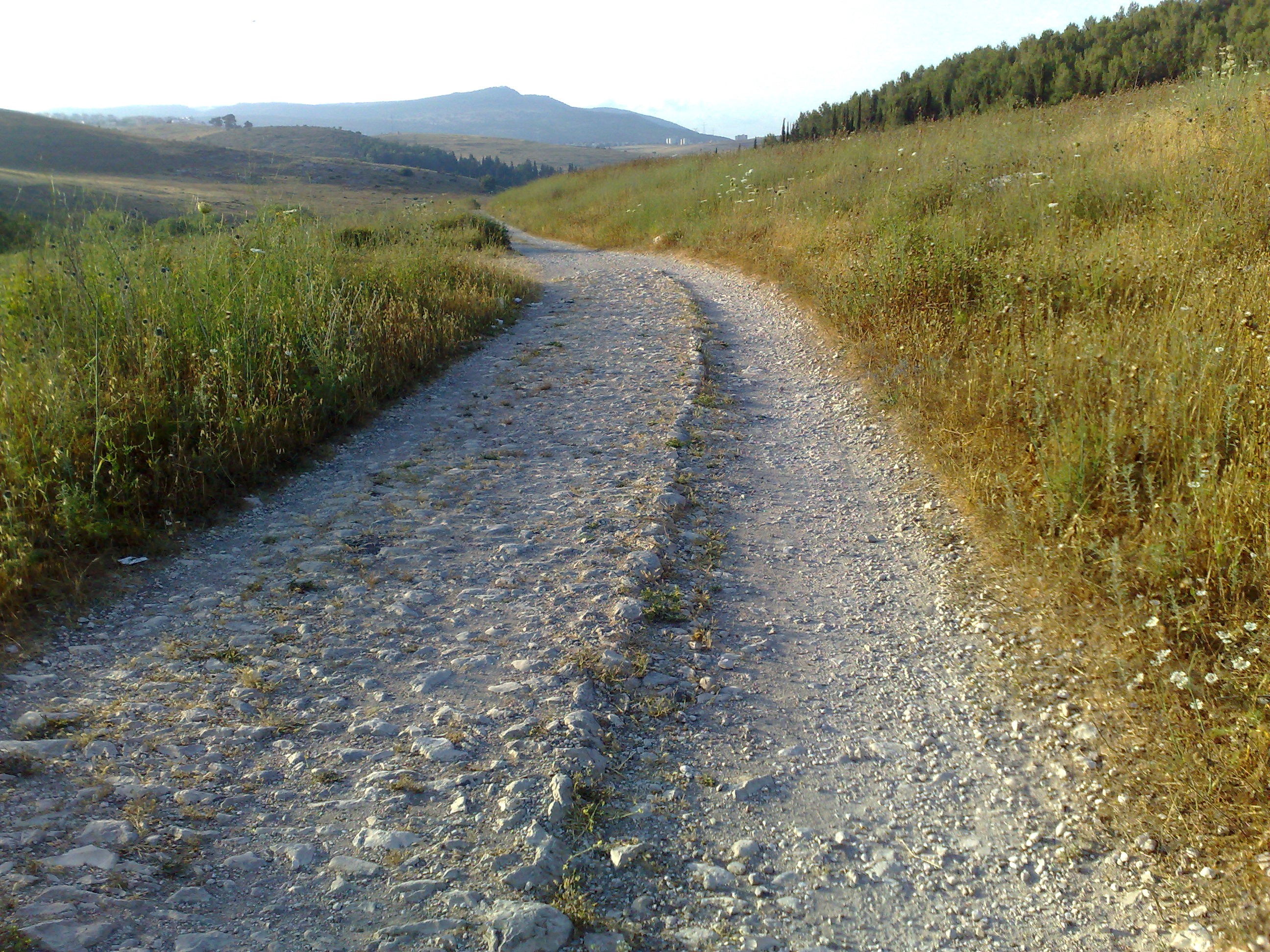
- Micah 4 2: “And many nations shall come, and say, Come, and let us go up to the mountain of the LORD”
- A new strings bridge was constructed on the western entrance to the city, as part of the light rail mass transit system in Jerusalem. The bridge resembles a harp, fitting the image of the “city of David”.
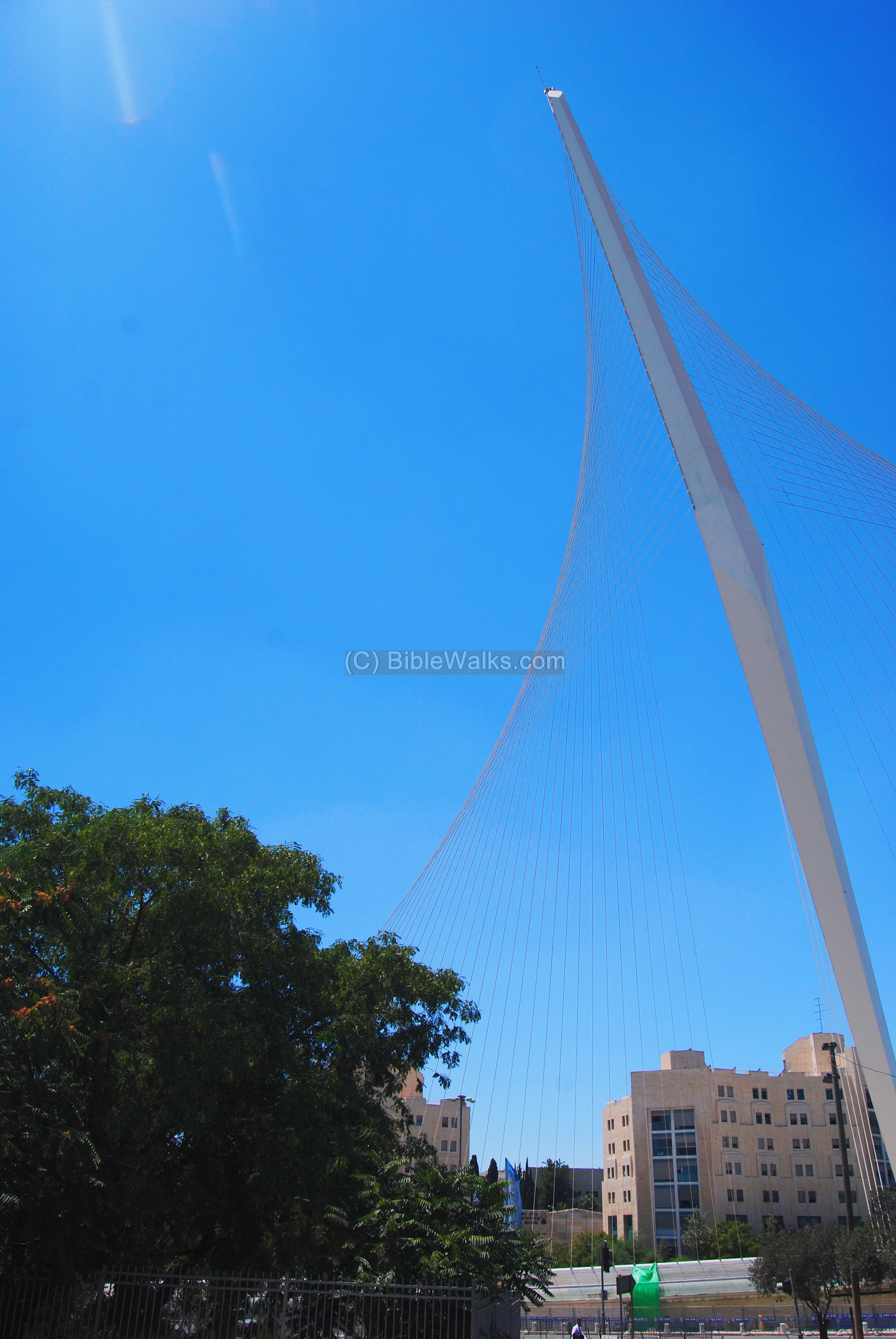
- 1 Samuel 16: 23: “David took an harp, and played with his hand”
- A Roman Catholic Church on Via Dolorosa (station II). According to tradition, this was the site where Jesus took up his cross after being sentenced.
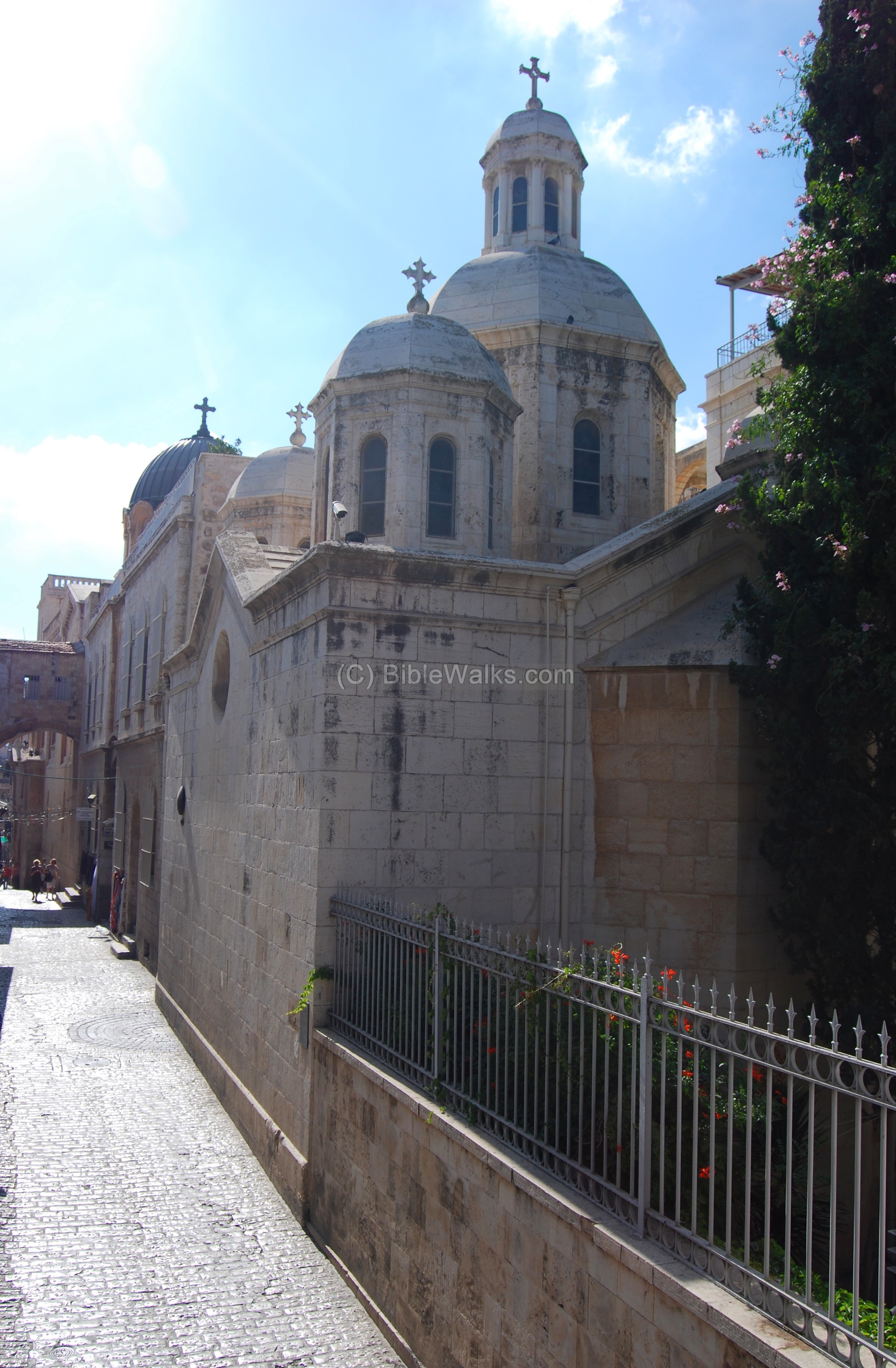
- John 19:13: “When Pilate therefore heard that saying, he brought Jesus forth, and sat down in the judgment seat in a place that is called the Pavement, but in the Hebrew, Gabbatha”.
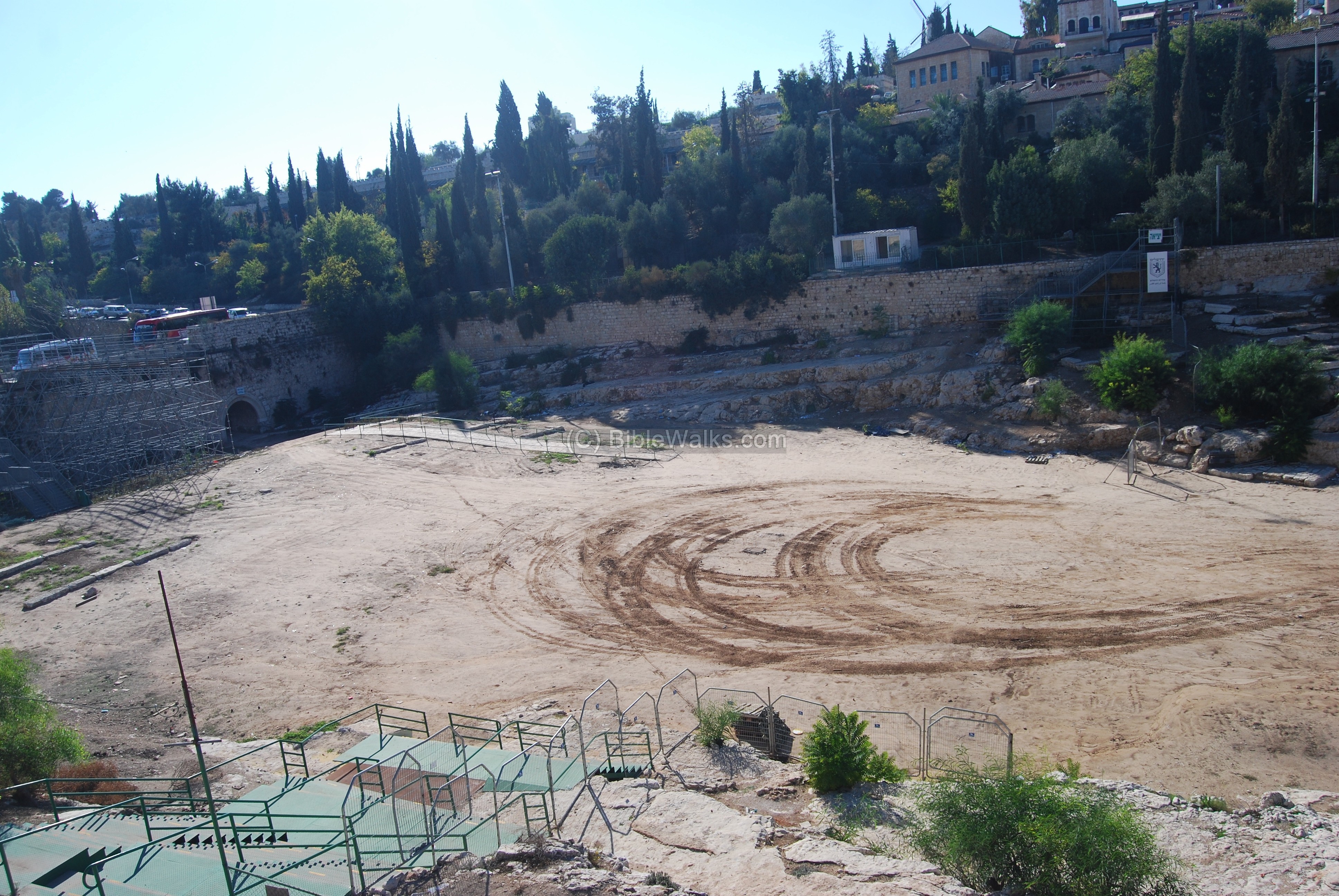
- An ancient pool in the valley of Hinnom, beneath the west side of Mt Zion. It was part of the water supply system of Jerusalem from the Roman period until the late Ottoman period. The “lower aqueduct” was built around the circumference of the pool.
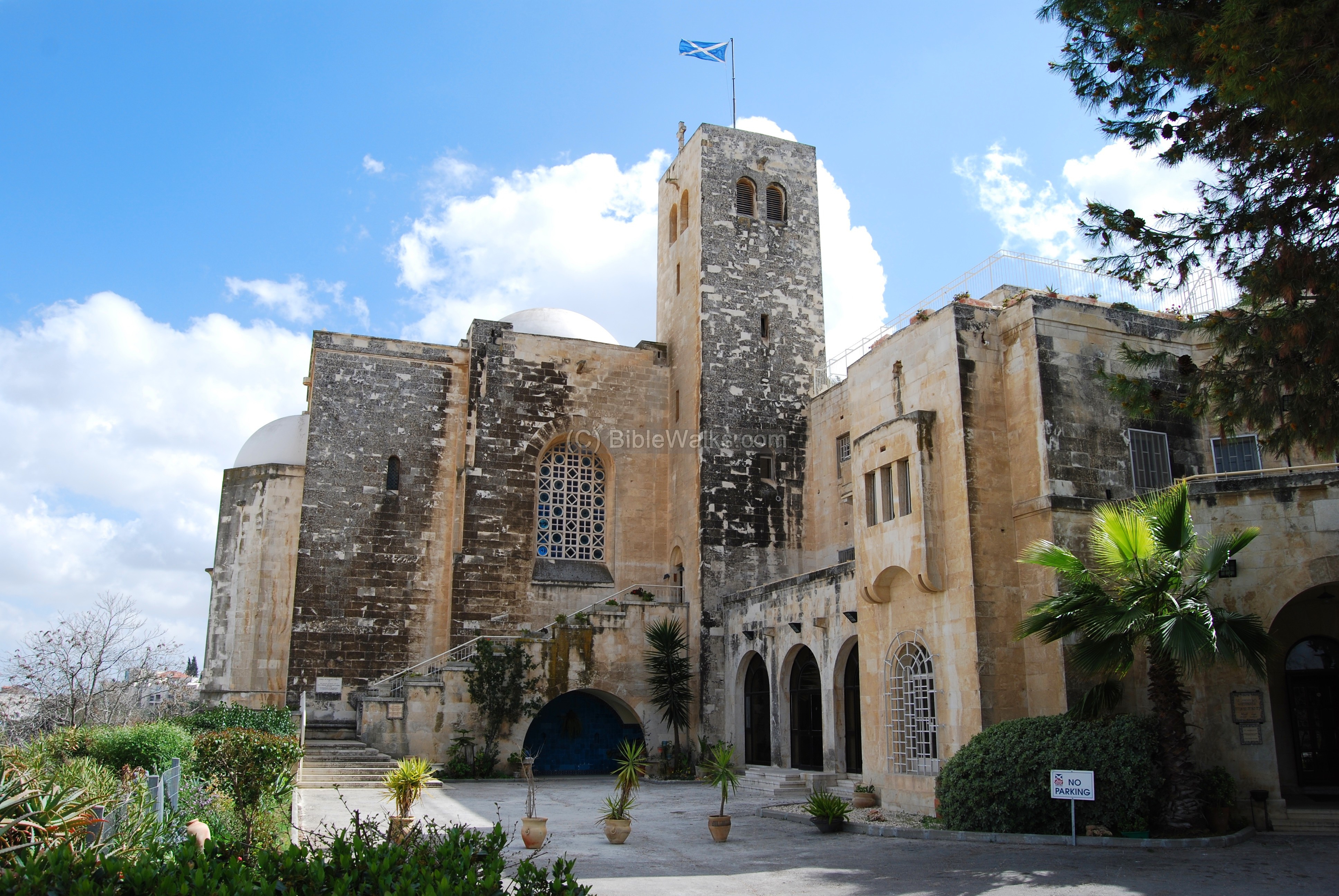
- A Scottish Protestant church and hospice, built in 1927 on a hill facing Mt Zion. Named after Andrews, one of Jesus’ twelve apostles, and a patron Saint of Scotland.
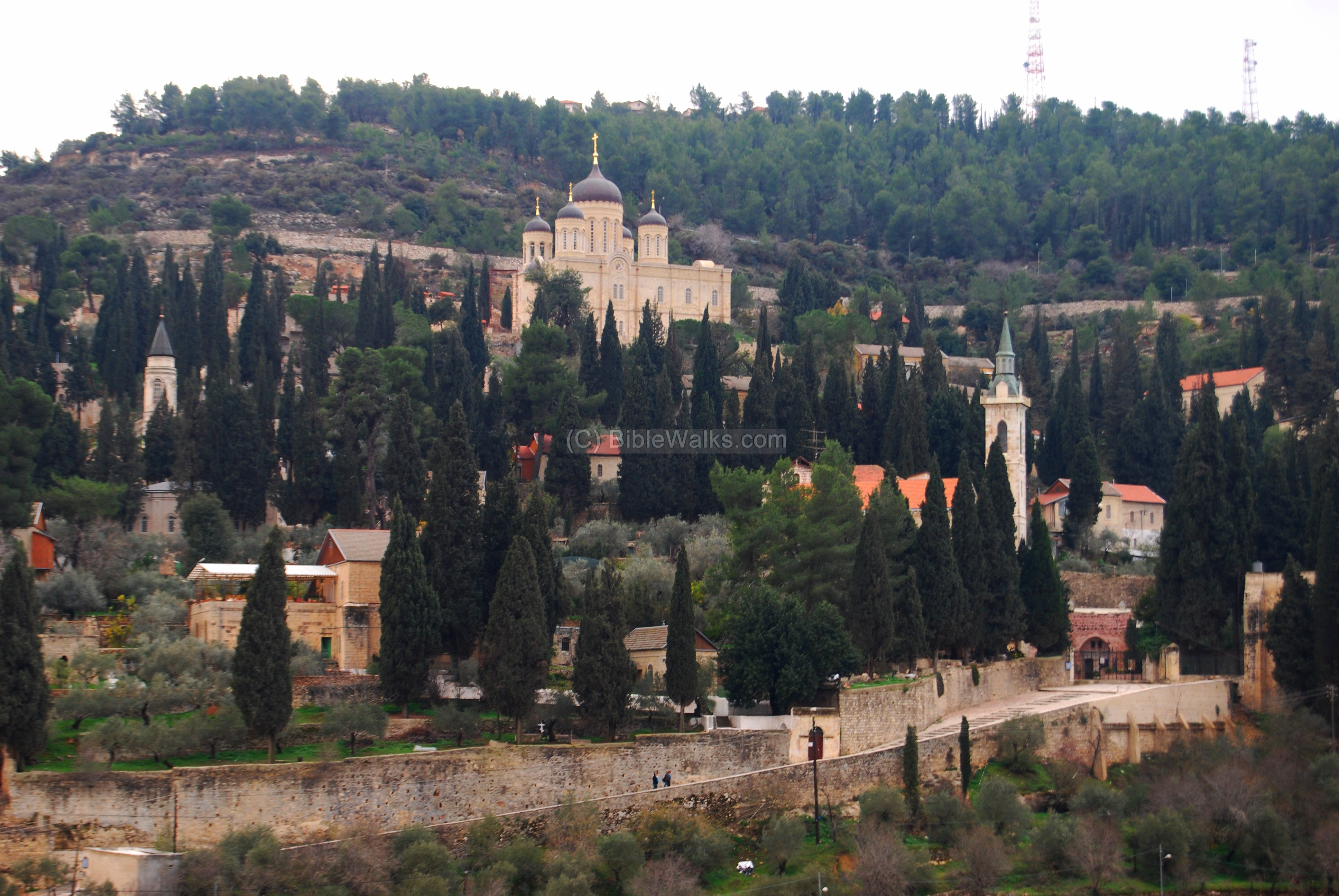
Ein Karem (Overview)
- The village of Ein Karem, on the west side of Jerusalem, is according to tradition the birthplace of John the Baptist.
Visitation church, Ein Kerem
- A Franciscan church in Ein Kerem, on the west side of Jerusalem, named after Mary’s visit to the summer house of the parents of John the Baptist .
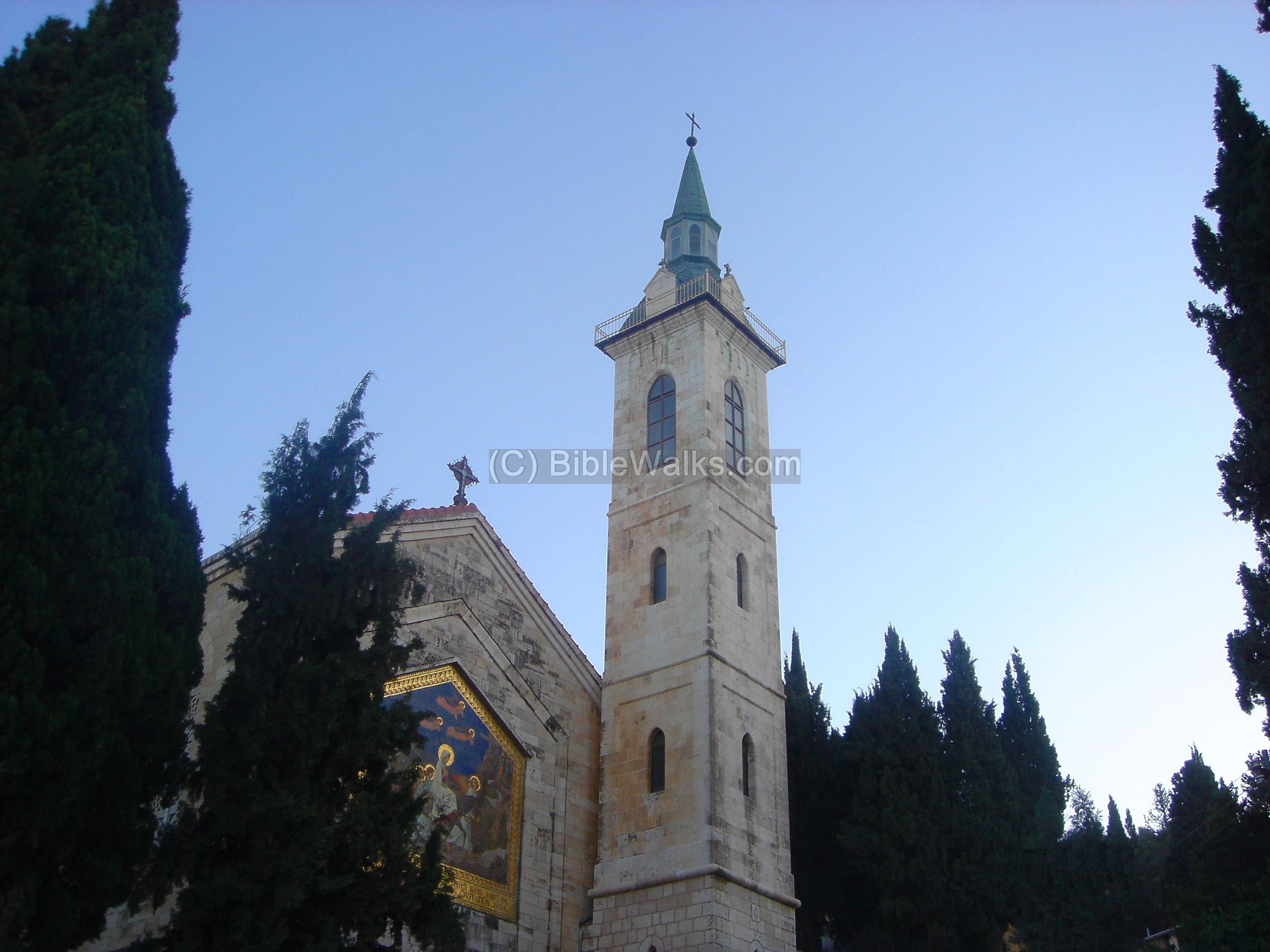
- Luke 1:39: “And Mary arose in those days, and went into the hill country with haste, into a city of Juda”
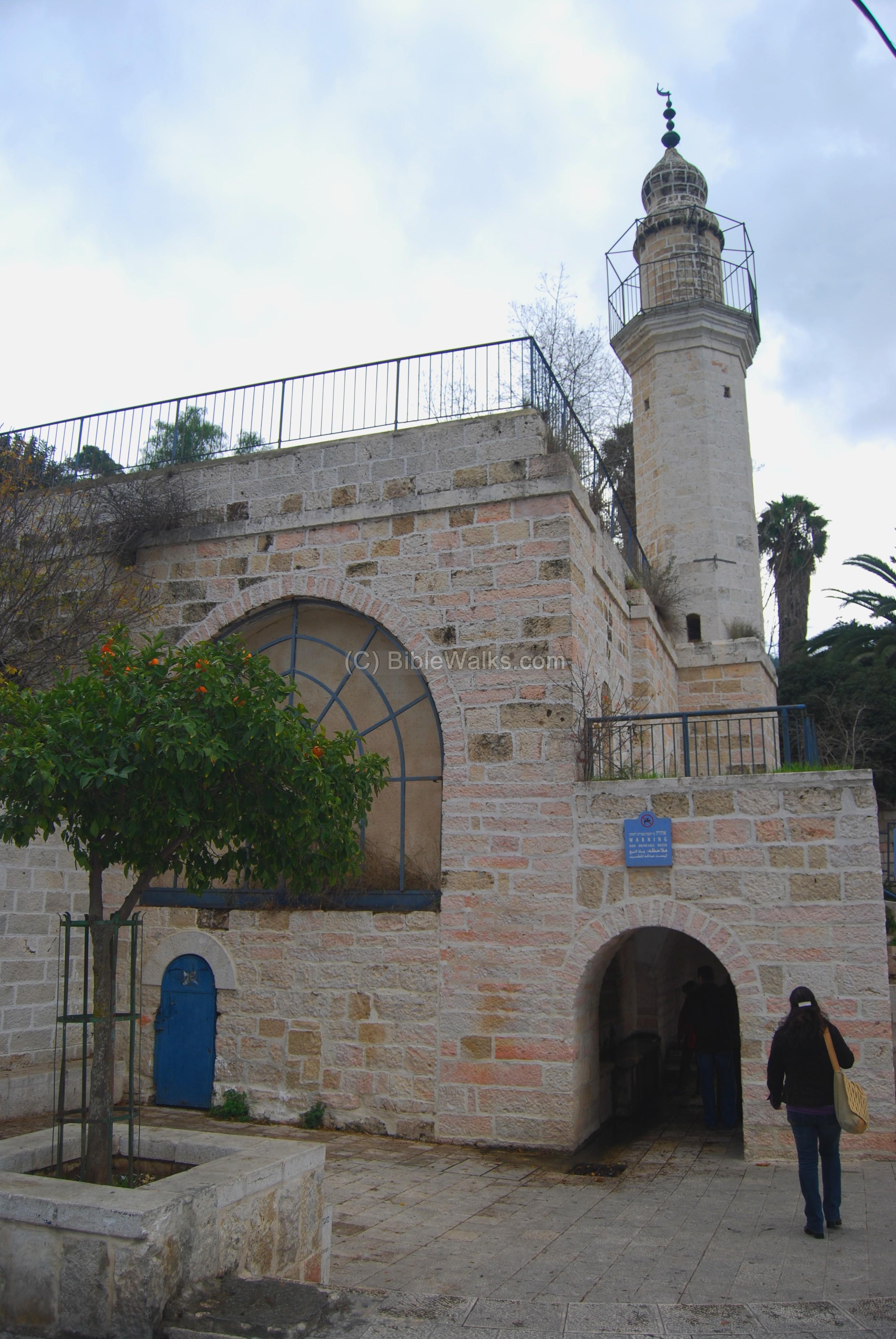
- A Holy spring which was the center of the ancient village. According to tradition, virgin Mary stopped here to drink while visiting John the Baptist’s parents.
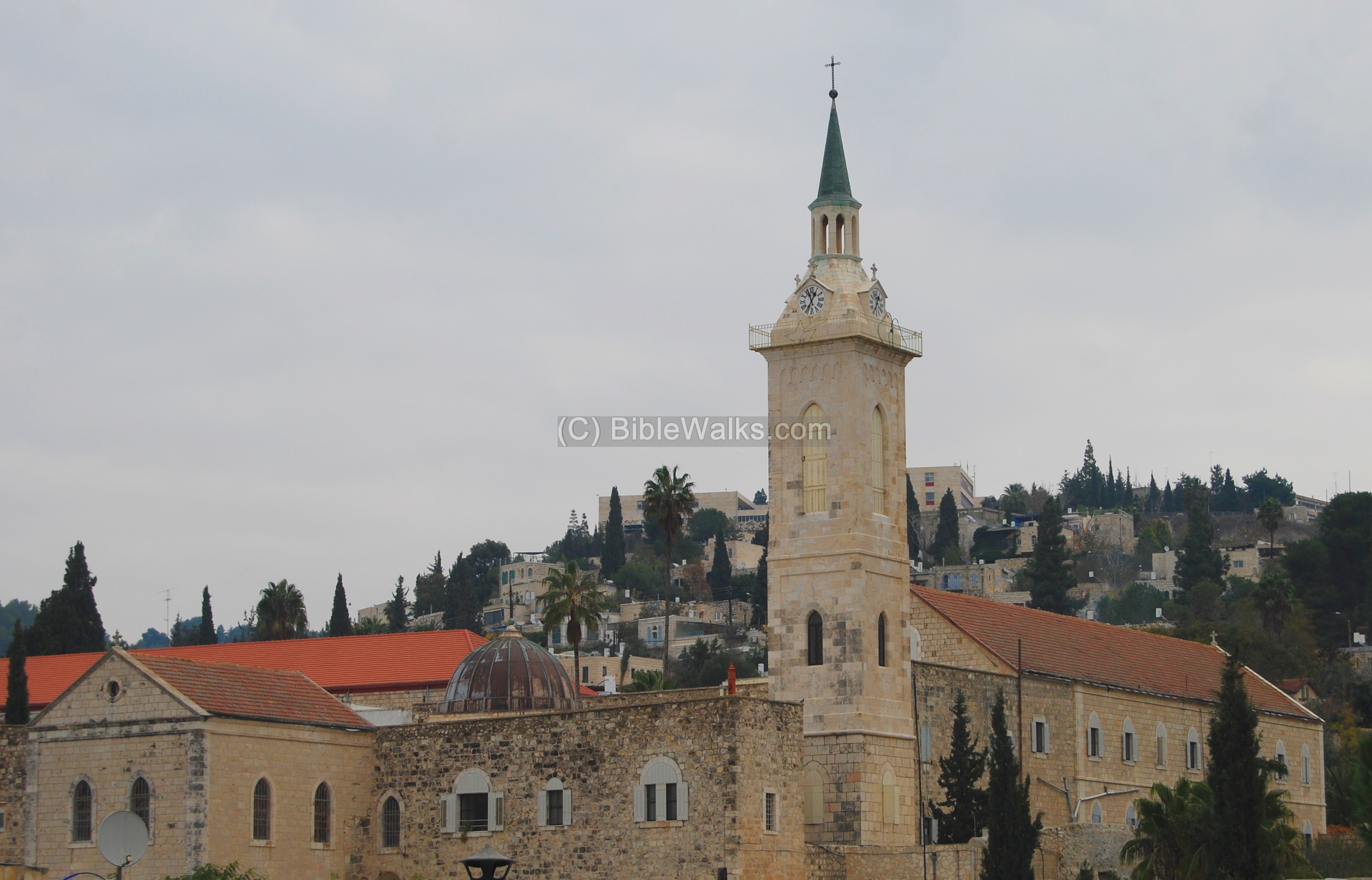
- A Catholic church and monastery in Ein Kerem, built over Byzantine and Crusaders ruins, and dedicated to John the Baptist. According to tradition, the site of his birthplace.
Greek Orthodox convent, St. John, Ein Kerem
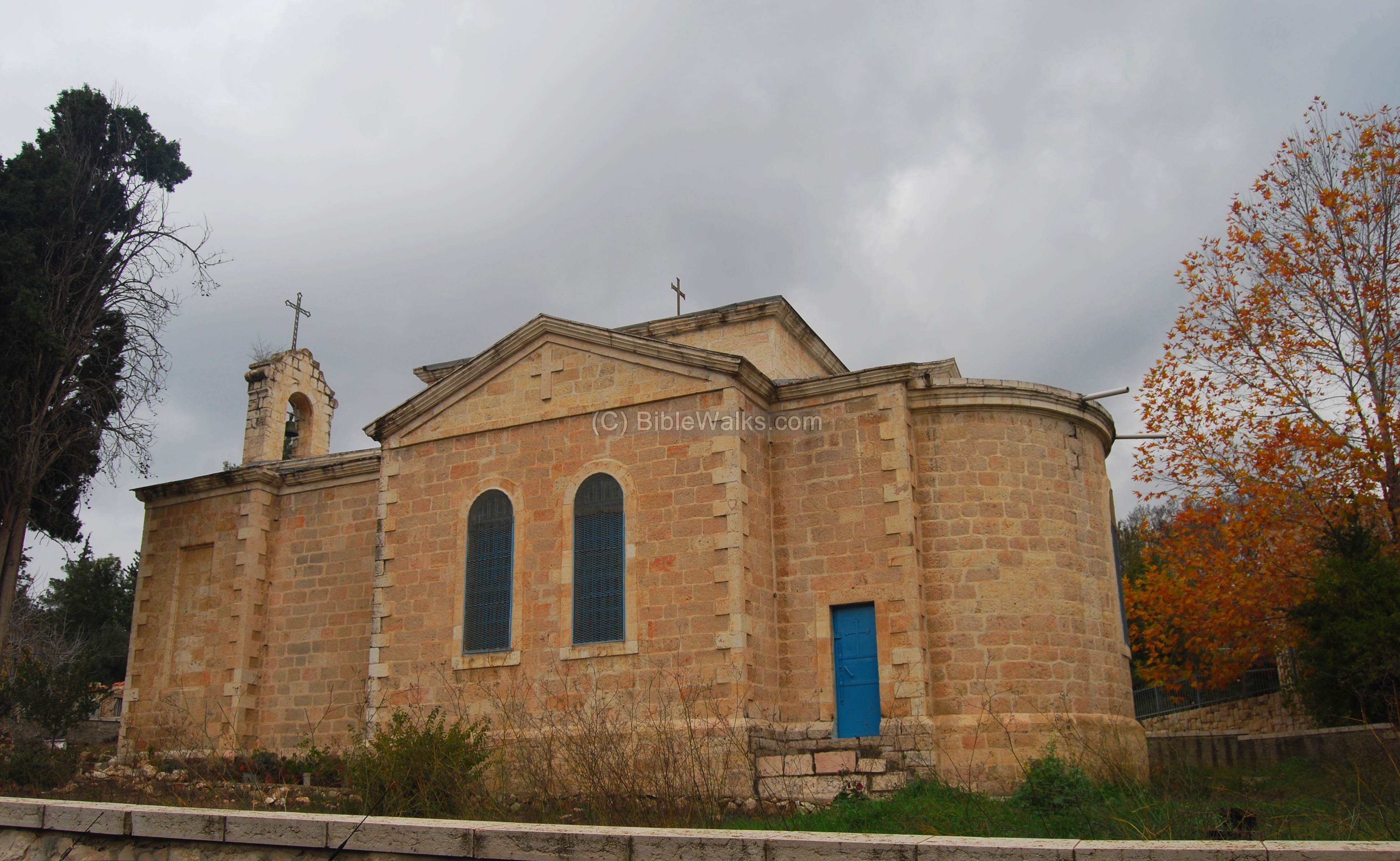
- A Greek Orthodox church in Ein Kerem, built in 1894 to service the local community.
- The 16th century Ottoman gate is located on the western side of the old city wall.
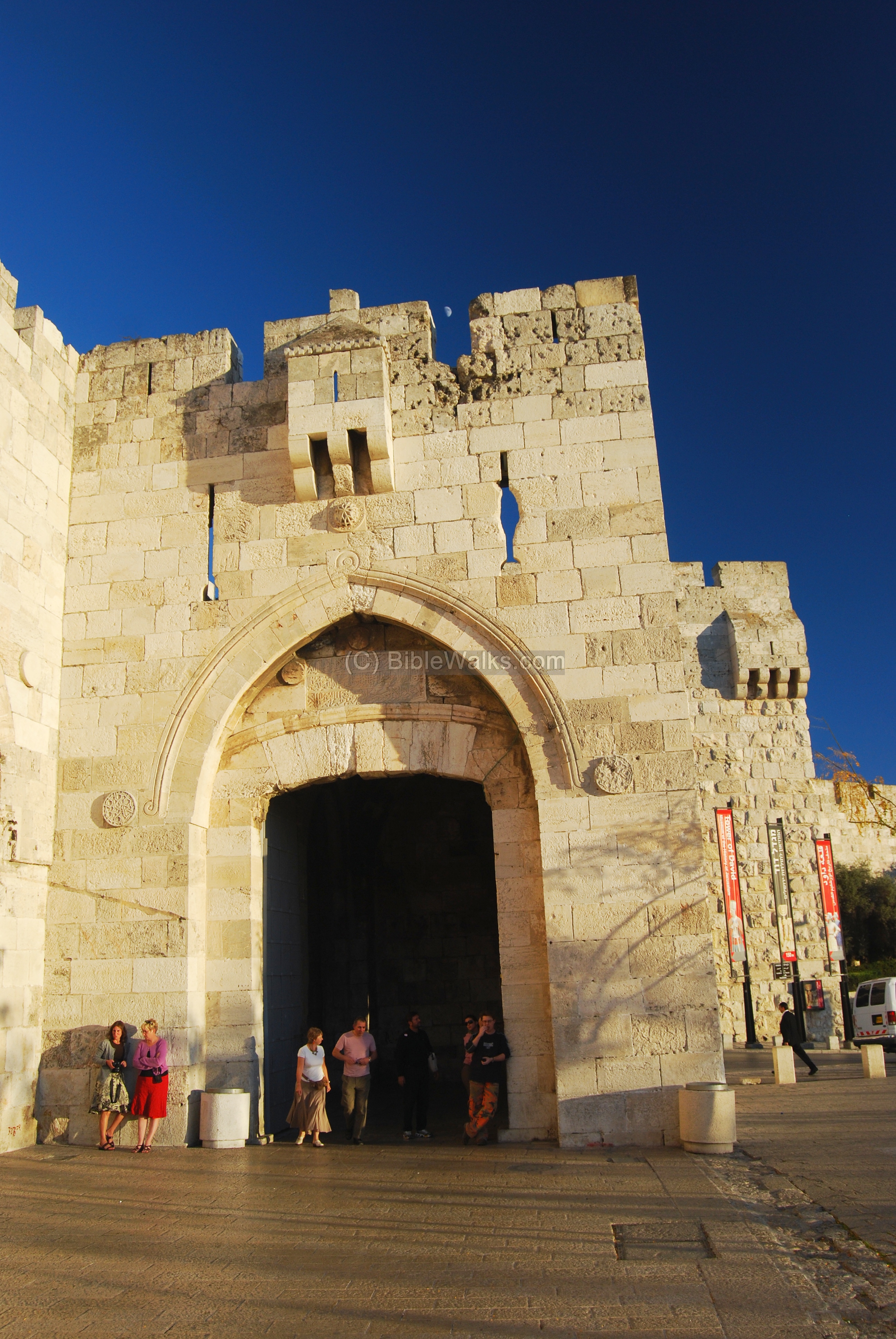
- Psalms 122:2 : “Our feet shall stand within thy gates, O Jerusalem.”
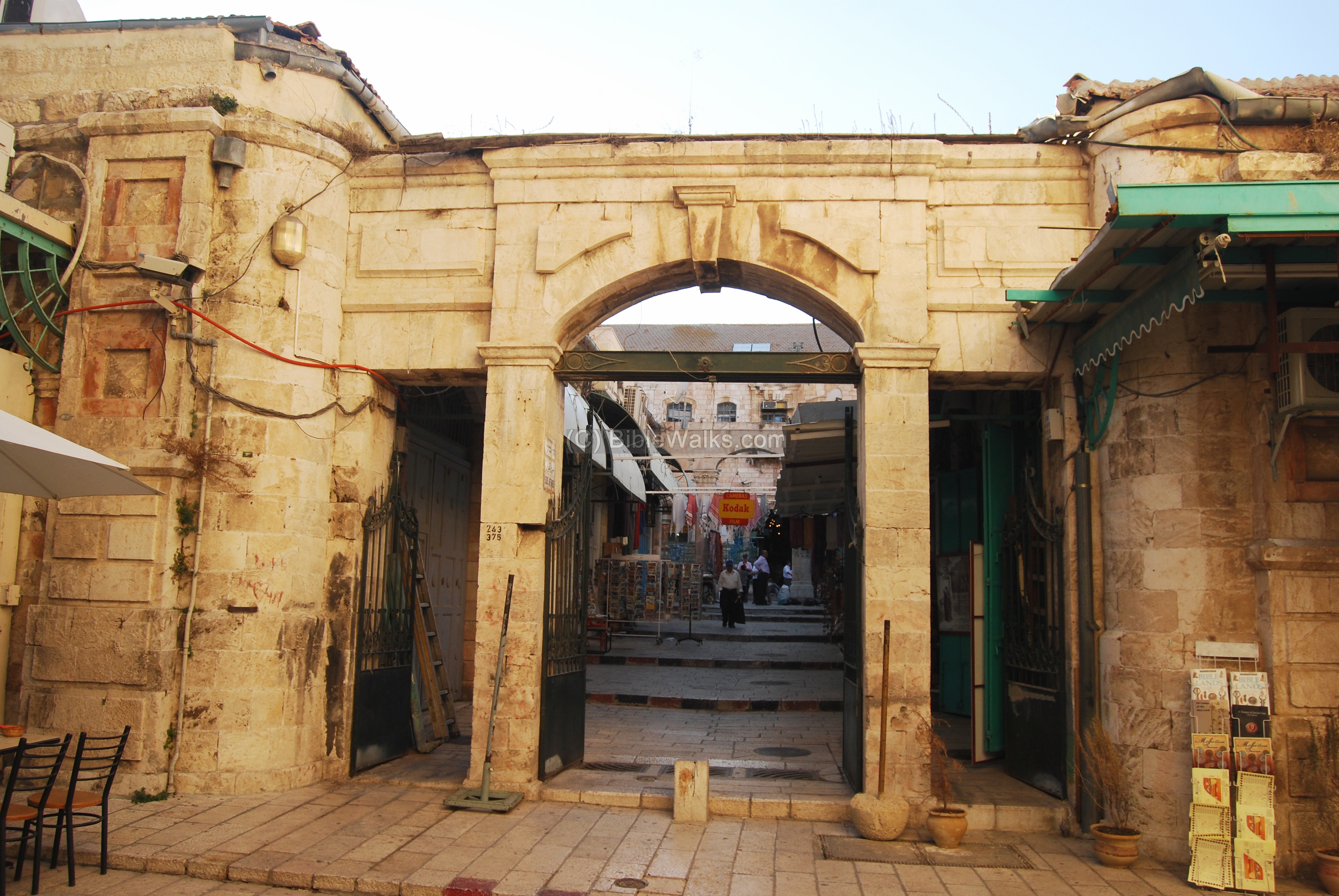
- An area in the Christian quarter, located on the site of the Crusaders Hospitallers quarters and hospital.
- An impressive German Lutheran church located near the Holy Sepulcher, built at the end of the 19th C over the ruins of a Crusaders church.

- Al-Aqsa (“the farthest”) mosque is located on the southern side of the temple mount, and is the 3rd most holiest site in Islam. It is named after the Muslim’s account of the night travel of prophet Muhammad to the remote mosque.
- The dome of the Rock shrine, located in the center of the temple mount, with its large golden dome and an octagon structure, is one of the most beautiful and enduring shrines in the World.
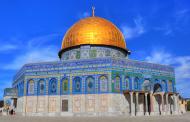
- This web page reviews additional points of interest on the temple mount.
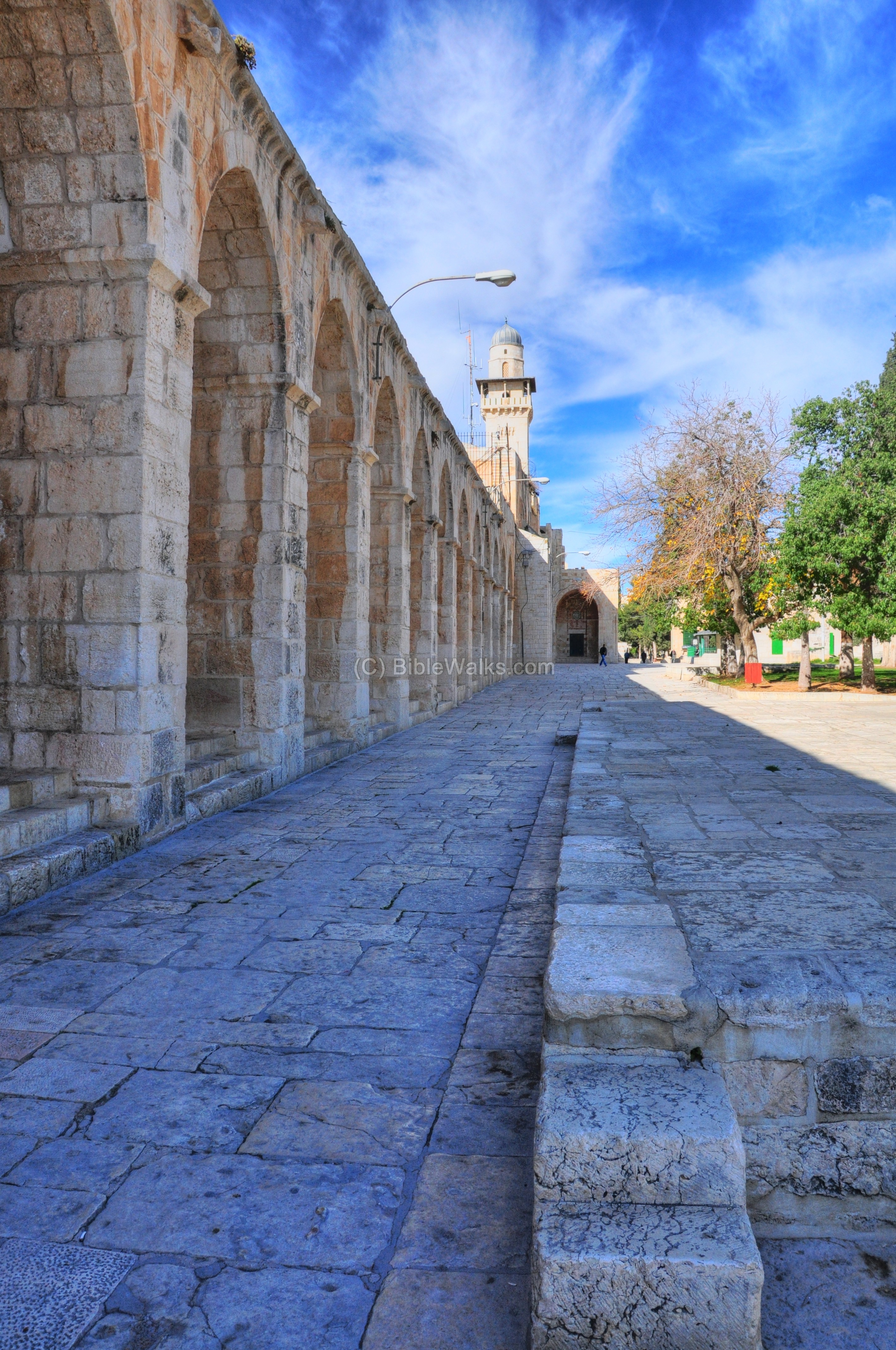
- The Ottoman period gate is located on the south side, and named after the Biblical gate that was located nearby.

- Quest for Herod’s great temple: This web page traces the location and form of the ancient gates of the second temple.
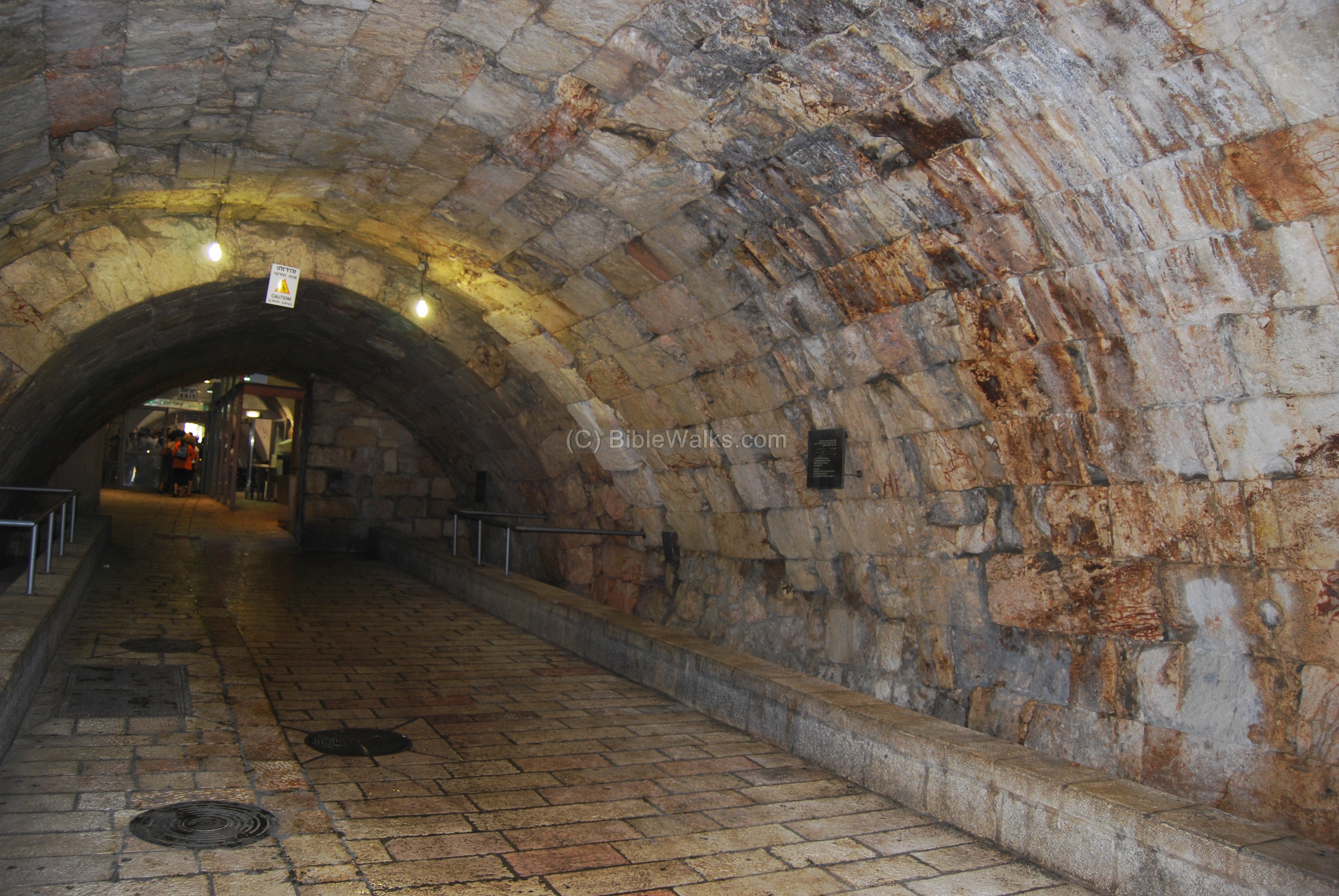
- Josephus Flavius, Ant. 15 11: “Now in the western quarters of the enclosure of the temple there were four gates…”
- This page describes the ancient streets in the old city of Jerusalem, following the Madaba street map.
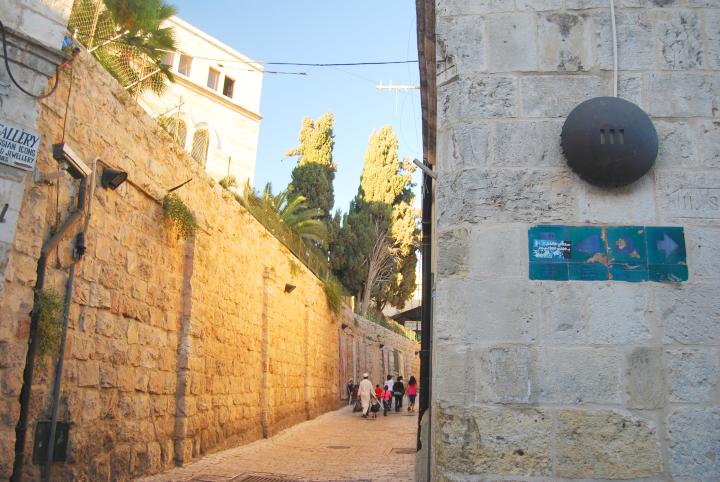
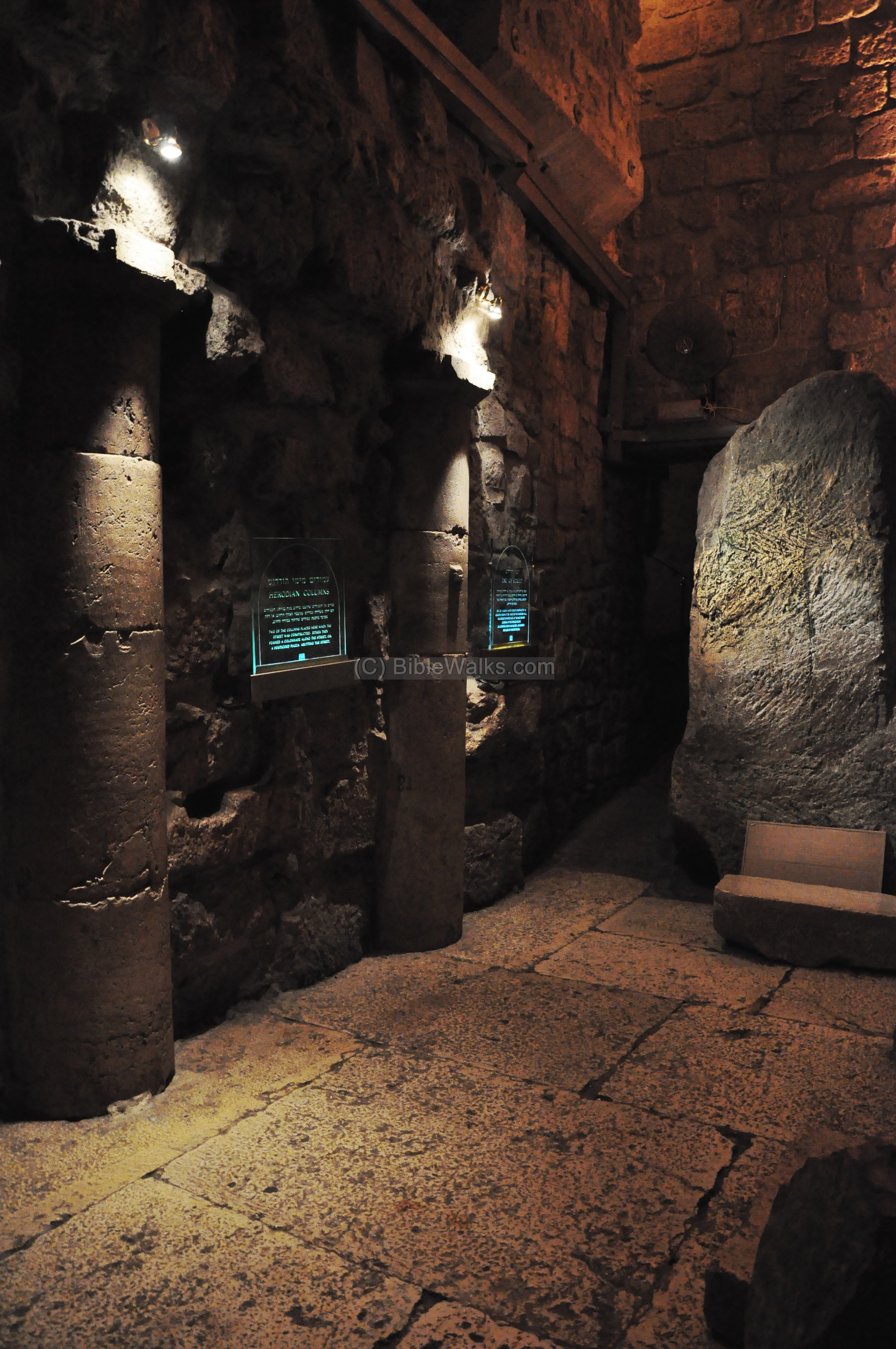
- A major tourist attraction, following the underground tunnels connecting the western wall prayer area to the north-west corner of the temple mount.
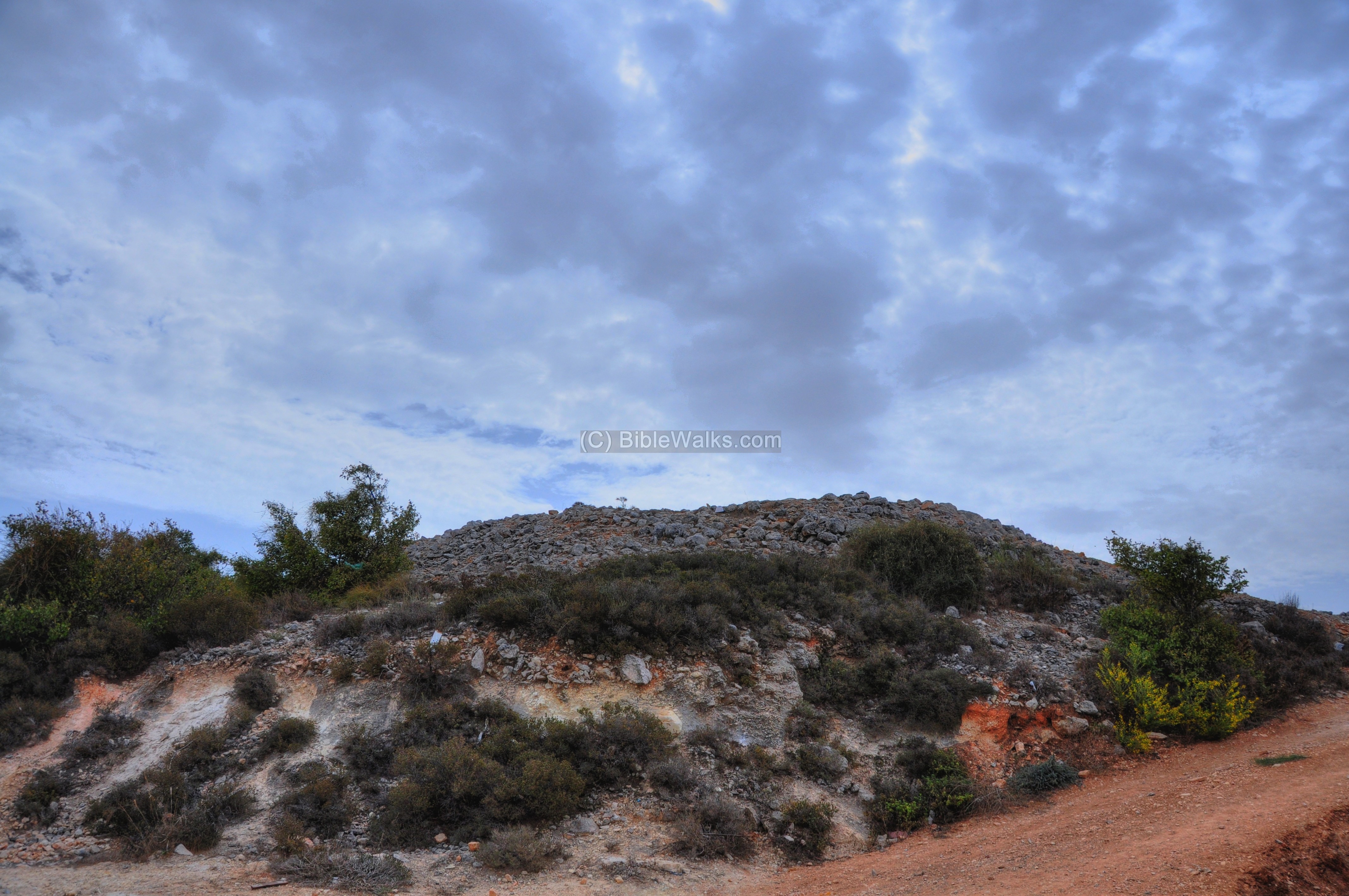
- Ruins of fortress situated on a high hill in the center of Ramot-Alon neighborhood, dated to the second temple period.
- Amazing Light & Sound show held in June 2010 in the old city of Jerusalem.
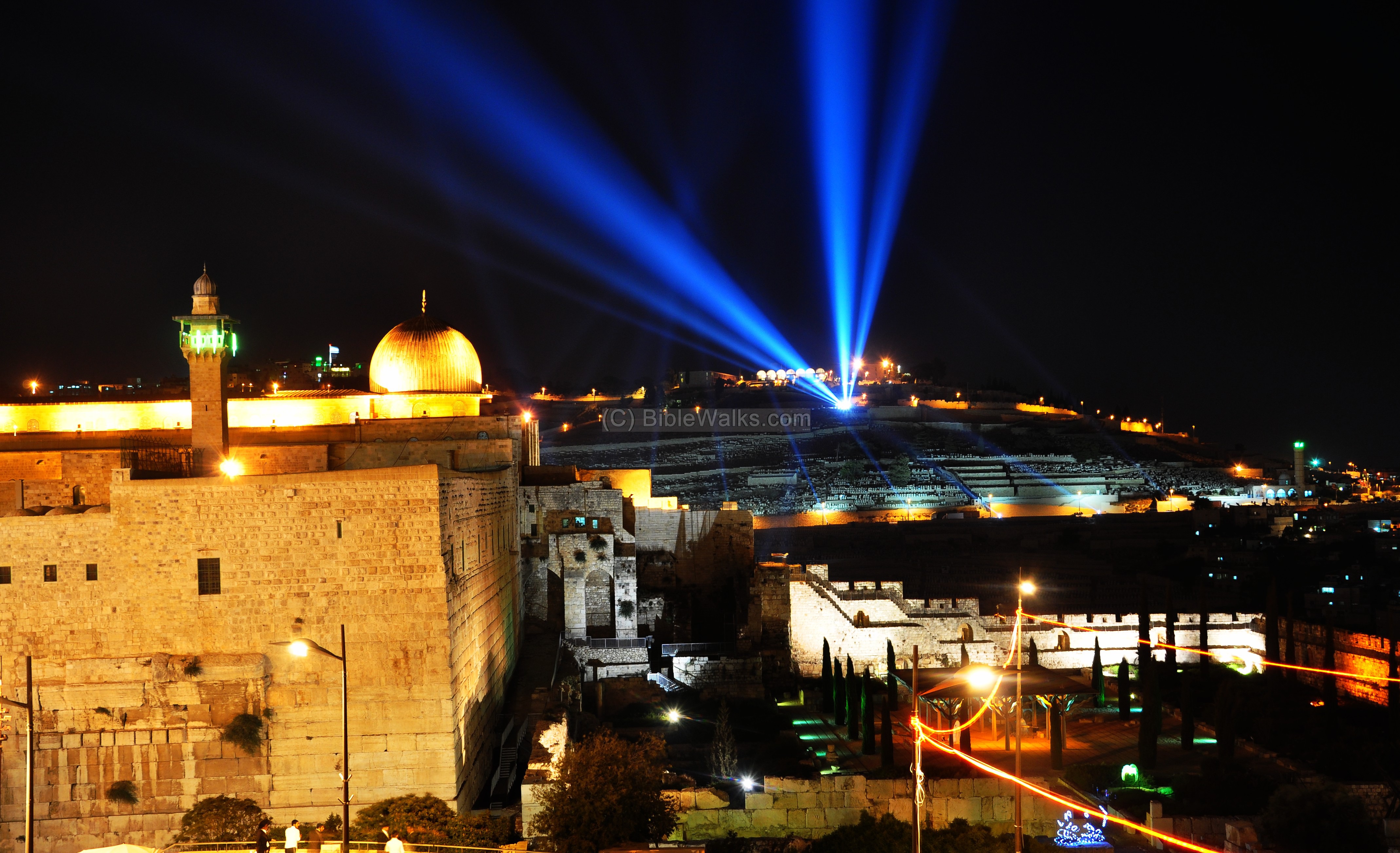
- Genesis 1 3-4: “And God said, Let there be light: and there was light. And God saw the light, that it was good: and God divided the light from the darkness.”
- The main source of water in Jerusalem during the Canaanite and Israelite Kingdom periods. Around the spring are tunnels, fortifications and pools that were constructed to better utilize and protect the water supply.

- (2 Chron. 32 30): “Hezekiah also stopped the upper watercourse of Gihon, and brought it straight down to the west side of the city of David”.
- Archaeological park with remains of the ancient core of Jerusalem, dated to the Canaanite and first temple periods.
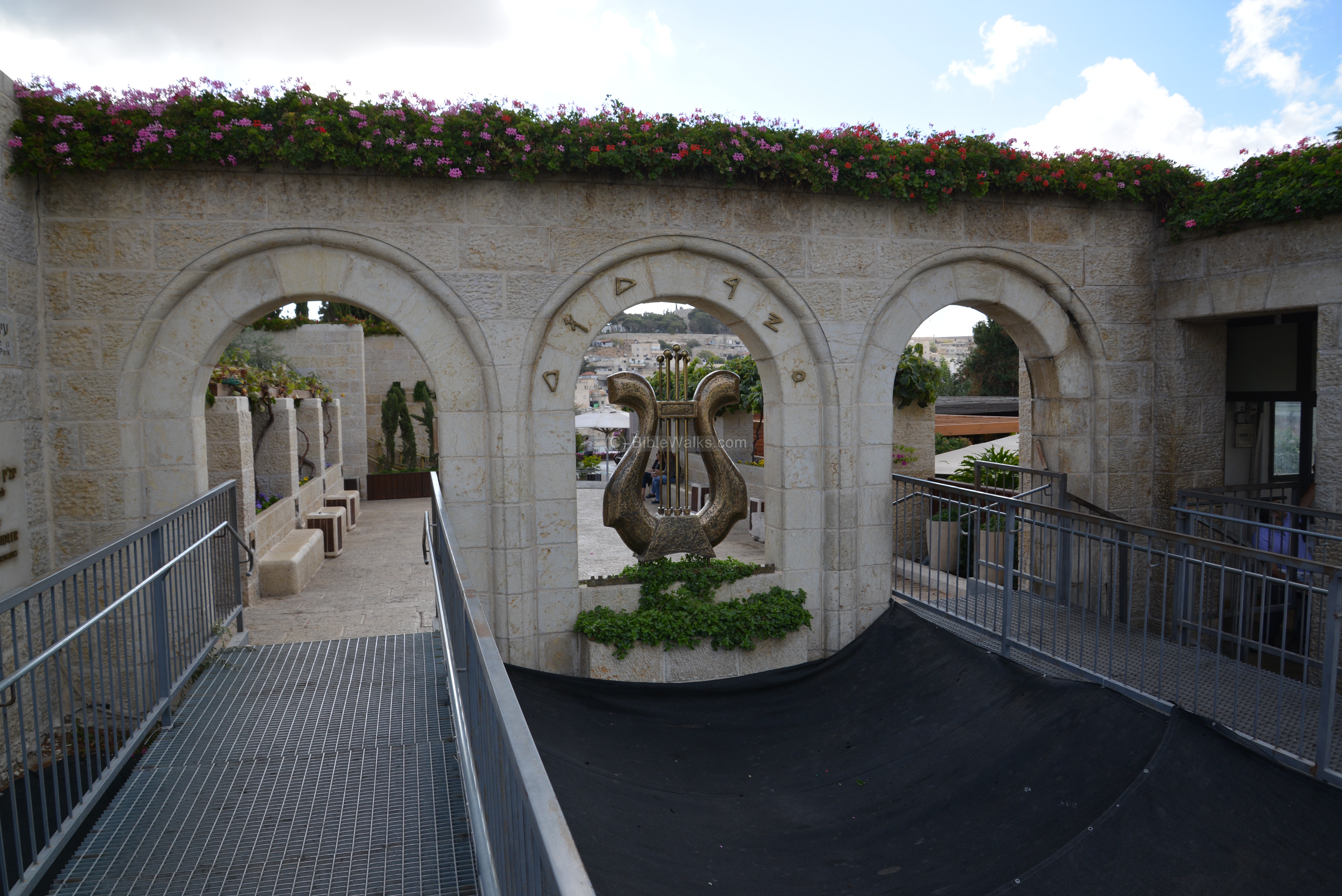
- 2 Samuel 5 6: “David took the strong hold of Zion: the same is the city of David”.
- Remains of the ritual pool of Shiloah, dated to the second temple period, were recently revealed in the southern edge of the city of David.
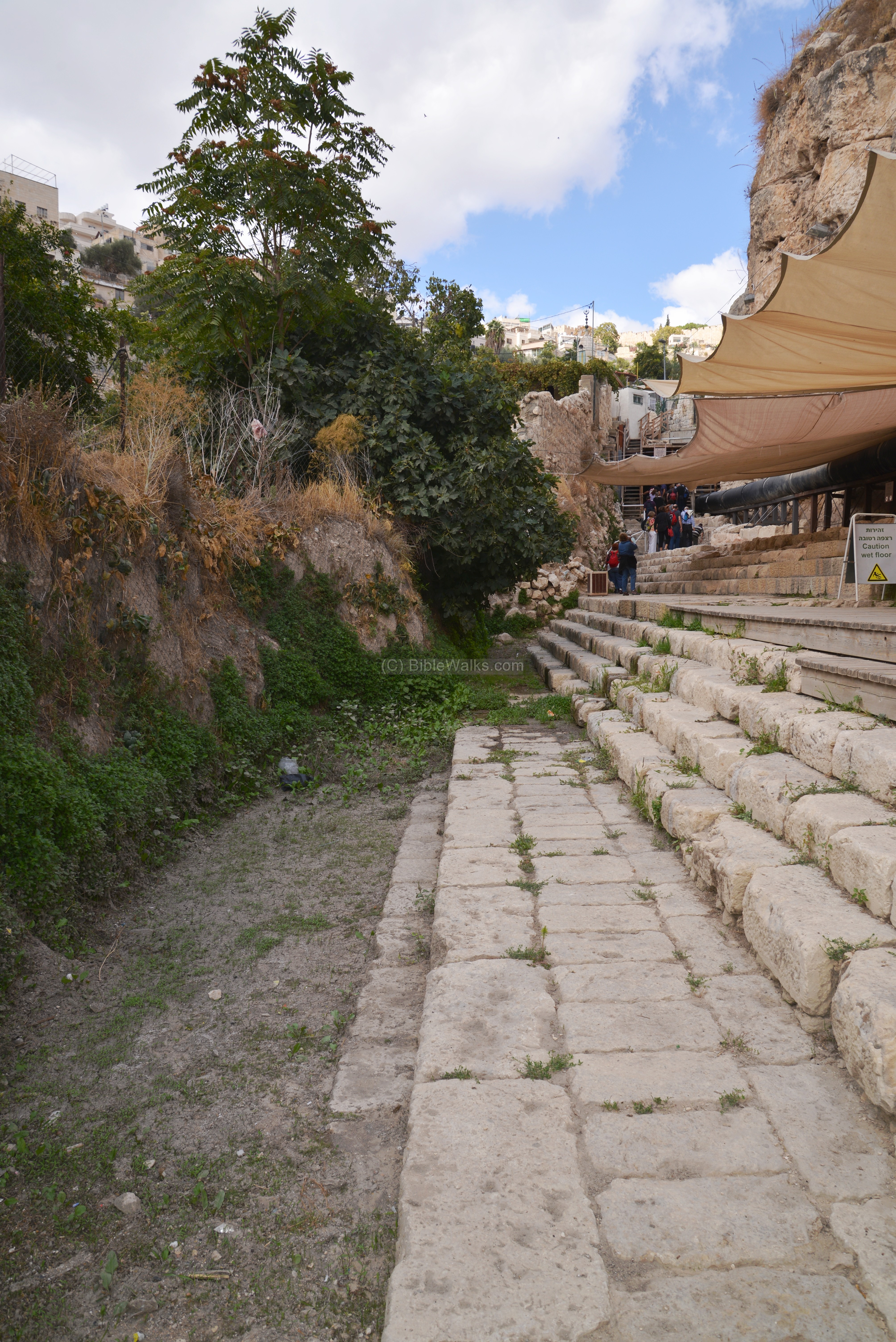
- John 9 11: “A man that is called Jesus made clay, and anointed mine eyes, and said unto me, Go to the pool of Siloam, and wash: and I went and washed, and I received sight”.
- Central water drainage system of the second Temple period, an underground tunnel connecting the west side of the temple mount to the area of the Shiloah pool.

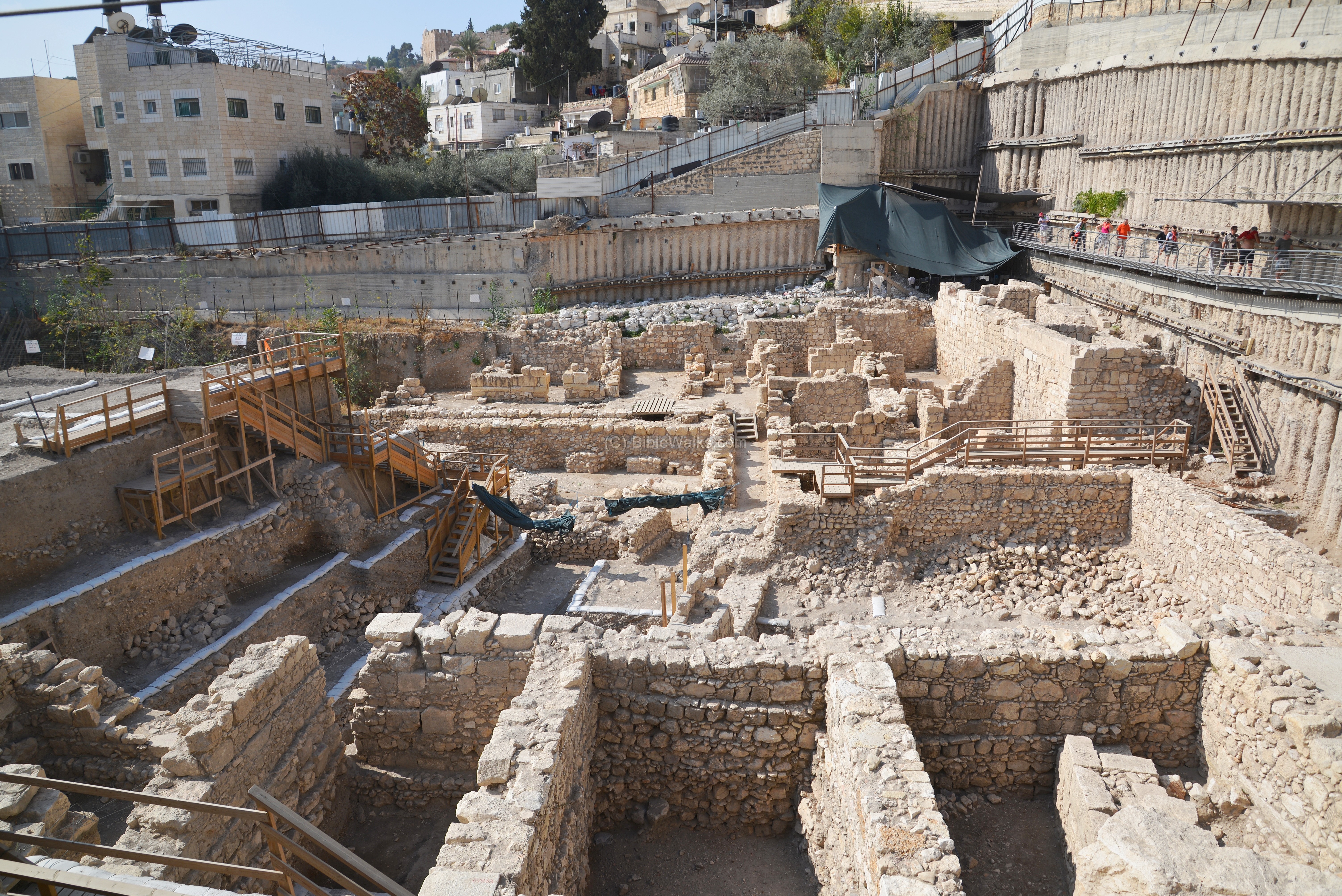
- One of the most exciting excavation areas, conducted in the area of the City of David.
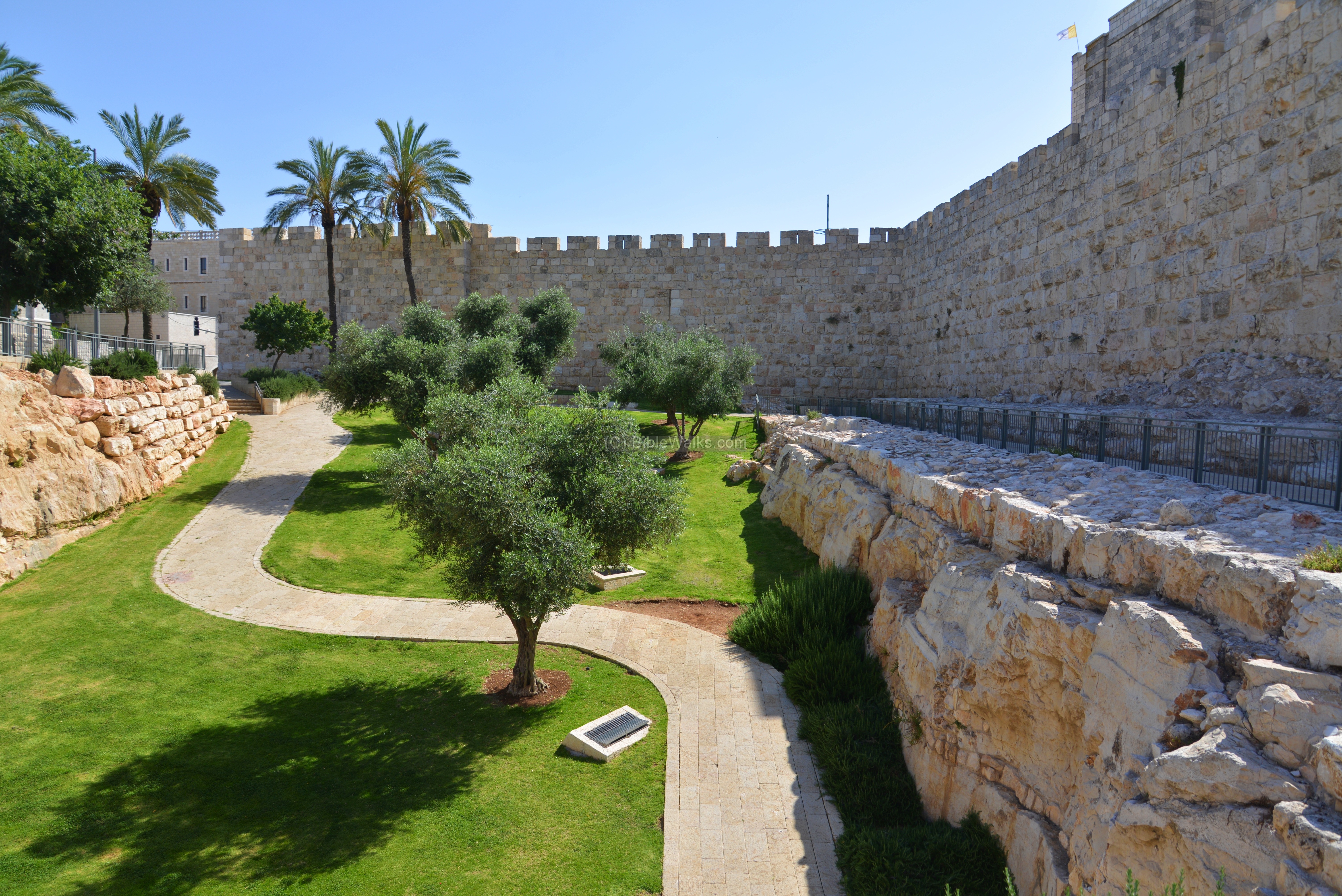
- Ruins of a fortress, dated to the Crusader period, located on the north west corner of the old city.
- Amazing Light & Sound show held in June 2014 in the old city of Jerusalem.

- Genesis 1 3-4: “And God said, Let there be light…”
Convent of Sisters of Our Lady of Zion
- A walled 19th Century monastery built on the west hill of Ein Karem.
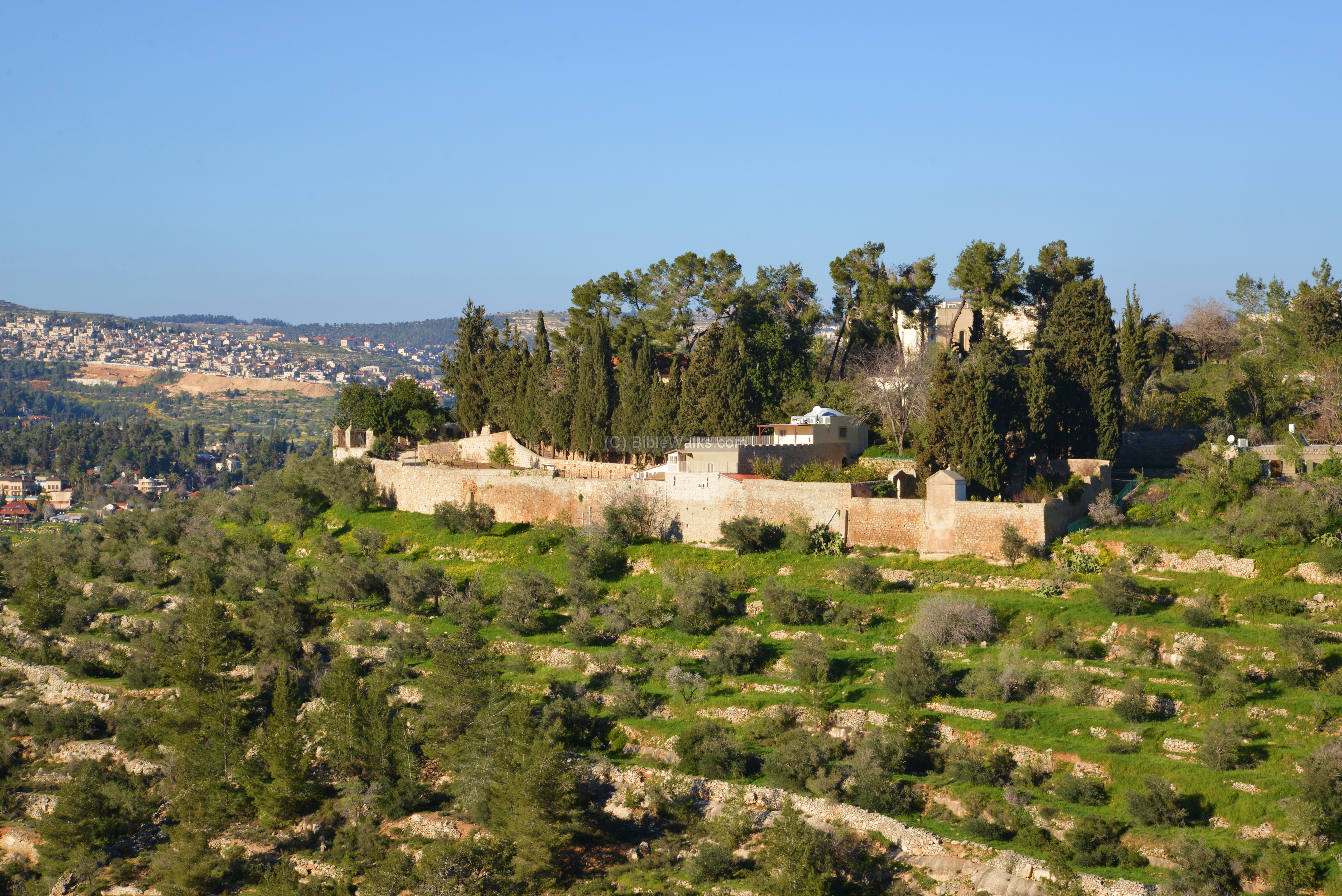
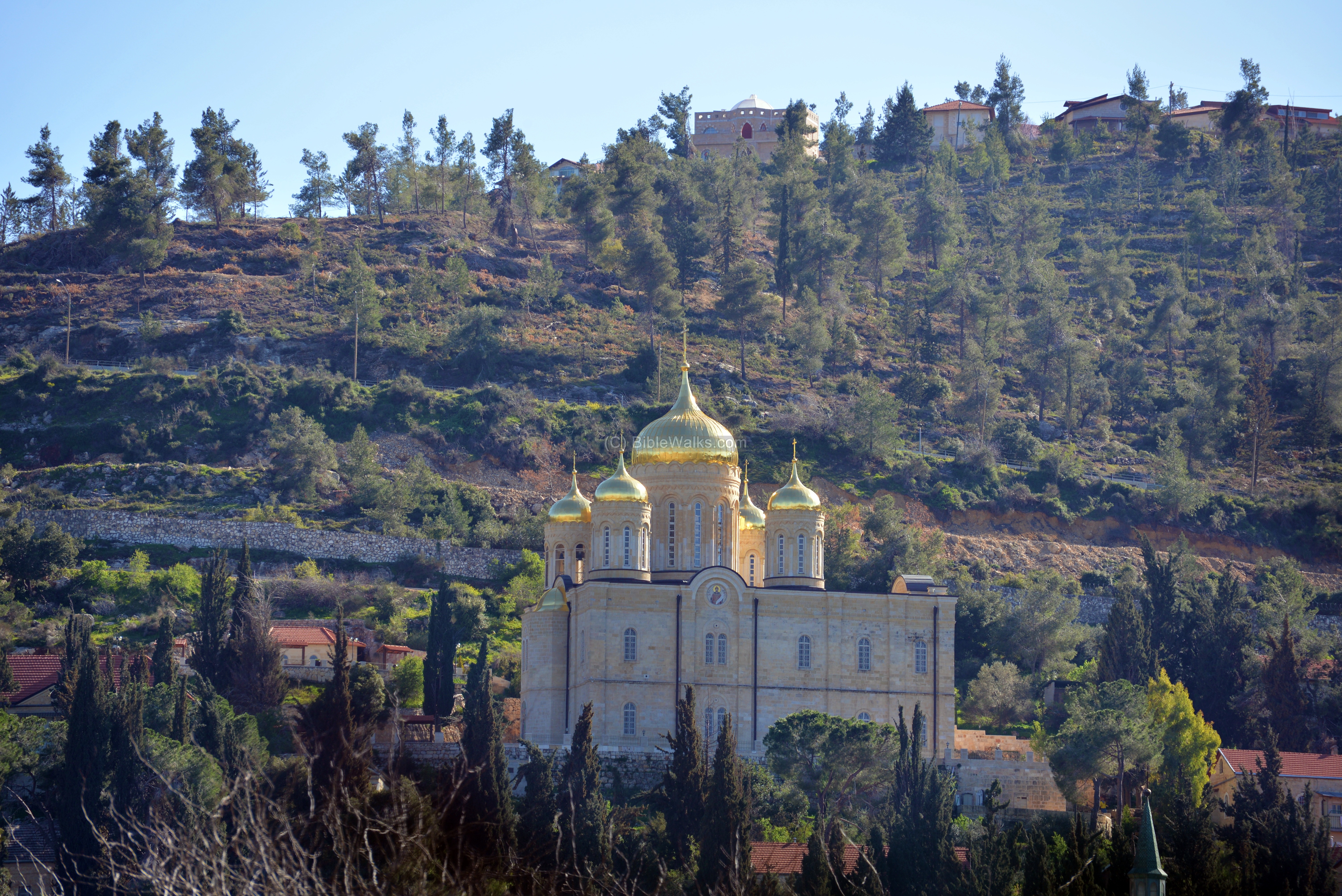
- A 19th Century Russian convent, on the south side of Ein Kerem.
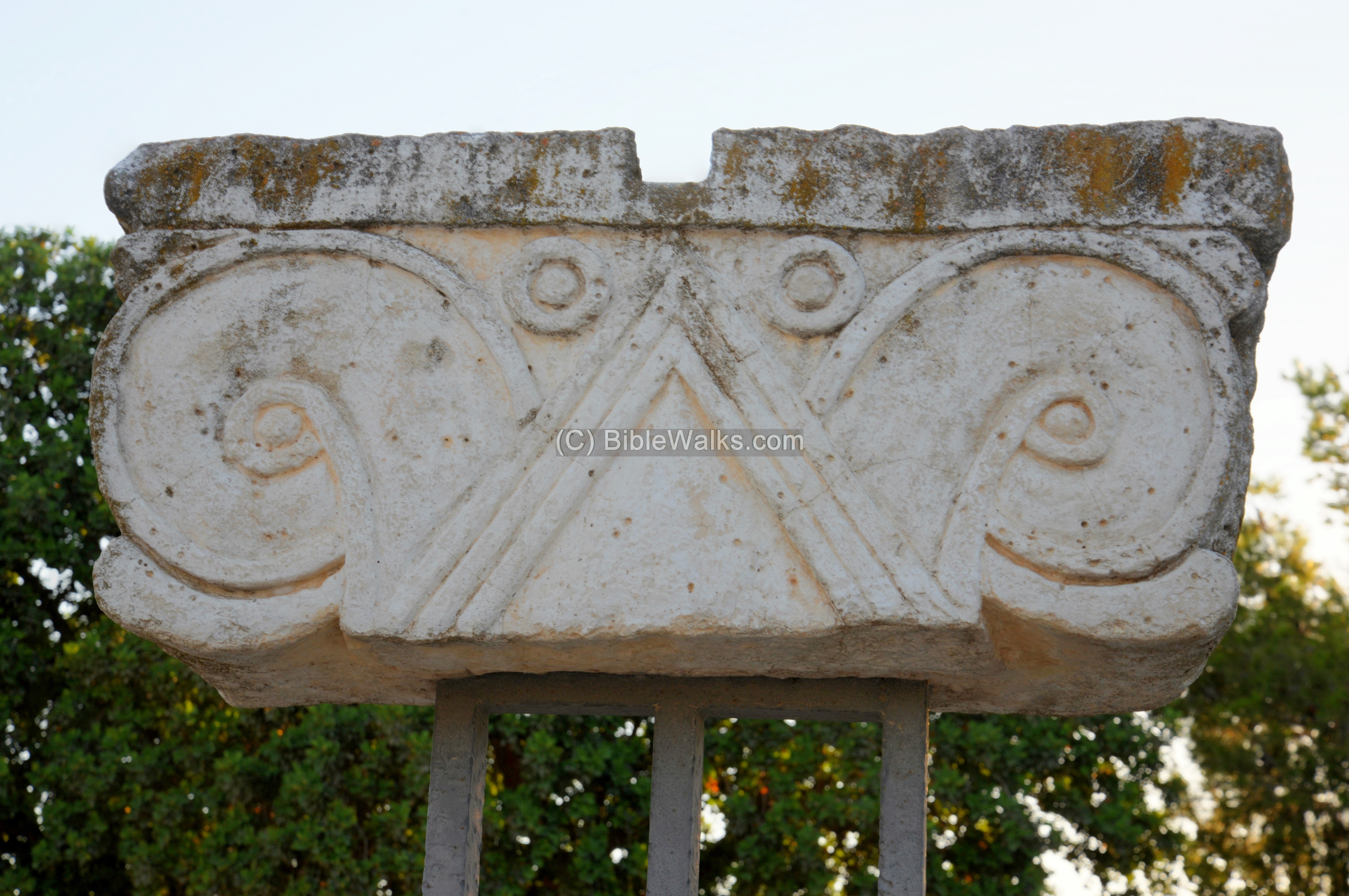
- Ruins of a royal palace and administration center, on the south outskirts of Jerusalem, overlooking the road to Bethlehem and Hebron.
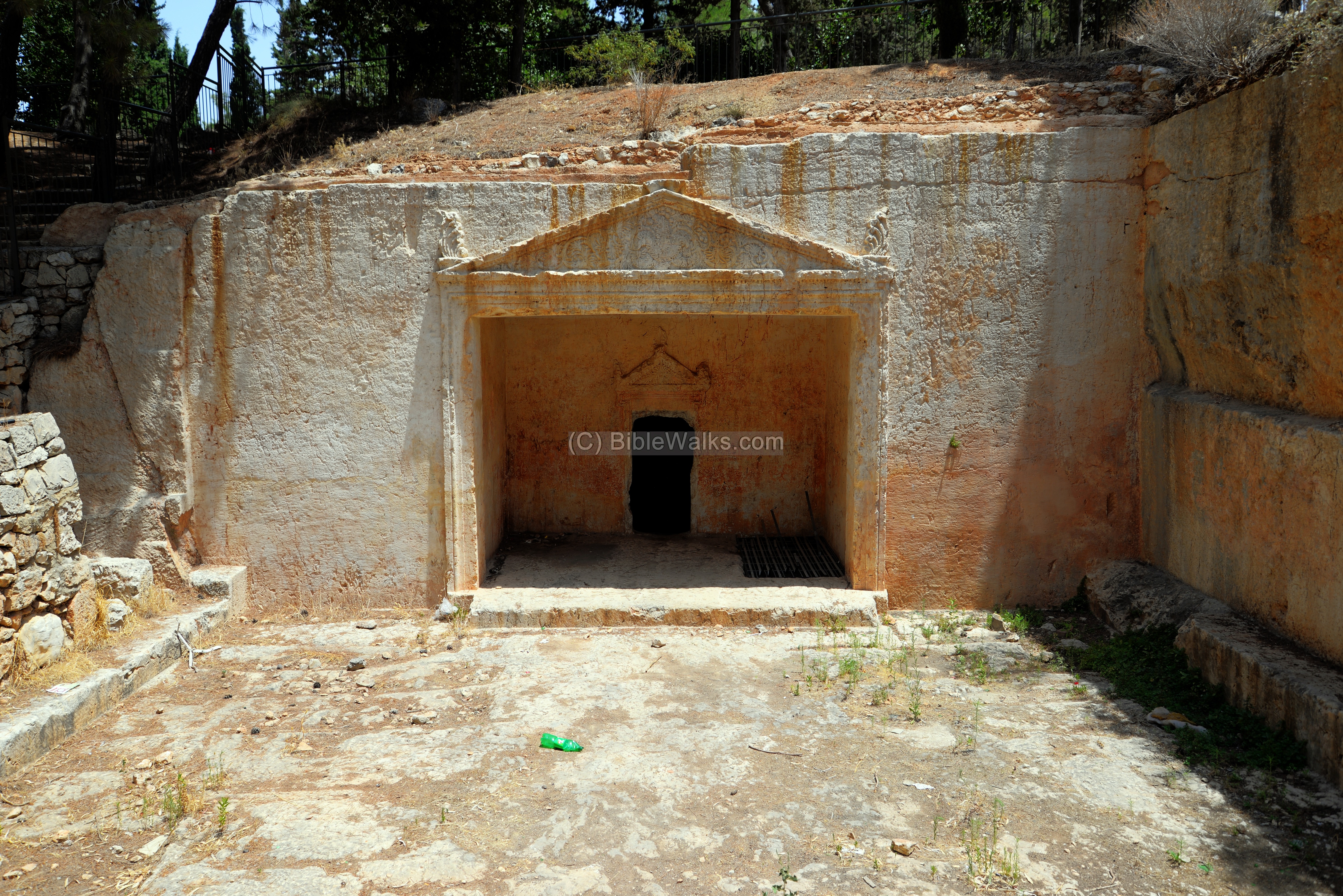
- An elaborate underground complex of Early Roman tombs located in the Sanhedria neighborhood in Northern Jerusalem.
Quick lookup on Map:
The sites appear on the following map, which focuses on the old city area.
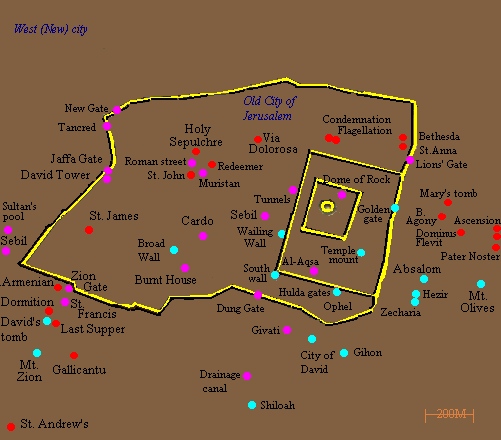
The color code on the map is:
● Blue = Old Testament
● Red = New Testament
● Purple= other ancient periods,
● Green= prehistoric, nature
● Yellow= regional galleries
You can also see the list of sites on a map of the region, and use it to navigate among the places.
BibleWalks.com – walk with us through the sites of the Holy Land
Sites Navigation: On all featured sites, you can use the navigation aid at the end of the page for proceeding to the next site. The navigation bar takes you through a tour of the sites. At the bottom of each site you can navigate forward or backward, or return back to a full list of all sites in all regions of Israel.
<<<All Sites>>>—next Jerusalem site—>>> Tower of David

This page was last updated on Aug 1, 2020 (Add Sanhedria)