
This village is located south of Mount Tabor. EinDor’s fame is from the visit of King Saul to the witch from EinDor. There are 2 sites – an ancient Biblical Tell, and a Roman village.
Home > Sites > Yizreel Valley > Ein Dor (EnDor)
Contents:
Background
Location
History
Photos
* Tell Zafzafot
* Tell Agol
* Roman Village
Biblical
References
Etymology
Background:
Endor is a ruined Arab village south of Mt Tabor. It was built on top of an earlier Roman village, and deserted during the Israeli Independence war (1948).
A Tell (mound) nearby the village was a famous Biblical site, identified as Ein-Dor (Endor), where King Saul consulted with the witch (magician woman) before the battle he lost and died on Mt. Gilboa, which is to the south of EinDor. The Bible tells the story of King Saul who wanted to hear a prophecy about a major battle with the Philistines, and came here to bring the spirit of the deceased prophet Samuel (1 Samuel 28:7): “Behold, there is a woman that hath a familiar spirit at Endor”…”Then said the woman, Whom shall I bring up unto thee? And he said, Bring me up Samuel”….
Location:
Ruins of the Roman/Arab village are located 5KM south of Mount Tabor, on the road to the city of Afula (#65). Taking the road (#716) towards Tamra and Neura, they are 0.5KM to the east of the main road, located along the steep slopes of the hillside – on the south side of the road.
The ancient site of Tell Zafzafot is located in the field across the road.
The following aerial view shows the points of interest.

History of the place:
-
Early history – Tell Zafzafot (Ein Dor?)
About 700M to the north of the ruins of the Arab village is an earlier site, Tell Zafzafot (Kh. es Sufsafeh). According to the stone and ceramics survey, it was inhabited almost continuously through the ages: from the Epi-Paleolithic period (16,000 to 8,300 BC), Chalcolithic (4500Bc to 3150BC), Early Bronze (3150BC – 2200BC), Middle Bronze age (2200 to 1550BC), Israelite/Iron age (1200 to 1000BC) and Persian period (586 to 332BC), Hellenistic (332BC – 37BC) , Roman/Byzantine (37BC-640AD), Arab, Mameluke and Ottoman.
Tell Zafzafot is according to some scholars a leading candidate for Biblical Ein-Dor (see references), since it was inhabited in the Biblical times, and preserved the name (in the nearby village). Other scholars, such as Y. Aharoni, identifies the Biblical Ein-Dor with the nearby Tell Agol (see also Naim).
The cities and roads during the Canaanite and Israelite periods are indicated on the Biblical Map below.

Map of the area around EinDor – during the Canaanite and Israelite periods – 15th through 6th century BC (based on Bible Mapper 3.0)
- The Roman period
The population relocated to a nearby site, probably during the Hellenistic period, as a general trend of many of the ancient sites in the Galilee. The new site, located on the hillside to the south of the ancient site, was bigger and thus could accommodate the larger population. The survey of the village (Z. Gal, 1998) revealed Roman ceramics and rock-hewn caves.
- Ottoman period
The sites related to Ein Dor were examined in the PEF survey (1866-1877) by Conder and Kitchener. The Roman/Arab village ruins appear as “Endor” in the center of the section of this map of 1878. The Biblical mound appears as “Kh. es Sufsafeh”, with springs (Ayun) located to the north. Conder described Kh. Sufsafeh as ” A few stones. No distinguishable buildings”.
 Part of Map sheet 9 of Survey of Western Palestine, by Conder and Kitchener, 1872-1877.
(Published 1880, reprinted by LifeintheHolyLand.com)
Guerin (1869) was quoted in their survey, describing the state of the Roman/Arab village at that time (SWP IX p116):
“Half the houses have fallen down, and the remaining half are ready to fall. A great many caverns, silos, and cisterns cut in the rock attest its ancient importance…. a number of ancient tombs surmounted by vaulted arcosolia. A fountain called ‘Ain Endor flows along the bottom of a cavern and emerges by a little canal. This spring partially fails in August and September, for which reason the former inhabitants cut the cisterns”.
A photo of the “fallen-down” village was captured by the American Colony photographers:

Photos of the Library of Congress – American Colony – created 1900-1910
- Modern periods
In the 1920s the Iraqi pipeline passed through the Arab village of Endor on the way to the port of Haifa. This brought in new Arab residents, who expanded the small village. They reused the stones from the Roman ruins and built 75 stone houses along the foothills. The village was later destroyed in 1948 and is in ruins since then.
A new Kibbutz was established in 1948, 2KM north-east to ancient EnDor, and named it “Ein-Dor”. The Kibbutz has a large wire factory (“TelDor”), agriculture, and a small – yet well organized – museum on the ancient history of the area. Some of the findings from Ein-Dor are displayed there. According to the staff, they are hoping to recover one day the sword of King Saul. We recommend a visit to the museum.
Photos:
(a) Tell Zafzafot:
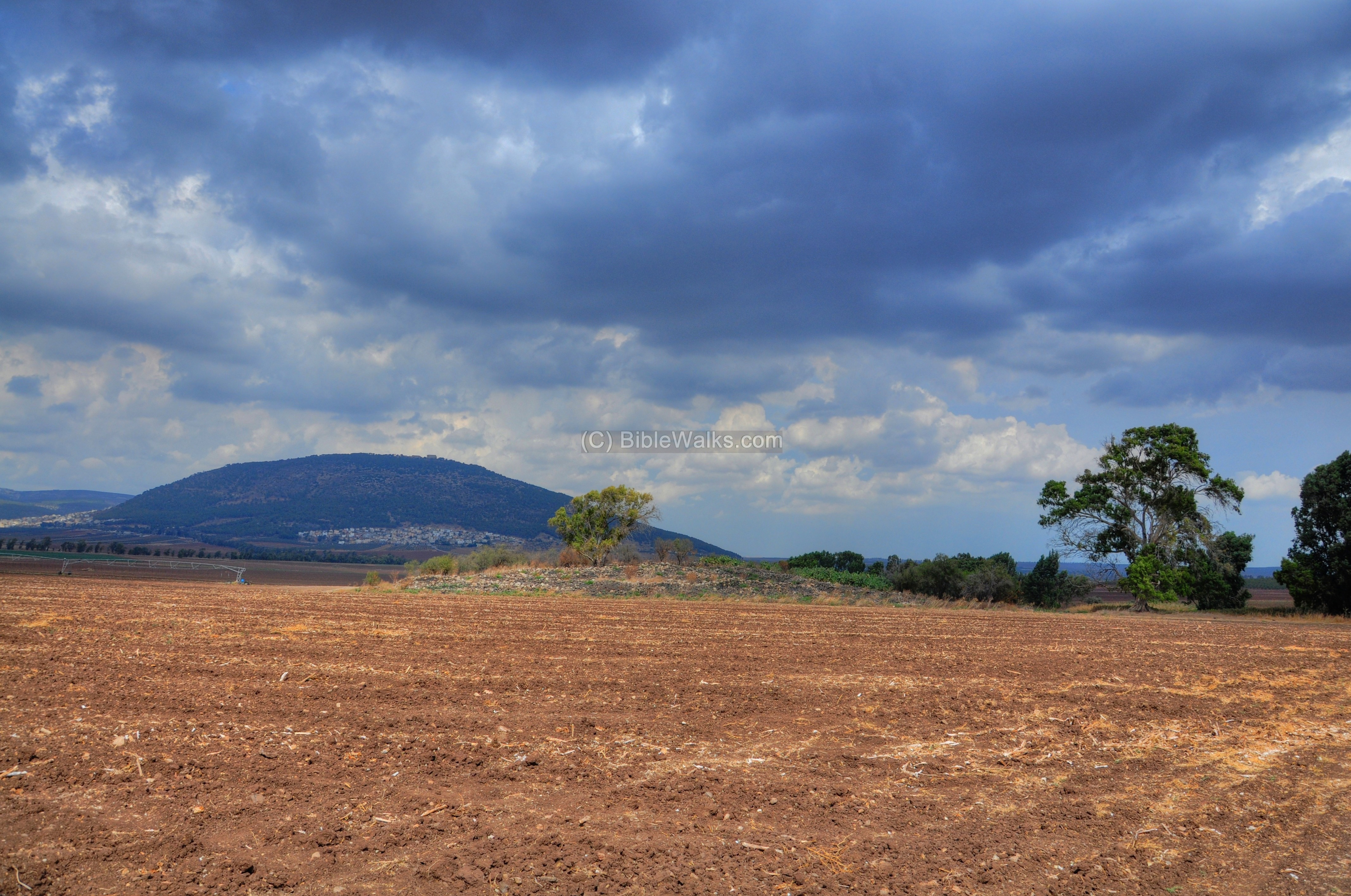
North to the modern road (#716) is a small Tell (mound) called Zafzafot, which may have been the Biblical site of Ein Dor. Behind the Tell is Mt Tabor, with the monastery on the top.
Click on the photos to view it in higher resolution…
The mound area is 5 Dunam (1.2 acres). The Tell was burnt during the summer time, clearing out the weeds, and so the stones are quite visible. In this site there were several archaeological surveys, which identified pottery from Early Bronze period until recent time. Their findings support the claim that this was the site of Biblical Ein-Dor, based on the availability of ceramics from the period of the Israelite Kingdom and the preservation of the ancient name.
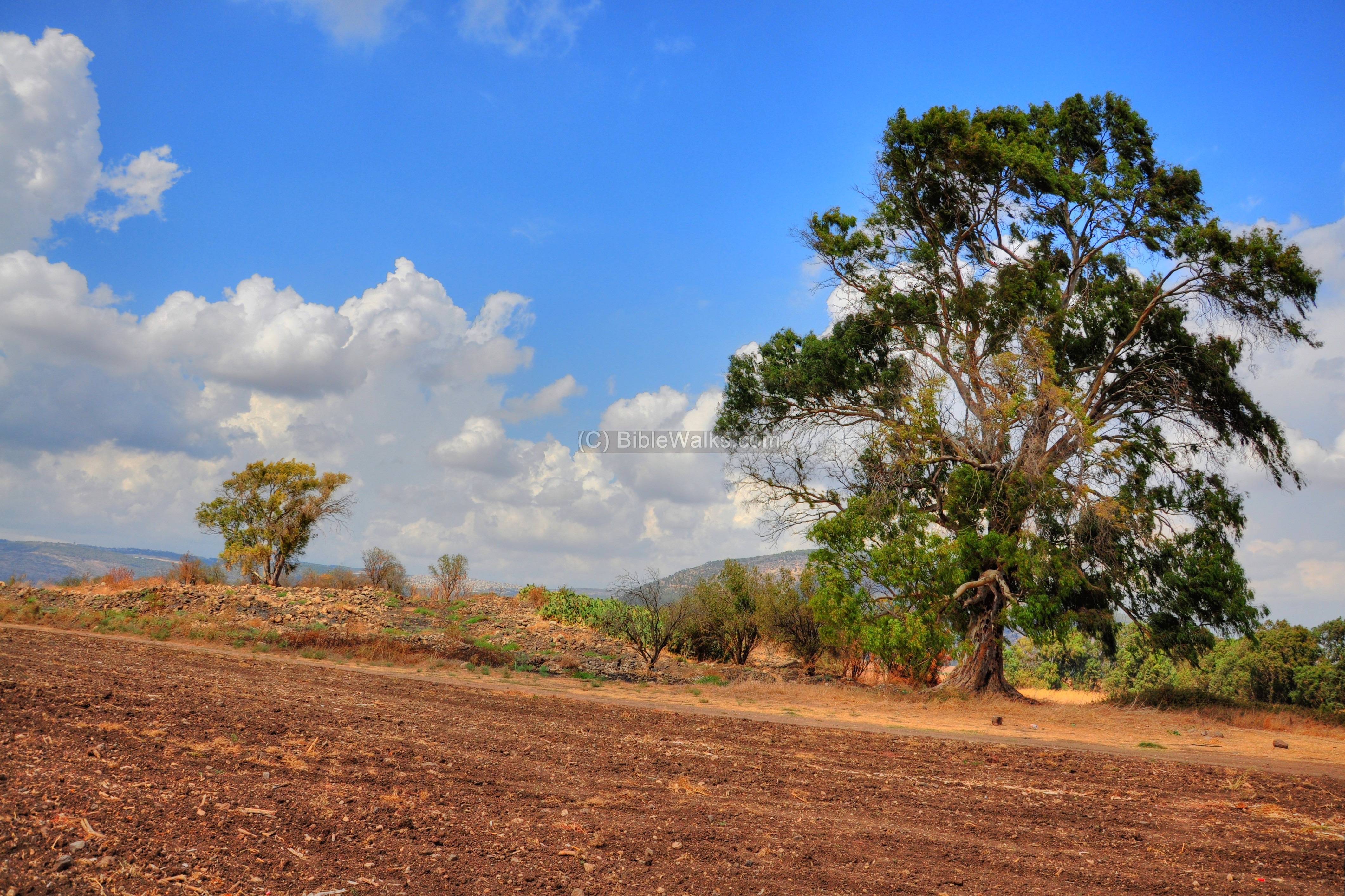
All around the top of the low hill are heaps of basalt and limestone stones, which were once walls and structures of the Canaanite and Israelite city, and also a collection of stones from the fields around the site.
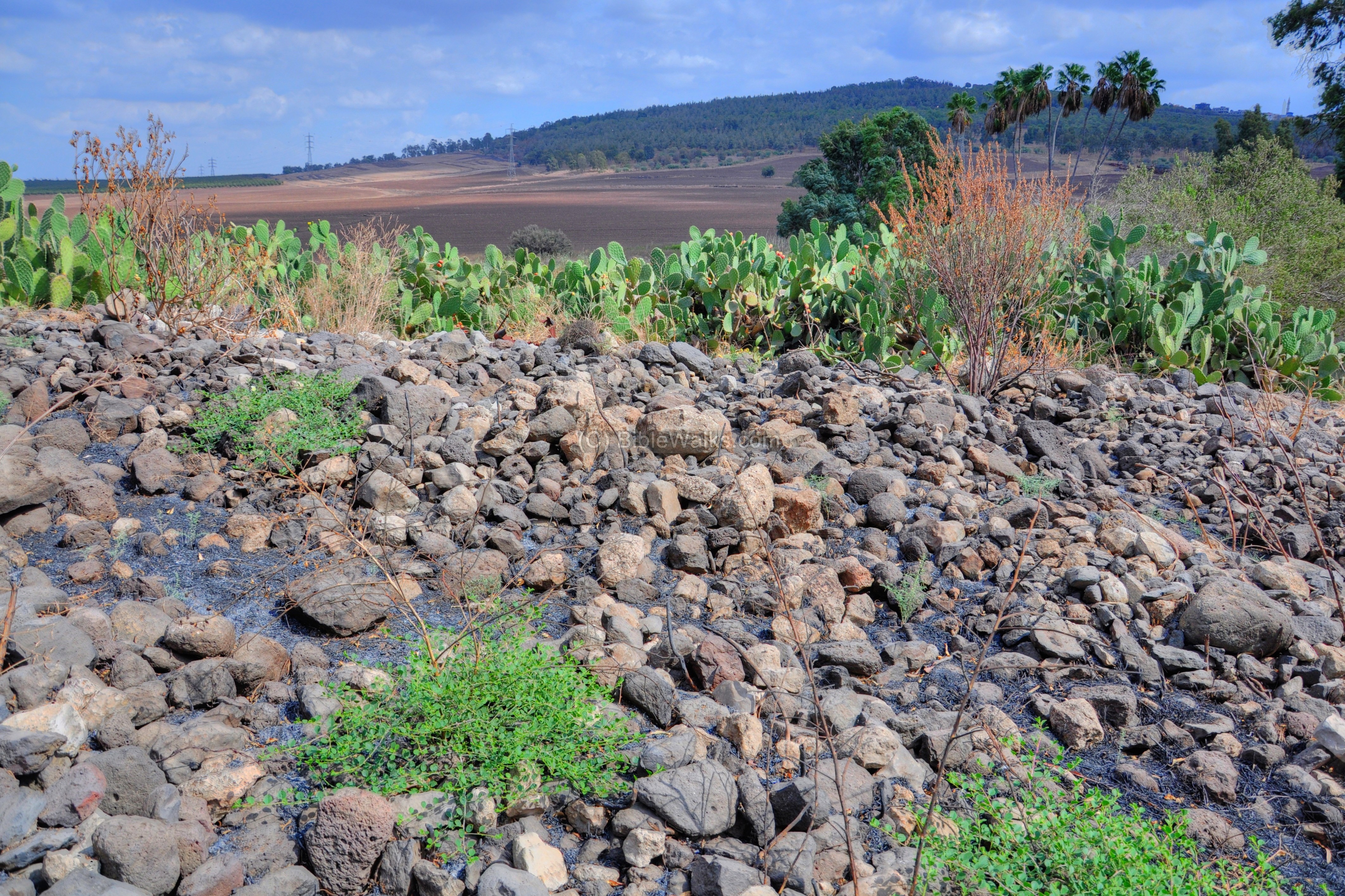
Another view of the top of the mound:

There are many cactus bushes on the hill:
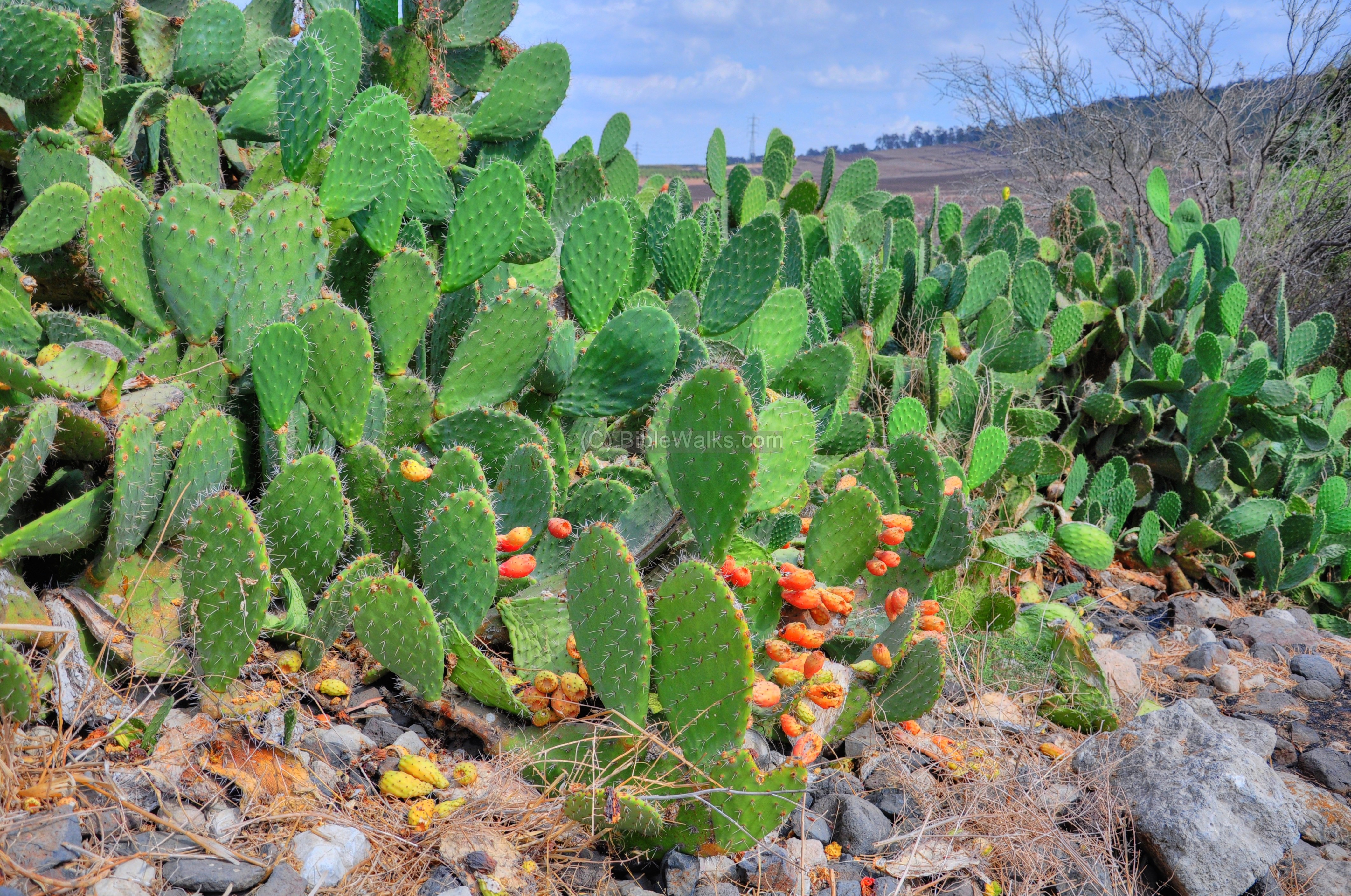
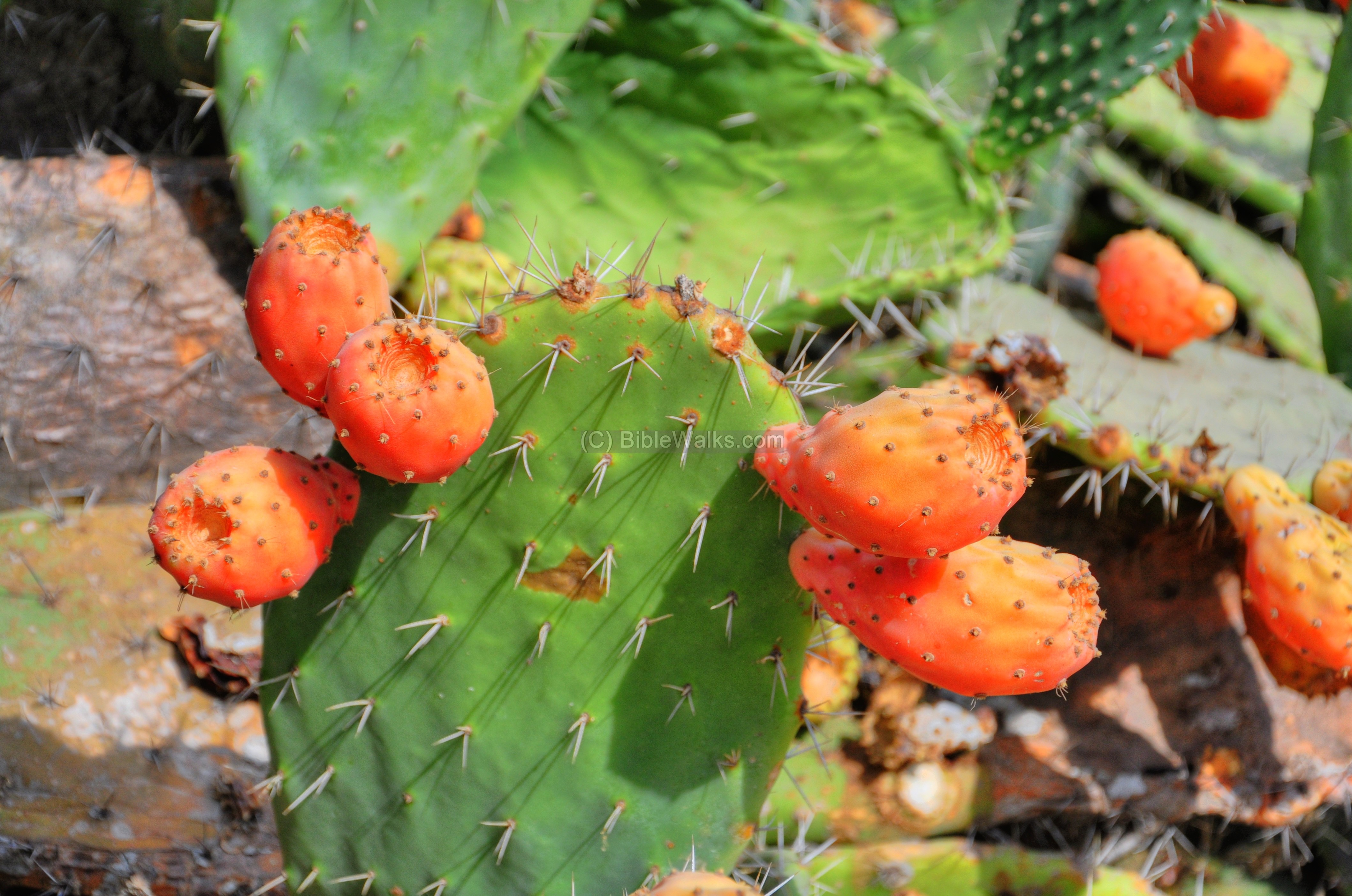
A closer look on the juicy cactus fruits. This photograph was taken in the first week of October. You can pick the sweet fruits (aka Sabre)- but beware of these tiny thorns.
-
Byzantine Oil Press
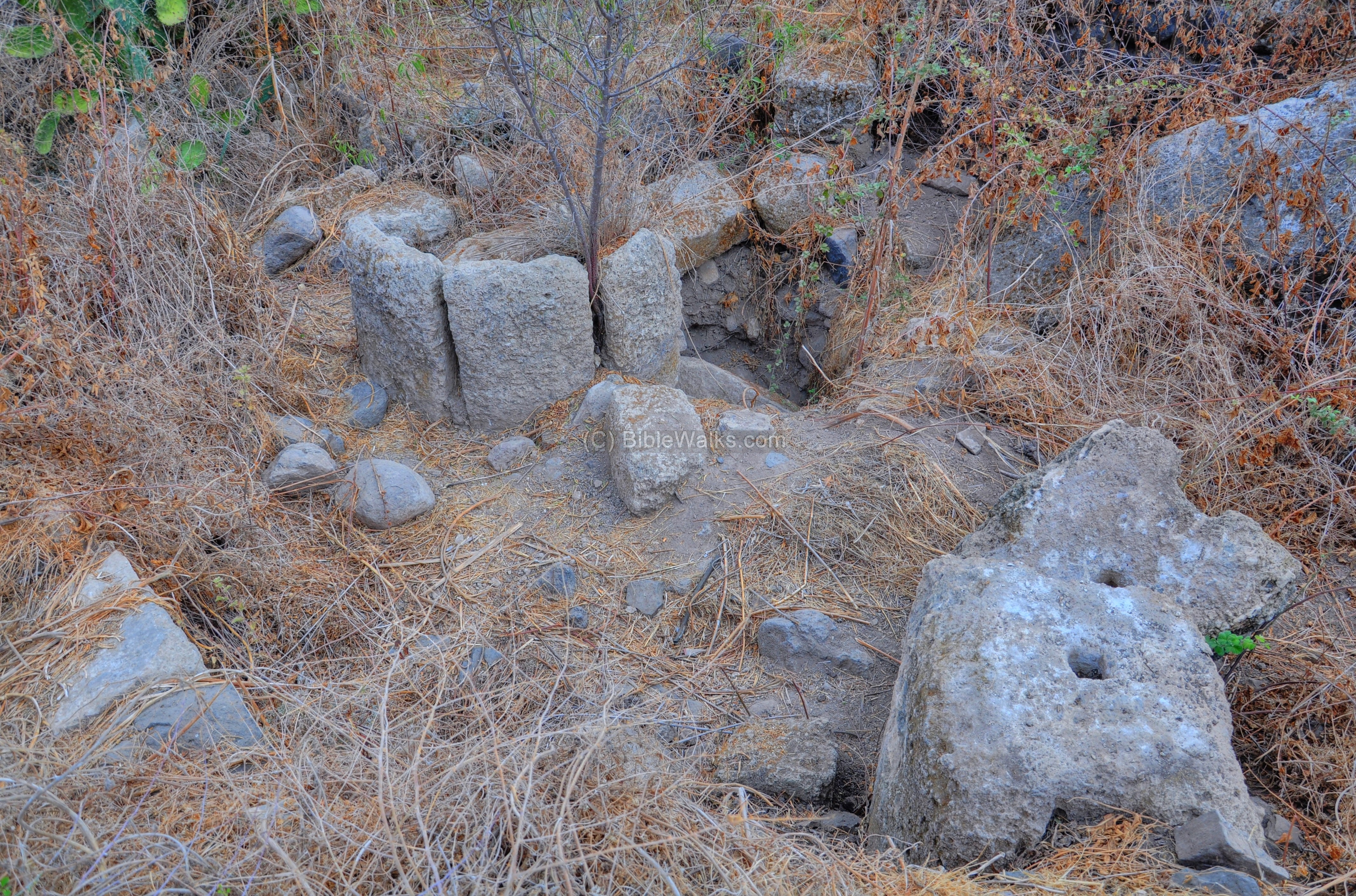
A large oil press complex was also exposed on the north side, dated to the Byzantine and Early Arab periods.
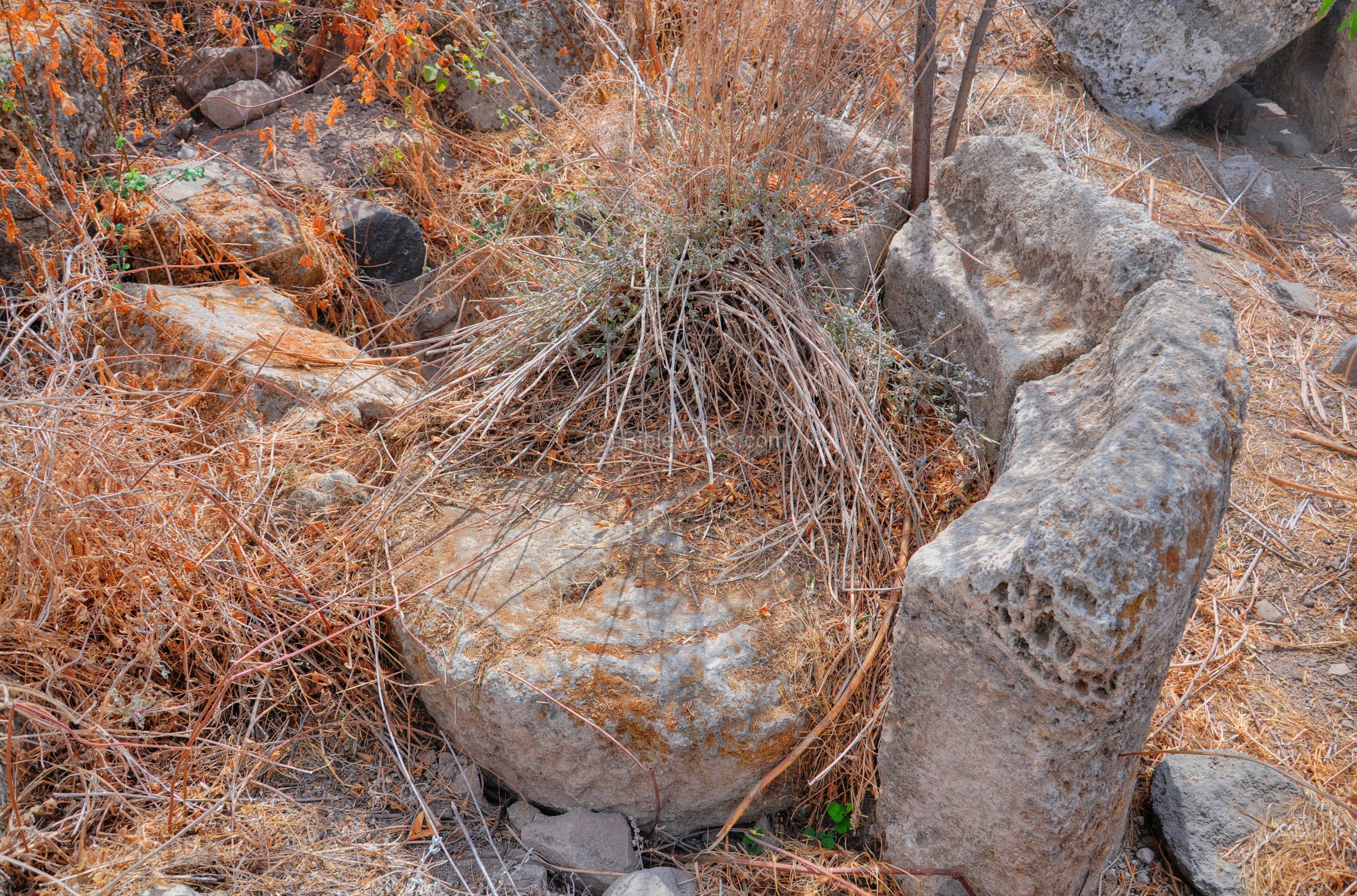
A closer view of the crushing basin is shown in the following photograph. The press is based on a horizontal beam made of wood, which hanged on a pair of vertical pillars. The beam was pushed down, using a set of stone weights, onto a round crushing basin. It pressed baskets with olives, extracting their juice which flowed into a collecting pool. The oil was then collected into vessels.
-
Ein Dor Spring
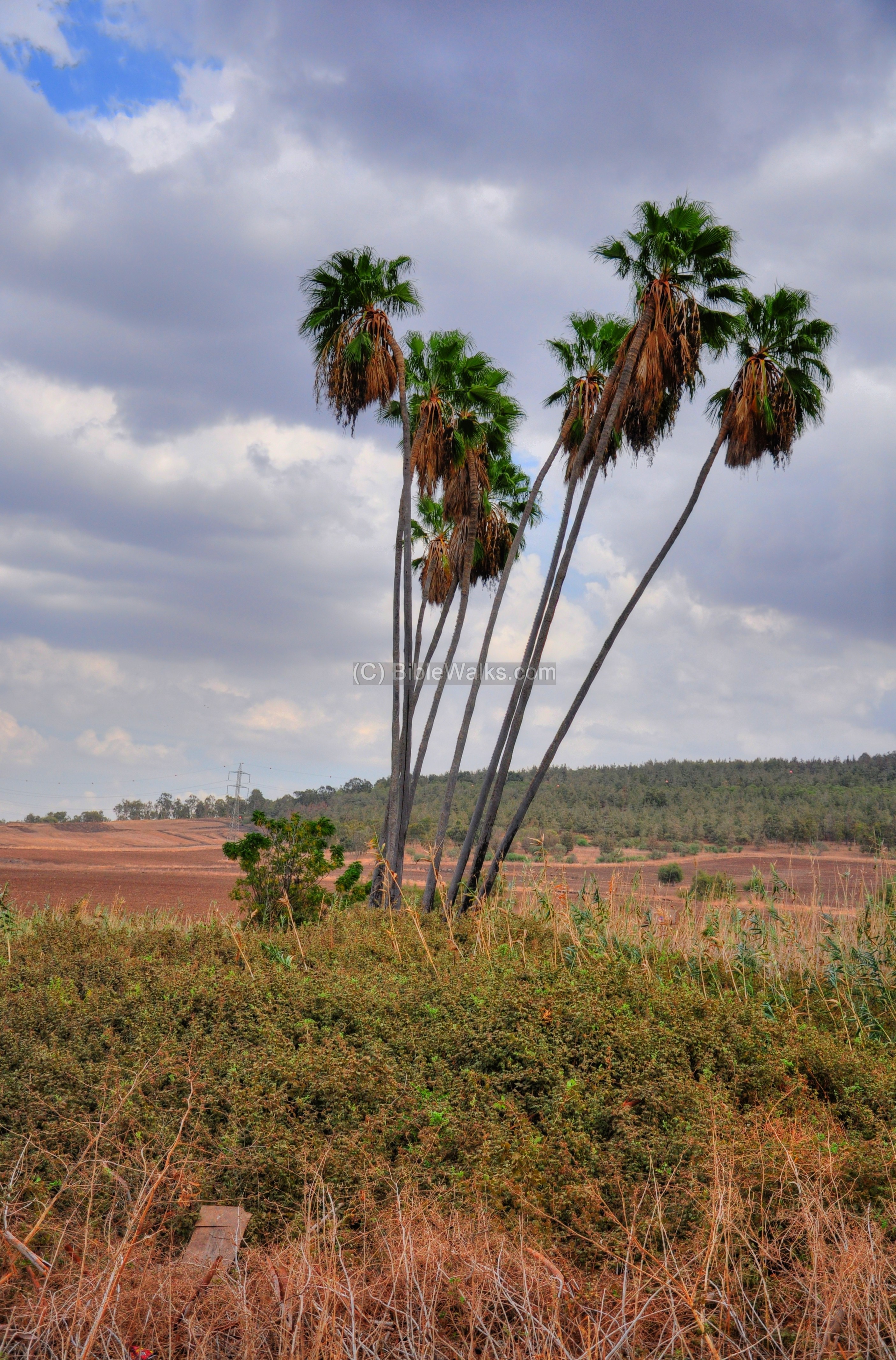
A spring, called Ein Dor, is located to the east and north of the Tell. It was the source of water at ancient times, and the reason why the ancient village was built at this site. A group of palm trees (of the type “Washingtonia Robusta”) grow out of the spring’s area. Raspberry bushes grow around the spring.
A large Eucalyptus tree, with a burnt trunk, is located near the spring. The Eucalyptus trees were not native in Israel; they were imported from Australia starting in the 1860s, and used primarily to combat the swamps since they suck up large quantities of water. Ever since these trees propagated through Israel.

- Witch (Magician-Woman) of Ein-Dor
Where is the witch (or magician woman) from Ein Dor who gave King Saul the gloomy fortune which eventually turned true? She is probably long gone. However, the name of the valley west (left) of the site is called “Kosemet”, which means magician-woman in Hebrew. If you visit the site you may still try to find her on the site…
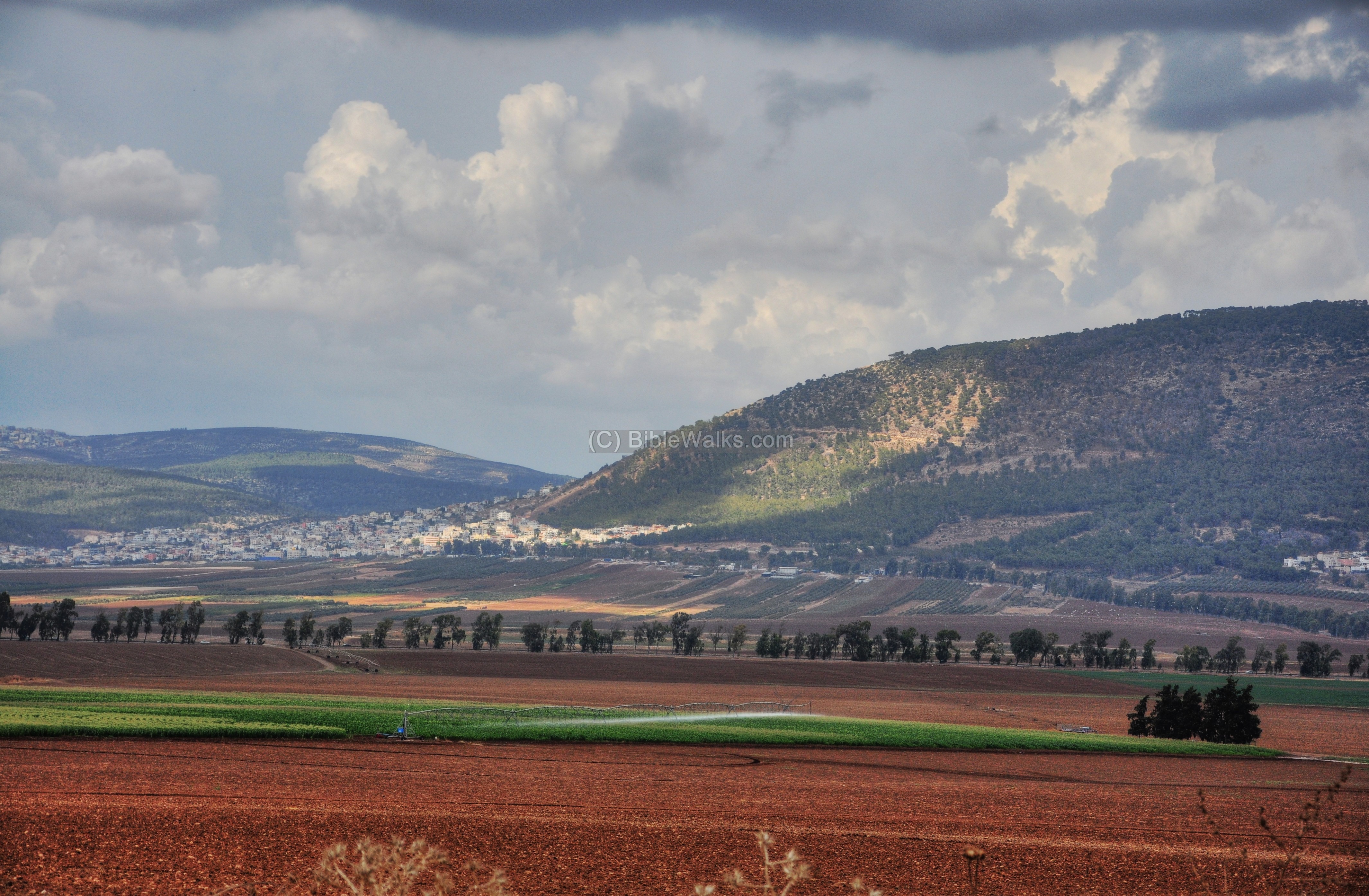
(b) Tell Agol:
This is the view of the another Biblical site, called Tell Agol (Tell el Ajjul, Tell el Ujul), which is 2KM to the south-east of Kh. Zafzafot. It is a crater of an extinct volcano, dated to 18 to 9 Million years ago, which explains the abundant of basalt stones around the area.
Although some scholars identify it with the Biblical Anaharath (listed in Joshua as part of the region of the Tribe of Issachar), there are scholars who identified that site as the Biblical Ein Dor.
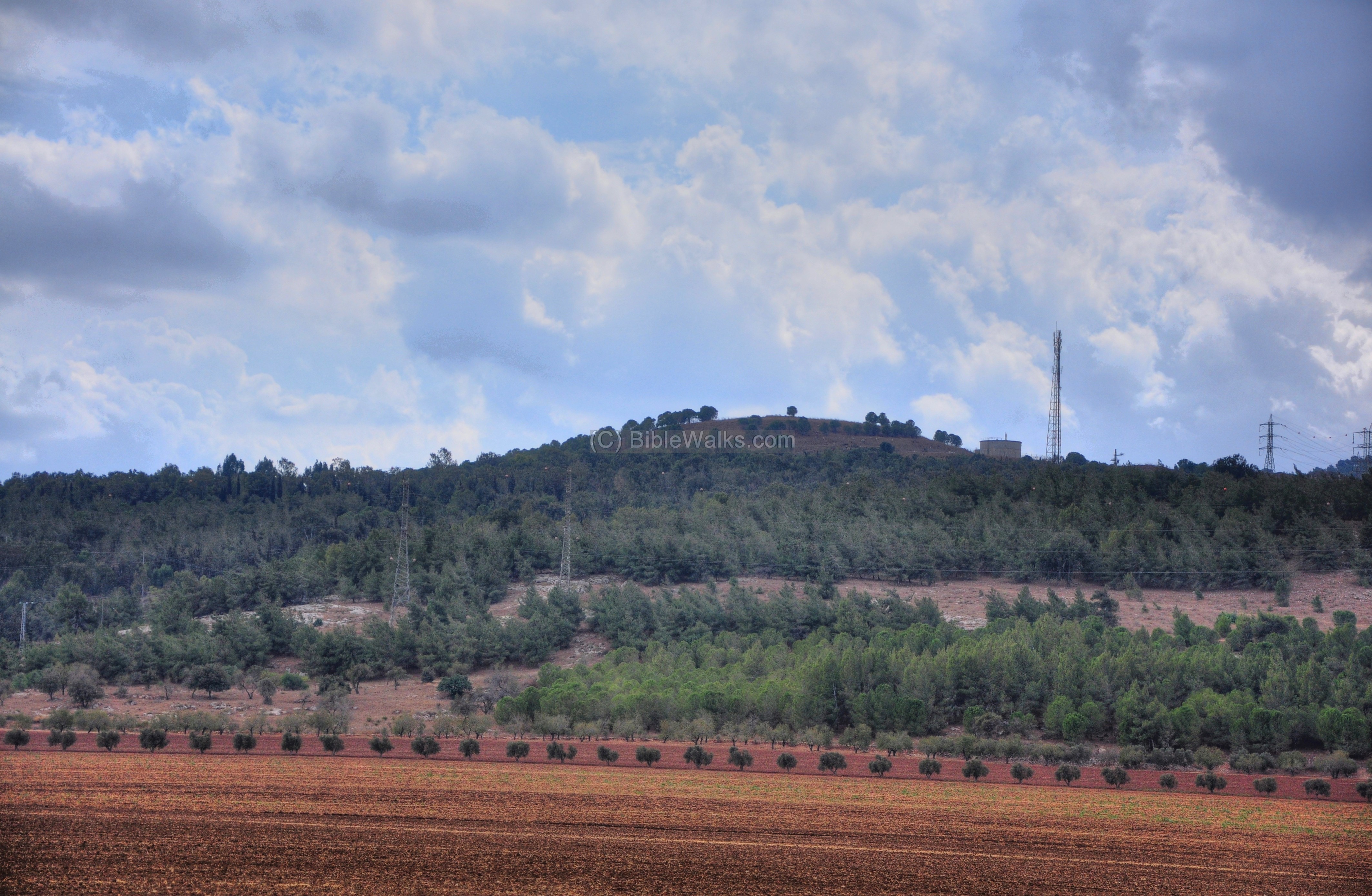
A view of Tell Agol from the village of Naim is seen in the following photograph. Today this round hill is located in the center of an industrial park.
The surveys on this site dated the findings to Paleolithic period, Middle Bronze I (2200 to 2000BC), Israelite/Iron age I (1200 to 1000BC), Iron II (1000-586), Persian period (586 to 332BC) and Byzantine (4th-7th C AD). These findings support the identification of Agol with ancient EinDor, while the identification of Anaharath does not fit the pottery found in the surveys.
On the south side of the hill are remains of trenches, related to a camp erected by Napoleon Bonaparte’s French army, in preparation for the 1799 battle on the Ottoman forces in Mt Tabor (April 16, when 6,000 French soldiers beat 20,000 Ottoman soldiers, with one of Napoleon’s most genius moves in the Holy Land campaign).
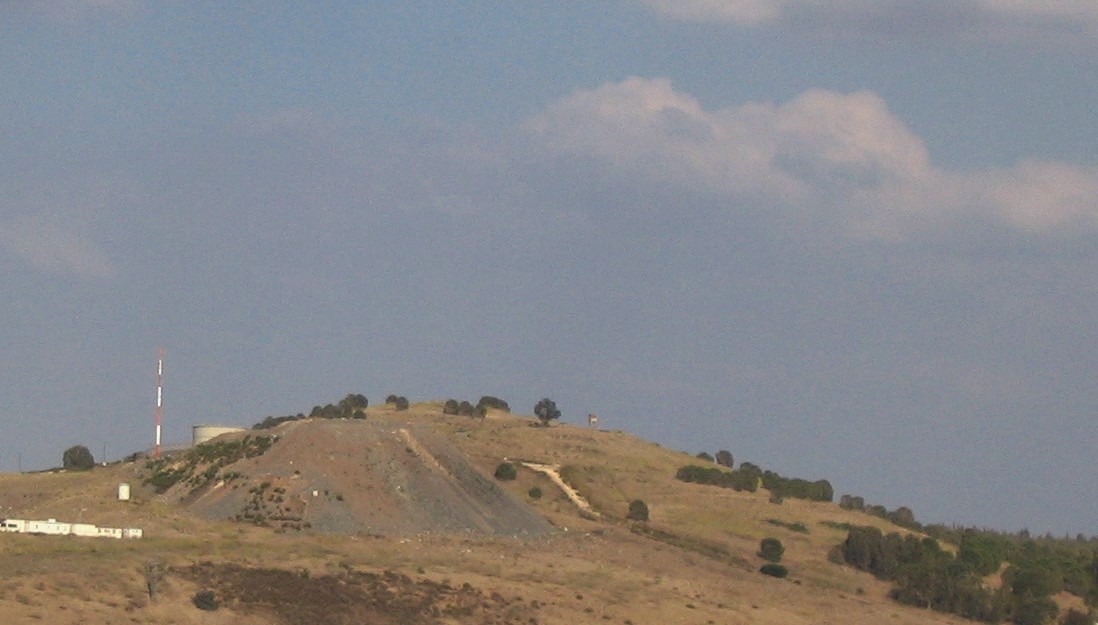
(c) The Roman and Arab village:
A view from the north towards the ruins of the Arab village, which is located on the northern hillside facing Mt. Tabor. The deserted Arab village is built on top of the ruins of the ancient Roman village.
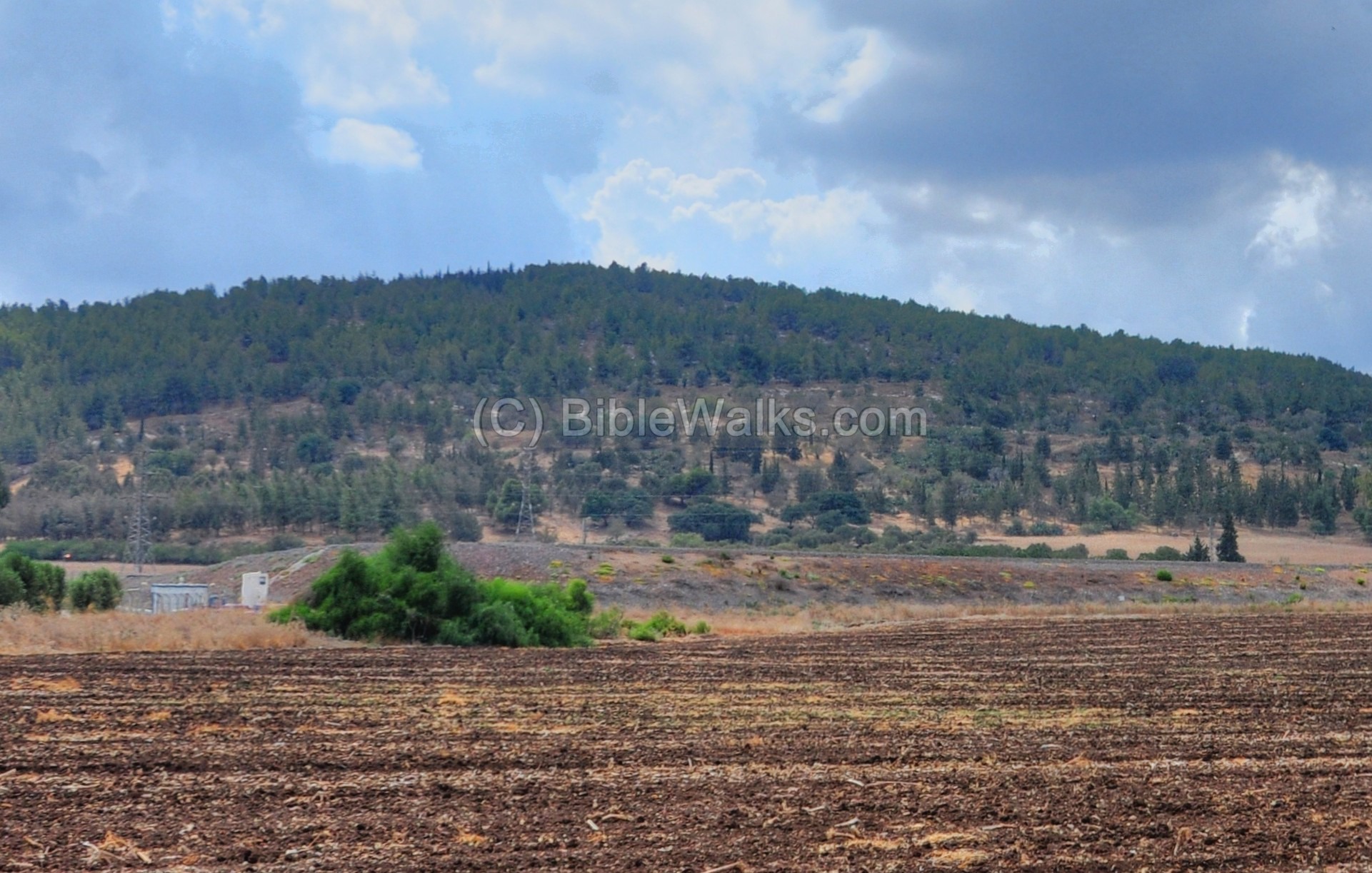
Along the bottom of the ruins of the village, and in parallel to the modern road, is an ancient road. It was connected the village of Tamrah (Tumrah) to Afula.
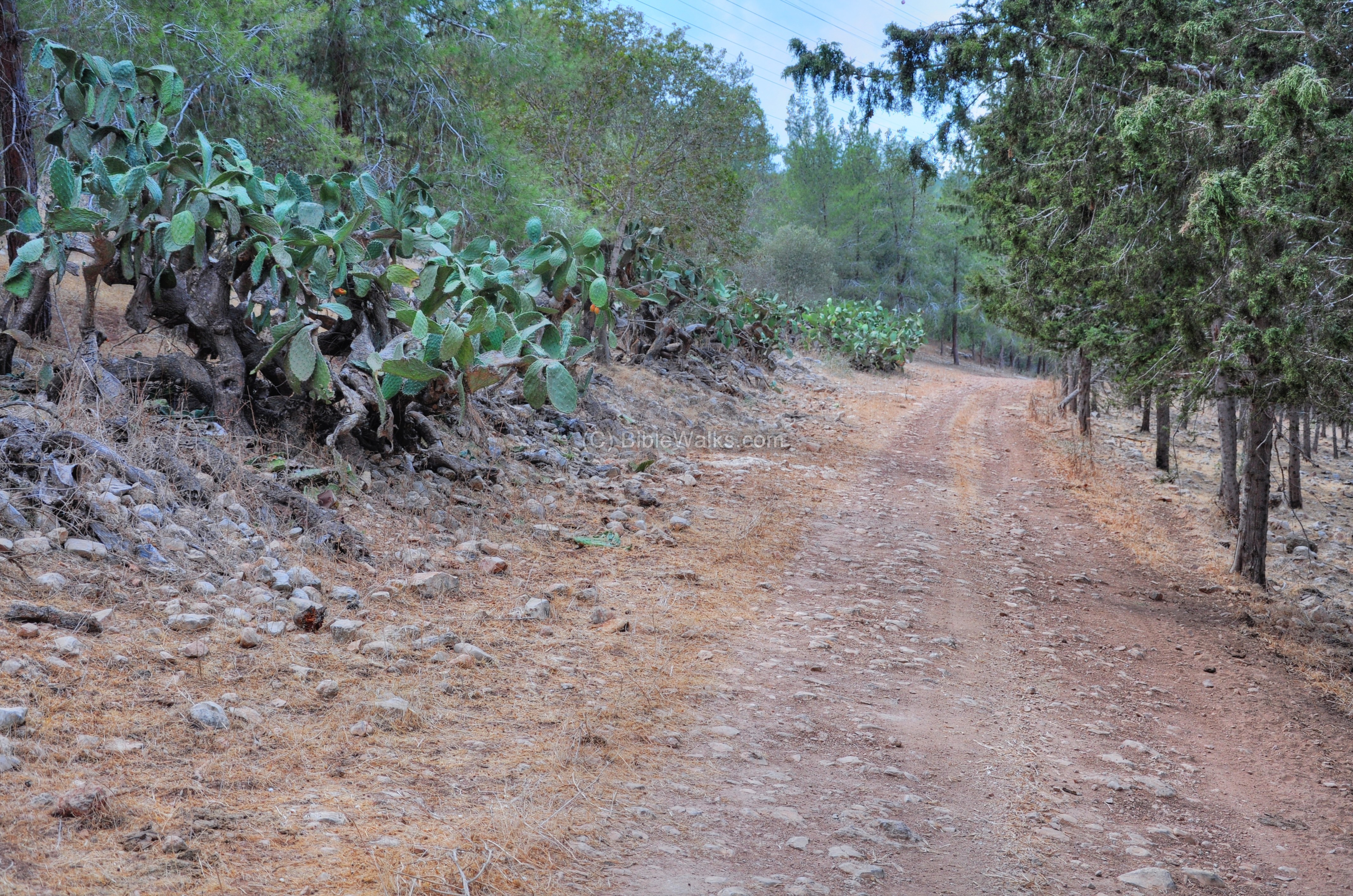
Another section of the old road is seen in the next photograph. The cactus plants are common in such sites – they were used as fences and were also planted along the sides of the roads. The whole village is covered by cacti, and some sections you have to actually crawl along narrow paths that cut through the bushes.
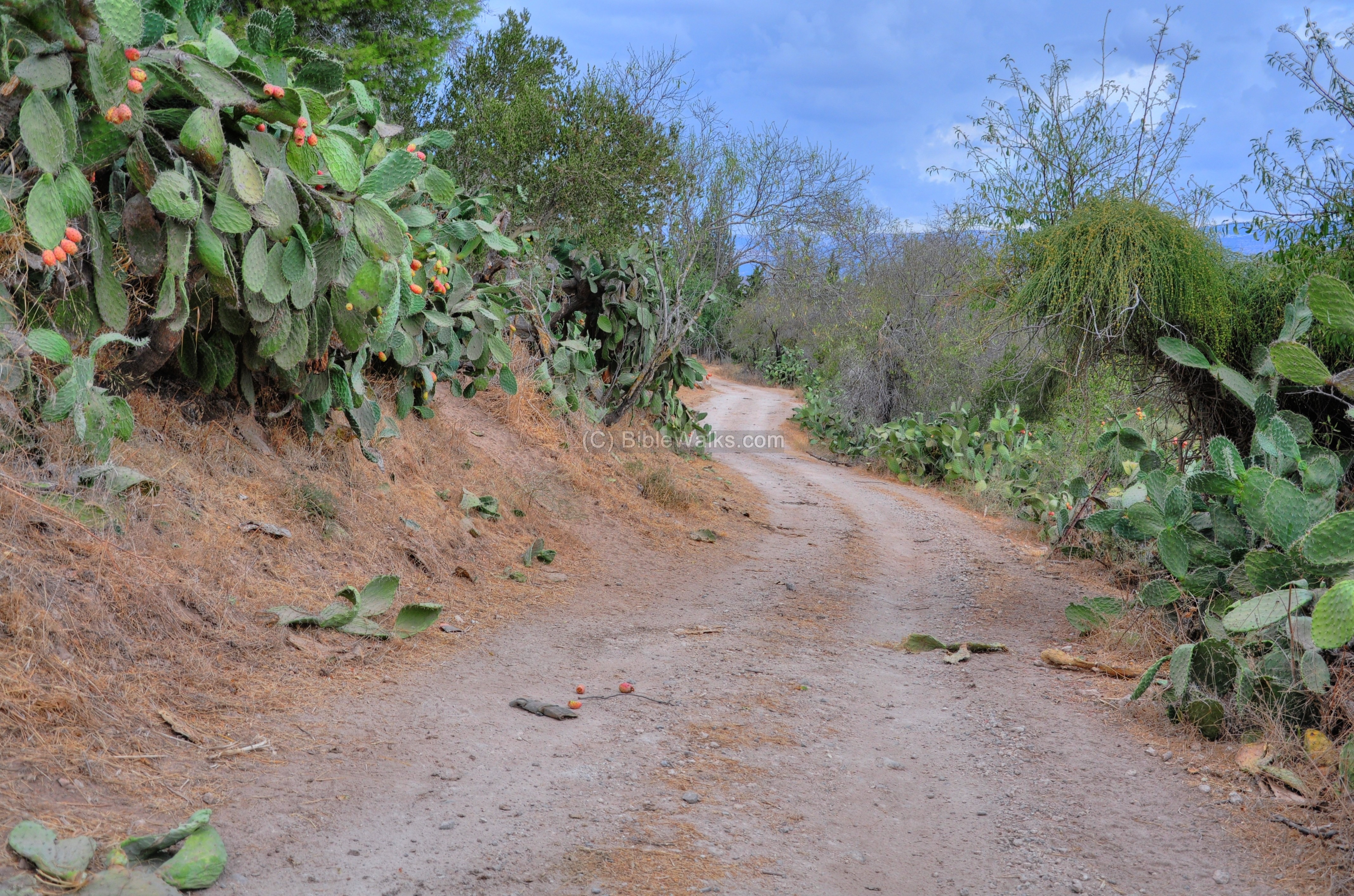
Above the road, along the steep foothills, are dozens of ruined houses. They have probably been constructed in the 20th C during the British Mandate, using the stones from the earlier Roman ruins. According to the PEF survey (sheet IX published in 1882 ) the village at that time (50 years earlier) was made of “mud cabins”.
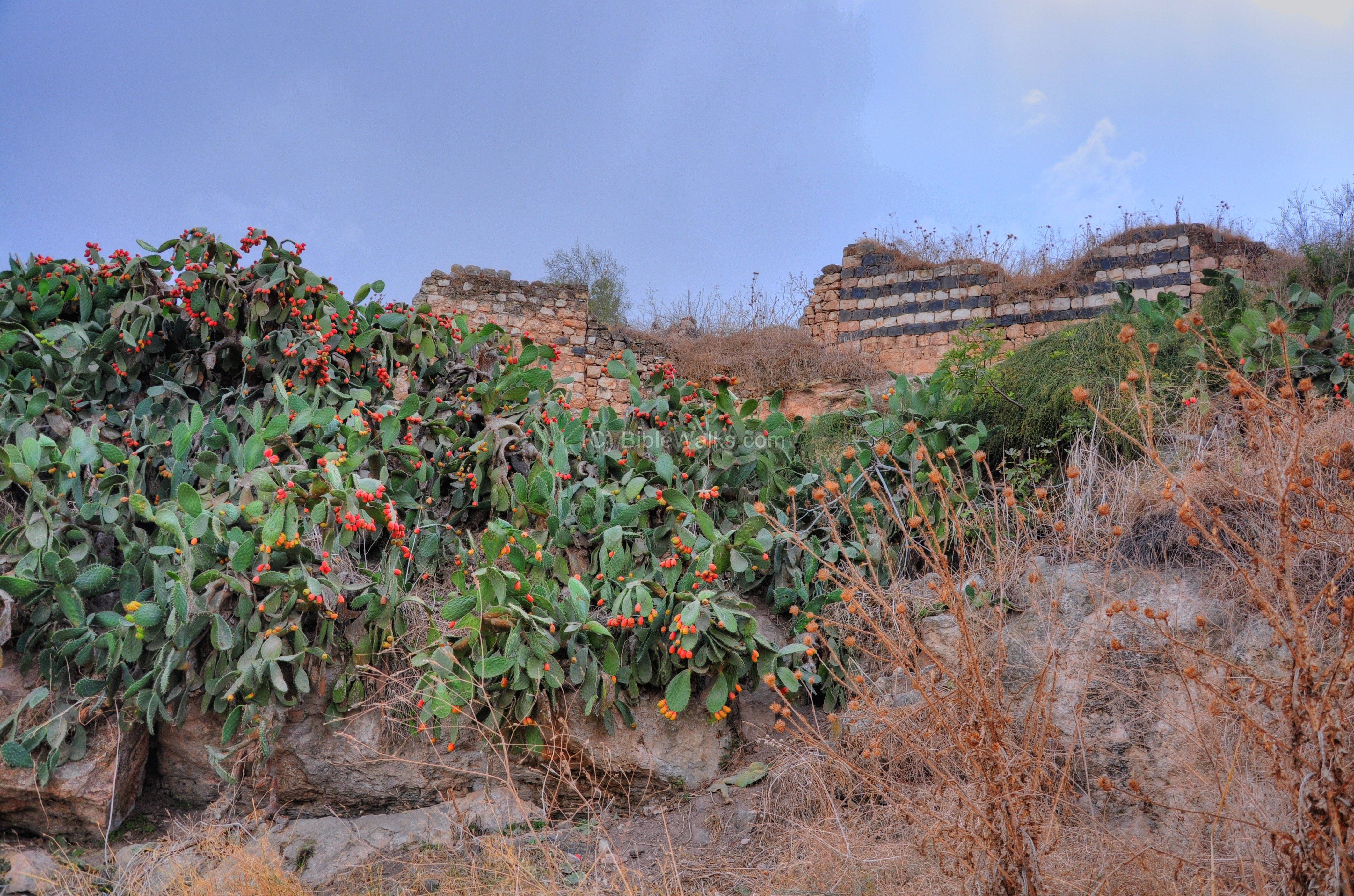
The ruins of the Arab village, which was built over the Roman village, cover an area of 60 Dunam (6 Hectares).
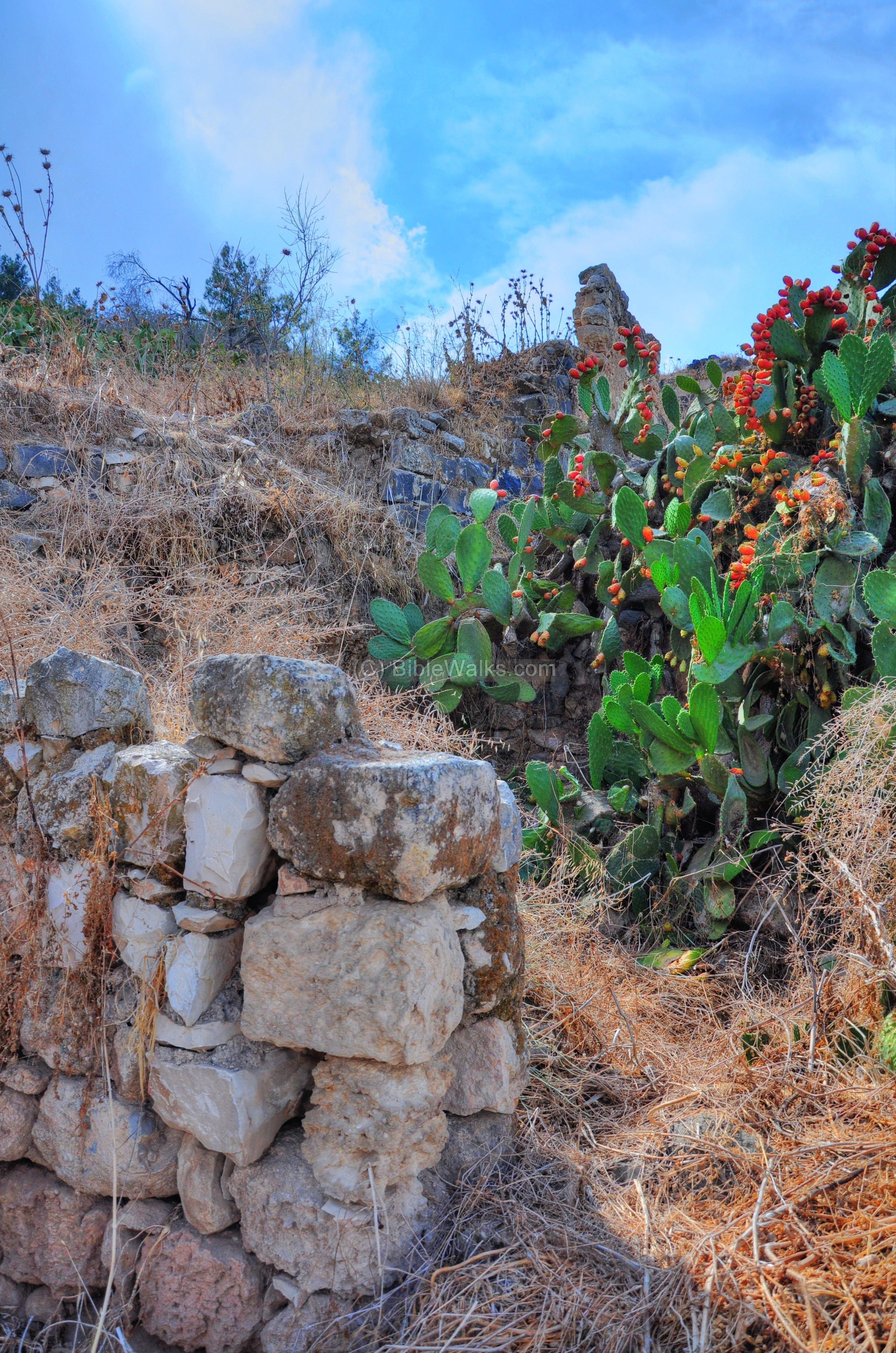
Between the ruins were cisterns, tombs and ancient quarries. They were dated to the Roman, Mameluke and Ottoman periods. The hewn tomb below is located on the side of the road.

A view from one of the ruined houses towards Mt Tabor:

Biblical References:
Joshua 17:11
This text lists the cities within the tribe of Menashe (Manasseh). Ein Dor, and its towns, was part of the area of Issachar, but reassigned to the tribe of Menashe after some of its families (Aviezer, the family of Judge Gideon) moved into the area, including En-Dor.
“And Manasseh had in Issachar and in Asher Beth-shean and its towns, and Ibleam and its towns, and the inhabitants of Dor and its towns, and the inhabitants of En-dor and its towns, and the inhabitants of Taanach and its towns, and the inhabitants of Megiddo and its towns, even the three regions”.
Psalms 83: 9:11
In this text is a description of one of the battles in the times of the Judge Gideon (12th C BC) against the alien nomads that penetrated from the desert into the Jezreel valley:
“Do unto them as unto the Midianites; as to Sisera, as to Jabin, at the brook of Kison: Which perished at Endor: they became as dung for the earth. Make their nobles like Oreb, and like Zeeb: yea, all their princes as Zebah, and as Zalmunna”.
1 Samuel 28: 4-25
This interesting Biblical story describes how King Saul consulted with the wizard woman from Ein Dor (EnDor) before his fatal battle on the Gilboa. King Saul persecuted these spiritual persons during his Kingdom, so no wonder she was afraid of the King. Although he came to the meeting disguised, the witch recognized him. Saul required her services in order to get a sign about the future he will face in the crucial battle on the next day against the Philistines. King Saul brought back the ghost (ob) of the recently dead prophet Samuel, however Samuel did not deliver a positive outcome of the battle. Indeed, King Saul dies on the next day.
“And the Philistines gathered themselves together, and came and pitched in Shunem: and Saul gathered all Israel together, and they pitched in Gilboa. And when Saul saw the host of the Philistines, he was afraid, and his heart greatly trembled. And when Saul inquired of the LORD, the LORD answered him not, neither by dreams, nor by Urim, nor by prophets. Then said Saul unto his servants, Seek me a woman that hath a familiar spirit, that I may go to her, and inquire of her. And his servants said to him, Behold, there is a woman that hath a familiar spirit at Endor.
And Saul disguised himself, and put on other raiment, and he went, and two men with him, and they came to the woman by night: and he said, I pray thee, divine unto me by the familiar spirit, and bring me him up, whom I shall name unto thee. And the woman said unto him, Behold, thou knowest what Saul hath done, how he hath cut off those that have familiar spirits, and the wizards, out of the land: wherefore then layest thou a snare for my life, to cause me to die? And Saul sware to her by the LORD, saying, As the LORD liveth, there shall no punishment happen to thee for this thing. Then said the woman, Whom shall I bring up unto thee? And he said, Bring me up Samuel. And when the woman saw Samuel, she cried with a loud voice: and the woman spake to Saul, saying, Why hast thou deceived me? for thou art Saul. And the king said unto her, Be not afraid: for what sawest thou?
And the woman said unto Saul, I saw gods ascending out of the earth. And he said unto her, What form is he of? And she said, An old man cometh up; and he is covered with a mantle. And Saul perceived that it was Samuel, and he stooped with his face to the ground, and bowed himself. And Samuel said to Saul, Why hast thou disquieted me, to bring me up? And Saul answered, I am sore distressed; for the Philistines make war against me, and God is departed from me, and answereth me no more, neither by prophets, nor by dreams: therefore I have called thee, that thou mayest make known unto me what I shall do. Then said Samuel, Wherefore then dost thou ask of me, seeing the LORD is departed from thee, and is become thine enemy? And the LORD hath done to him, as he spake by me: for the LORD hath rent the kingdom out of thine hand, and given it to thy neighbor, even to David: Because thou obeyedst not the voice of the LORD, nor executedst his fierce wrath upon Amalek, therefore hath the LORD done this thing unto thee this day”.

Saul and the witch of EnDor – by Gustav Dore (French artist, 1832-1883)
“Moreover the LORD will also deliver Israel with thee into the hand of the Philistines: and to morrow shalt thou and thy sons be with me: the LORD also shall deliver the host of Israel into the hand of the Philistines.
Then Saul fell straightway all along on the earth, and was sore afraid, because of the words of Samuel: and there was no strength in him; for he had eaten no bread all the day, nor all the night. And the woman came unto Saul, and saw that he was sore troubled, and said unto him, Behold, thine handmaid hath obeyed thy voice, and I have put my life in my hand, and have hearkened unto thy words which thou spakest unto me. Now therefore, I pray thee, hearken thou also unto the voice of thine handmaid, and let me set a morsel of bread before thee; and eat, that thou mayest have strength, when thou goest on thy way. But he refused, and said, I will not eat. But his servants, together with the woman, compelled him; and he hearkened unto their voice. So he arose from the earth, and sat upon the bed. And the woman had a fat calf in the house; and she hasted, and killed it, and took flour, and kneaded it, and did bake unleavened bread thereof: And she brought it before Saul, and before his servants; and they did eat. Then they rose up, and went away that night”.
Archaeological References:
-
Arch. Survey of Israel – Ein Dor Map (45) – Zvi Gal [1998] , site #6 (EnDor) and #7 (Tell Zafzafot)
-
Carta’s Atlas of the Bible – Y. Aharoni [Carta Jerusalem 1974] – Shop for this must-have book.
-
Oil presses in BibleWalks
Etymology (behind the name):
- Name in the survey of Western Palestine (1881): Sufsafeh
- Name from the British Mandate map (1940): Sufsafa
- Ein Dor – in Hebrew: Ein is springs
- Dor was a common name for cities, such as the great city of Dor (Dorah), south of Atlit.
- Zafzafot – In Hebrew: name of a tree, in plural (poplar trees).
- Agol – round
BibleWalks.com – absorb the Biblical spirit
Sahar<<<—previous site—<<<All Sites>>> —next Yizreel Valley site—>>> Beit Shearim
This page was last updated on Jan 15, 2025 (remove ad)
Sponsored links: