
A Catholic Franciscan church, one of the most magnificent churches in the Holy Land. This place, Gethsemane on the foothill of Mount of Olives, was the site where Jesus had his last prayer before he was betrayed and arrested.
Home > Sites > Jerusalem > Basilica of Agony (Gethsemane, Gat-Shamna, Gethsemani, Gat-Shmanim, Church of all Nations)
Contents:
Overview
Location
History
Interior
Photos
* General view
* Entrance
* Mosaic
* Interior
* North garden
* South Garden
Biblical
Etymology
Links
Overview:
A Catholic Franciscan church, built in 1924 by donations from many nations (hence one of its names). It is one of the most magnificent churches, located on the east bank of valley Kidron at the foothill of Mount of Olives. The front of the church, facing the temple mount, is covered by a large mosaic picture. According to the new testament, this place was the site where Jesus had his last prayer before he was betrayed and arrested by the Romans.
Mark 14: 32: “And they came to a place which was named Gethsemane: and he saith to his disciples, Sit ye here, while I shall pray”.
Location:
The church is built on the lower western foothills of Mount of Olives, facing the old city of Jerusalem, on the eastern side of Kidron valley. Its name (Gat Shemanim – means in Hebrew: oil press) came from the olive press that was used to process the olives.
The church is located on the junction of 3 roads – to the old city via Lions gate, the road up Mount Olives, and the road to Jericho.
An aerial view is seen below showing the location of the church and other points of interest.

History of the place:
-
Old Testament
There are no references to Gat-Shemanim (Gethsemane) in the old testament, but the olive presses were probably in this site from previous periods, in order to process the olives of Mount of Olives.
The Mount of Olives is first referred in the Bible when King David flees the city. King Solomon erected altars on the hill dedicated to false alien gods. They were later destroyed by King Josiah who “filled it with bones” to prevent future worships. Prophet Zechariah talks about the day of Judgment, with Mount of Olives its epicenter of God’s fiery fight against the enemies of Jerusalem.
-
New Testament
Gethsemane is the Greek form of Gat Shemanim, and it is where Jesus had his last prayer before he was betrayed and arrested by the Romans. According to the texts, Jesus and his disciples came to the site in this garden “beyond the Kidron (cedron) brook”, and Jesus prayed alone. Judas (Judah) knew this hiding place from previous times, and gave its position to the Romans. Jesus was apprehended at night (as per John), and led to a Jail within the city.
-
Byzantine through Crusaders period
In the 4th century a church was constructed at this place, but was destroyed by the Persians in 614AD. It was rebuilt by the Crusaders in the 12th century, but was destroyed again by the Arabs in 1187.
-
Modern times
In 1666 the Franciscans purchased the land at this site, but were not allowed to rebuild the ruined church until the British conquest.
During 1919-1924 the Franciscans order built the Catholic church over the ruins of the Crusaders church. It was designed by the Italian famous church architect, Antonio Barluzzi, who also designed the baslica of Beatitudes and the closer Dominus Flevit. The modern church was based on the Crusaders church, and some of its remains were embedded into the modern basilica. The church was constructed with worldwide donations, and therefore one of its names is “the church of all nations”.
Photos:
(a) General views:
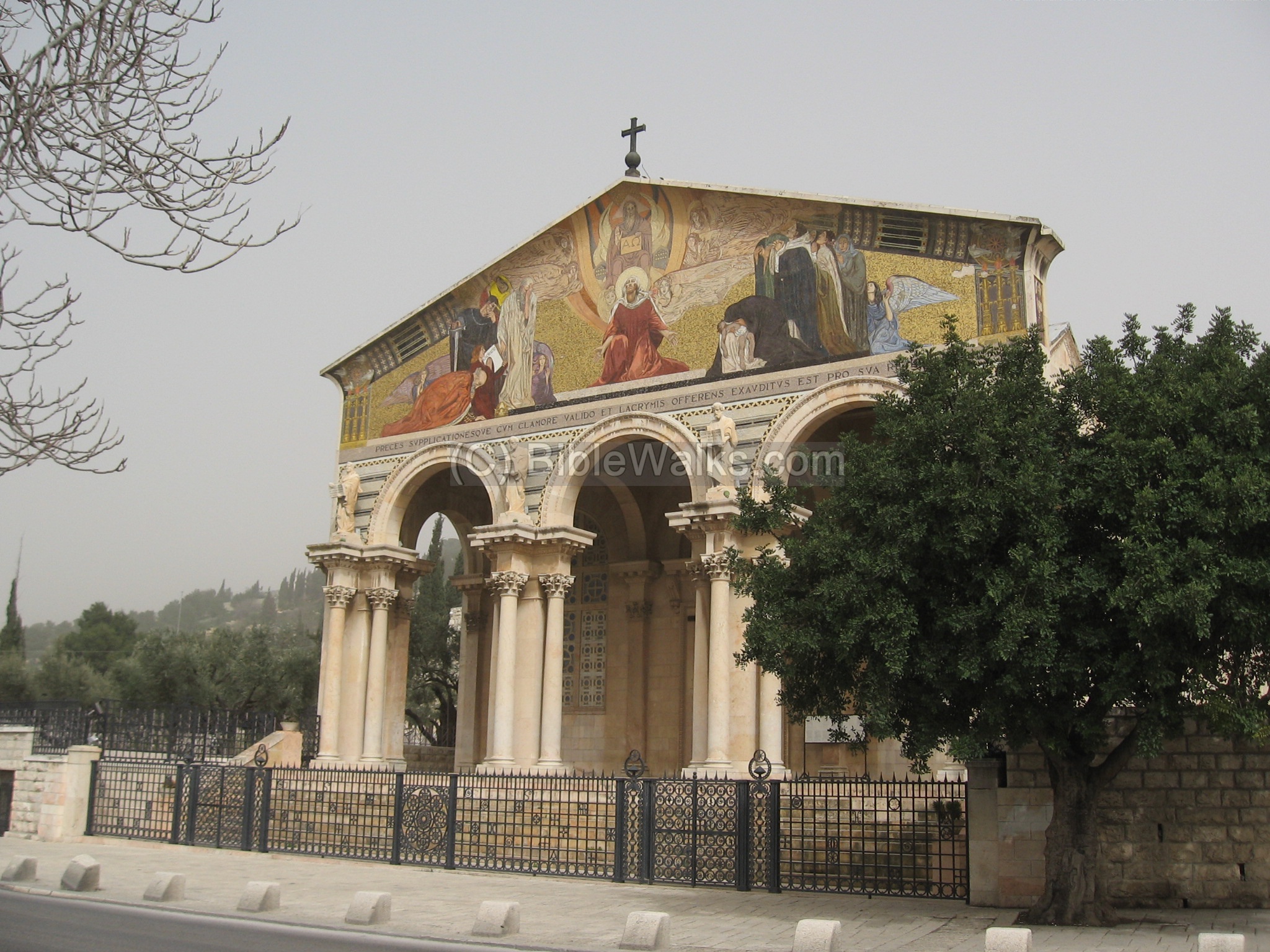
The Basilica of Agony – “Church of all nations” – is located on the lower foothills of Mount Zion, close to the Kidron brook. The photo below is of the western side of Mount of Olives, and the church is in its center.
Click on the photos to view in higher resolution…

A close up of the church is seen below. The Basilica’s roof has 12 grey capes. Before the church is the grove of the ancient olive trees.
(b) Entrance:
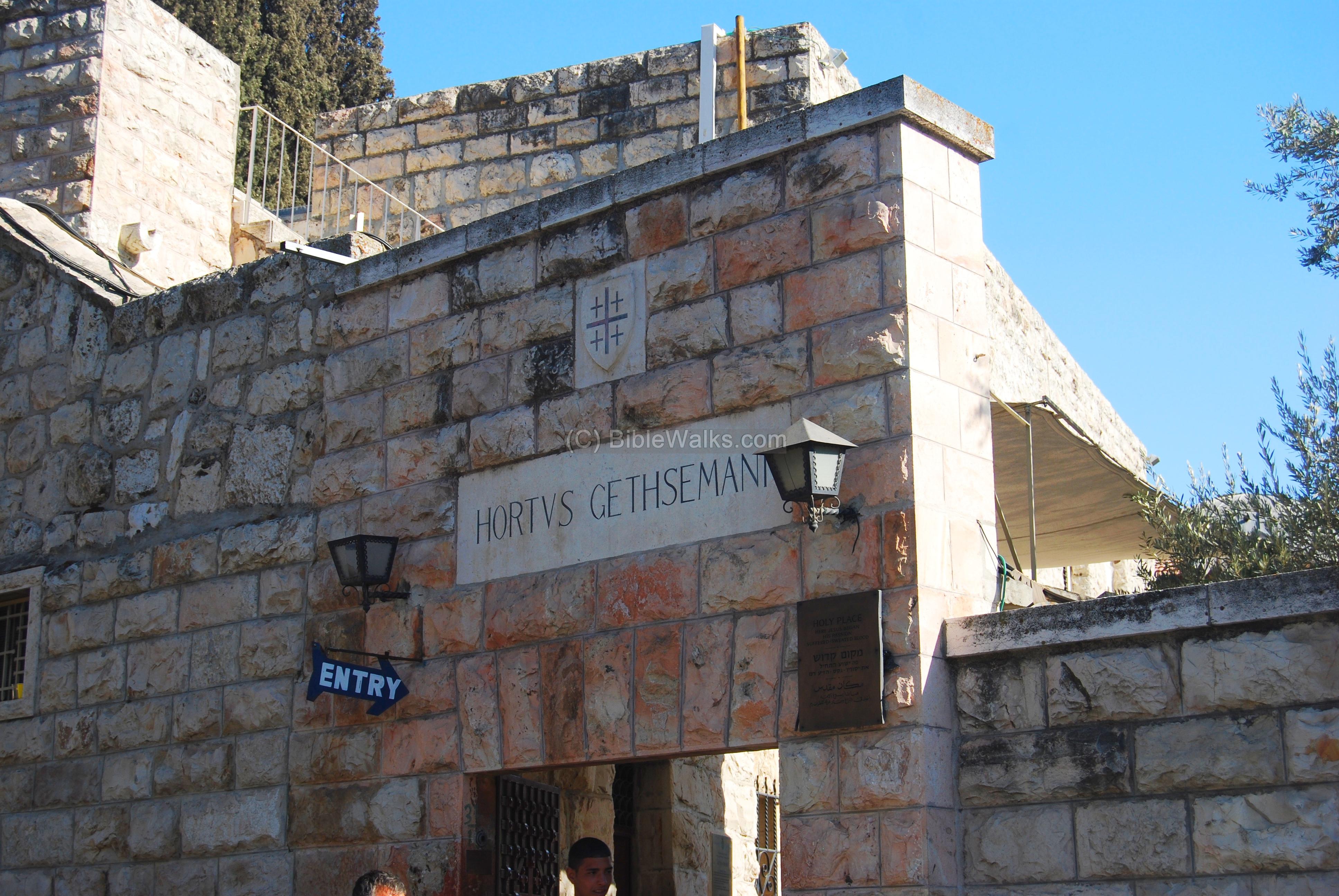
The entrance to the complex is on the north side, which opens to the north garden. The title reads “Hortus Gethsemane” – the garden of Gethsemane.
Above the name of the church is the symbol of the Franciscans, the custodians of the Holy sites. Their symbol is a large cross with four crosses on each of its corners. This symbol was the Crusaders sign of Jerusalem, and was adapted by the Franciscans. The 5-cross symbol is based on the 5 Holy wounds of the crucifixion of Jesus (2 in the hands, 2 in the legs, and one in the chest).
(c) Front side mosaics
The photo below shows the view of the front of the church, as seen from the road. This road follows along the Kidron valley from Jerusalem to Jericho.
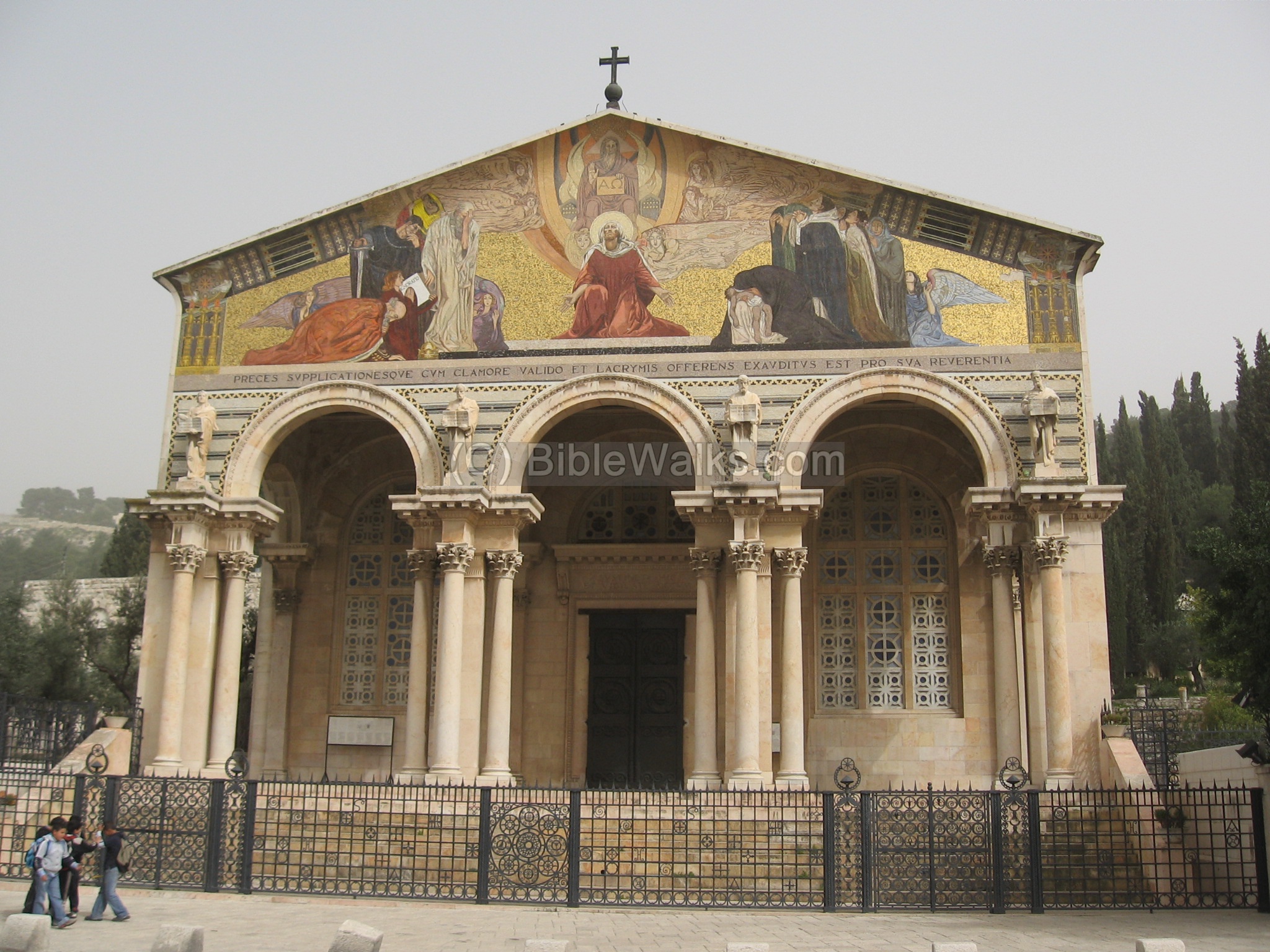
The colorful front mosaic depicts the story of Gethsemane, showing Jesus in the center weeping over the future fate of Jerusalem – the destruction of the city by the Romans (which actually happened 40 years later) .

Details of the mosaic are described below.

Above Jesus are two Greek letters – Alpha and Omega, the first and last letters of the Greek alphabet. As per Revelation 1: 8: “I am Alpha and Omega, the beginning and the ending “.
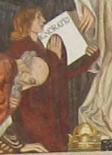
One the left side, one of the followers holds a tablet with the Latin word Ignoratio, which means “Ignorance”. This is due to the fact that the citizens of Jerusalem were ignorant of their cruel future fate, a gloomy future that Jesus viewed and cried (as per Luke 19).
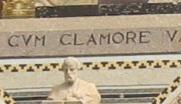
Under the mosaic – new Testament texts in Latin, such as: “…Cum clamore valido et lacrymis…” from Hebrews 5: 7 “Who in the days of his flesh, when he had offered up prayers and supplications with strong crying and tears unto him that was able to save him from death, and was heard in that he feared”;
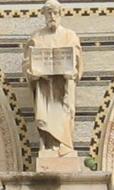
On the tops of the pillars are the 4 canonical Gospels: Matthew, Luke, Mark, and John.
(d) Inside the Church:
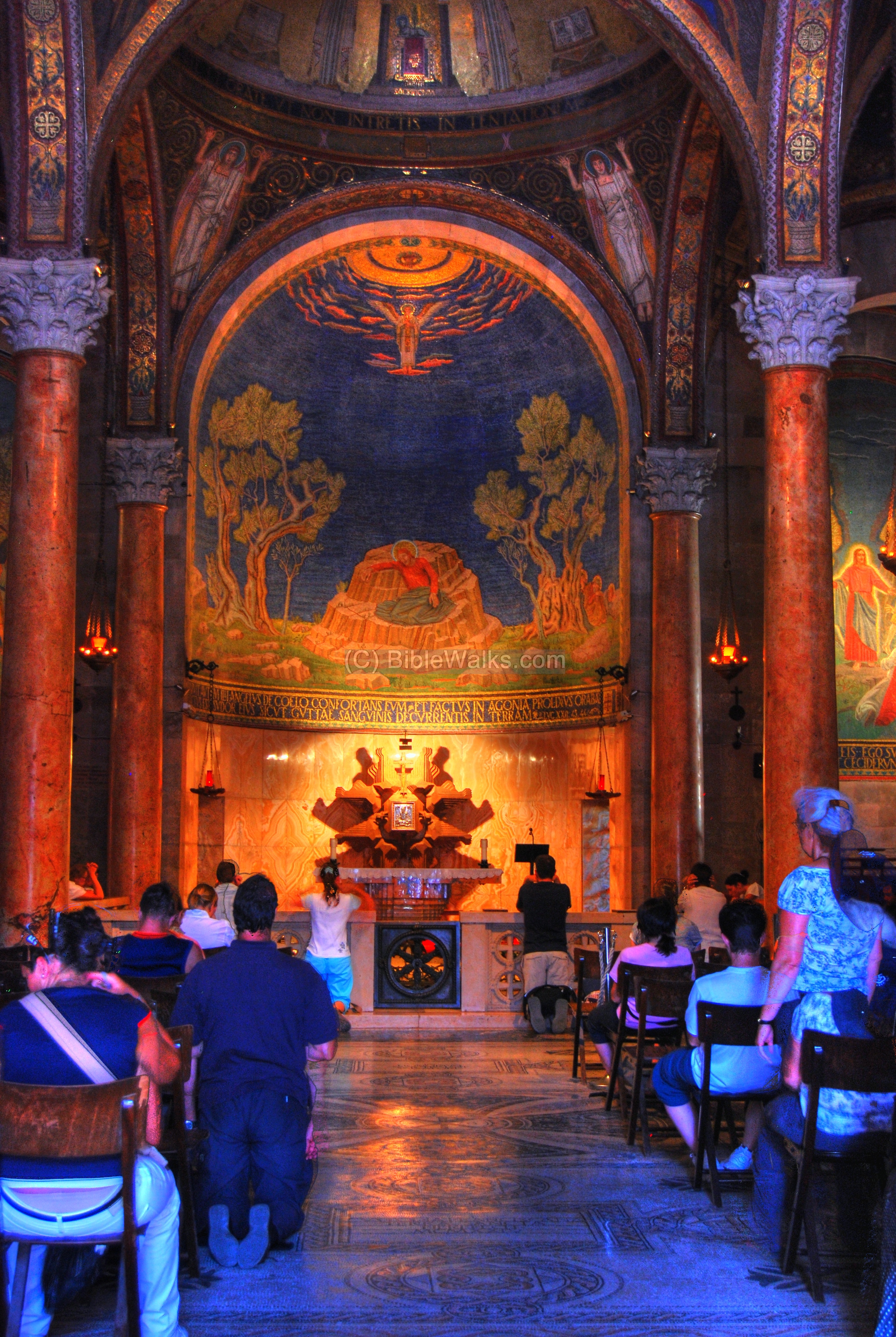
The photo below shows the main altar inside the basilica, which faces the east. The painting illustrates the moment when Jesus secluded in his prayer, on the Holy rock, and flanked by the olive trees.
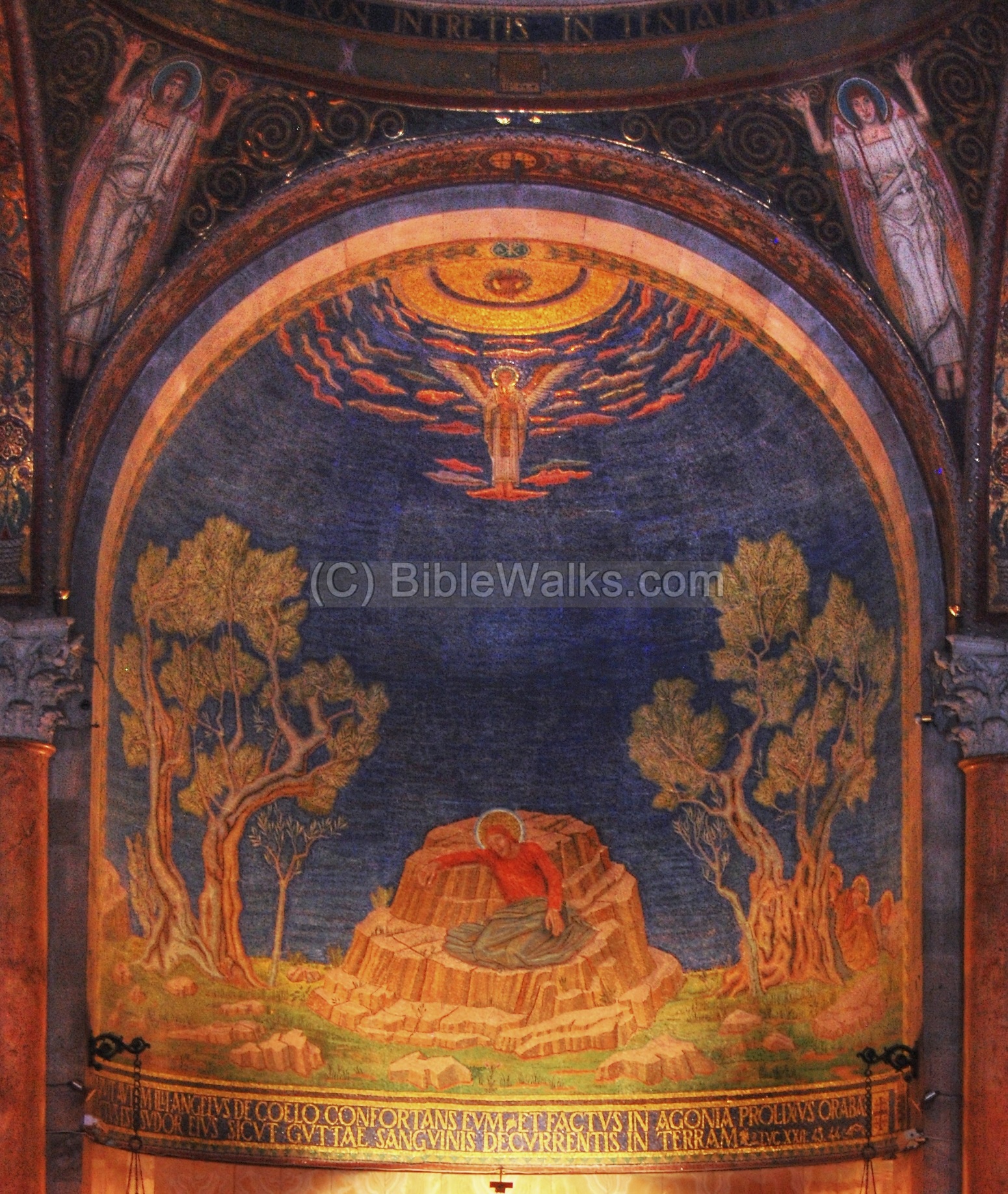
A closer detail of the agony of Jesus is seen in the photo below. Jesus is seen weeping on the rock between the olive trees, after visualizing the ruin of Jerusalem and observing the ignorance of its citizens of the events to come.
On the floor of the hall lays a flat rock. According to tradition, this is the Holy rock of agony, where Jesus conducted his prayer.
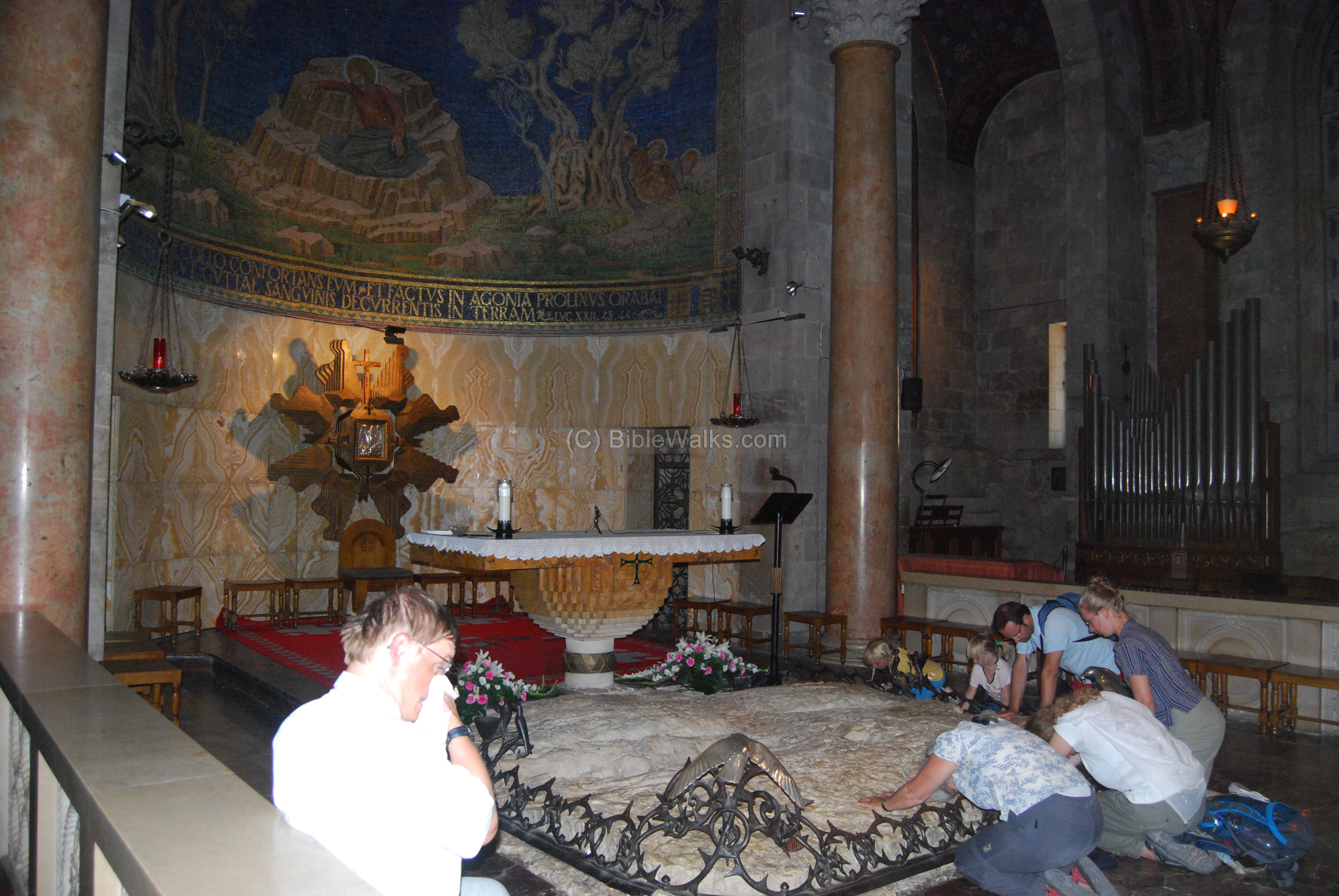
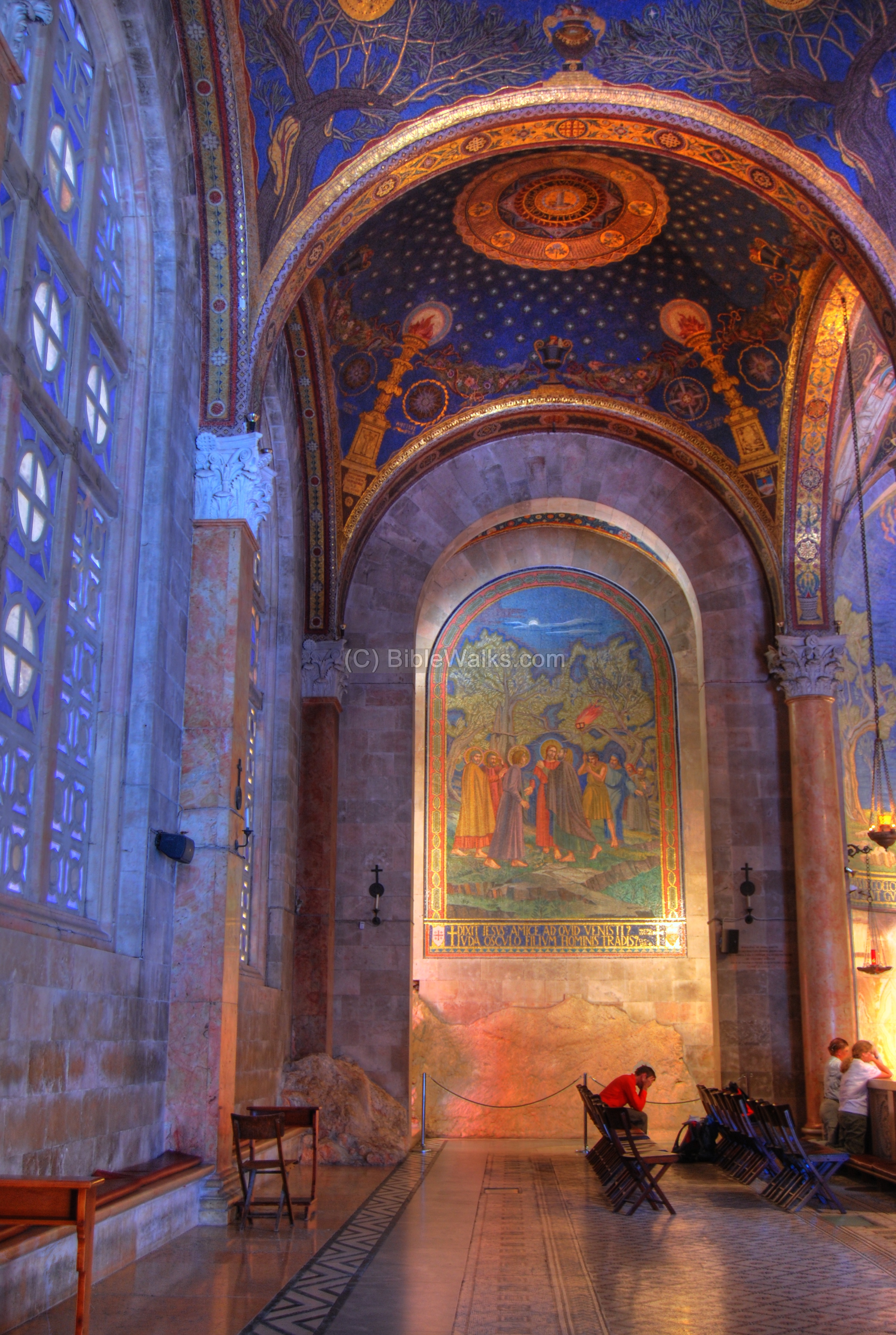
In the ceiling are 12 capes, each dedicated to one of the nations that contributed to its construction. Their seals are located on the corners of the capes.

A view of the northern side is seen below. The painting illustrates the story of the prayer in the garden and the betrayal: Peter, John and James are seen on the left side, since they waited nearby while Jesus prayed. The priests and soldiers and the torch holder are on the right side. Judas is seen kissing Jesus on his cheek, a sign for the Roman soldiers to pick him up. The Latin text under the painting is from Matthew 26:50 (“And Jesus said unto him, Friend, wherefore art thou come? Then came they, and laid hands on Jesus and took him.”) and Luke 24: 7 (“The Son of man must be delivered into the hands of sinful men, and be crucified, and the third day rise again.”).
(e) The North Side:
In the north side of the church is a garden with several ancient and large olive trees, perhaps the descendents from the original olive trees from the times of Jesus.
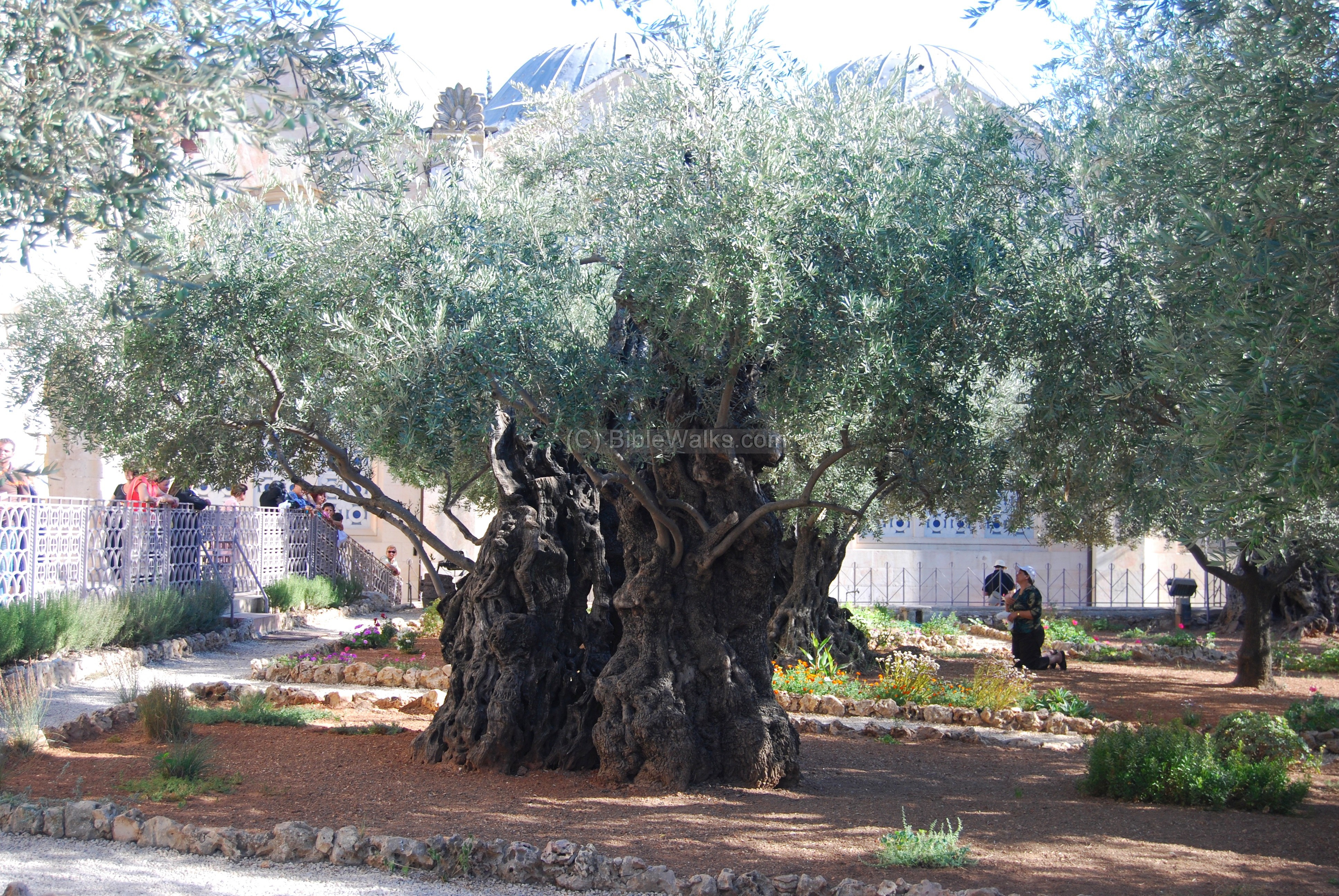
There are several other ancient olive trees trees in the garden, as seen in the photo below.
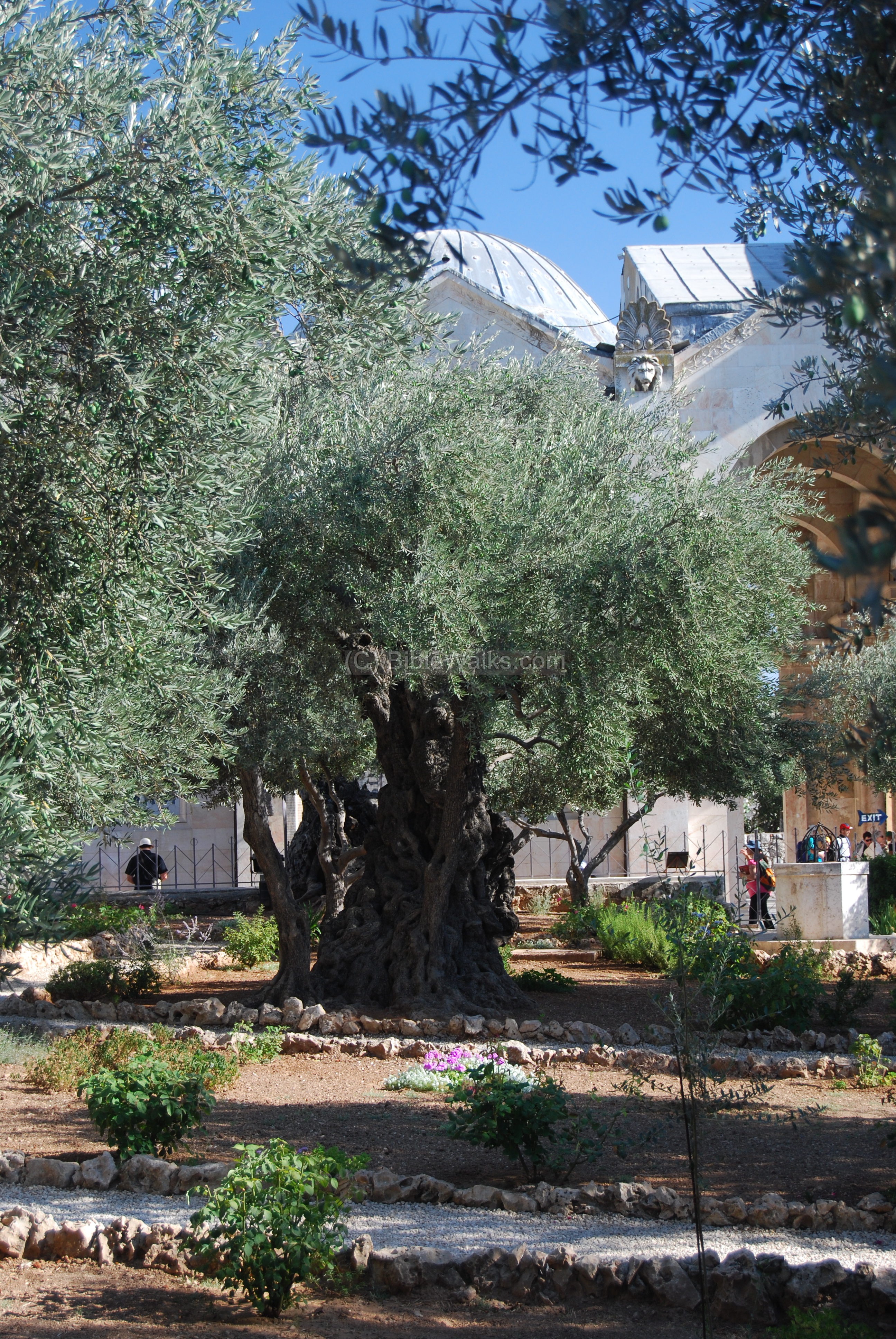
An interesting detail is seen below. This window is on the western side of the north wing.
The small sculpture was created by the Italian sculptor Pietro Canonica (1869–1959). Canonica was a prominent sculptor and a favorite of the architect Antonio Barluzzi, who designed the church. This particular bronze sculpture is situated in the garden area near the northern wall of the basilica, visible through the windows or while walking through the Gethsemane grounds. It depicts Jesus in a moment of profound sorrow, leaning against a rock as described in the Gospel accounts of his prayer before the arrest.

The sculpture was part of the broader artistic program for the church, which was completed in 1924. Canonica also contributed other works to Barluzzi’s projects in the Holy Land, such as the bronze door for the Church of the Holy Sepulchre and works for the Church of the Visitation in Ein Karem
(f) The south side:
On the south side of the church is another garden, seen below.

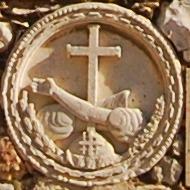
In the center of the wall is a Franciscan symbol, with two hands on both sides of a cross – the seal of the custody of the Holy places. In 1342 Pope Clement VI declared that the Franciscans are the official custodians of the Holy places (“Custodia Terroe Sanctoe”), a custody which is still in effect to date.
The bare hand is the hand of Jesus (pointing to the left), while the hand with a sleeve is St. Francis of Assisi, the founder. Both hands are perforated – the holes created by nails (Jesus on the cross, St. Francis of stigmata).
On the bottom of the cross is the 5-cross symbol of the Franciscans.
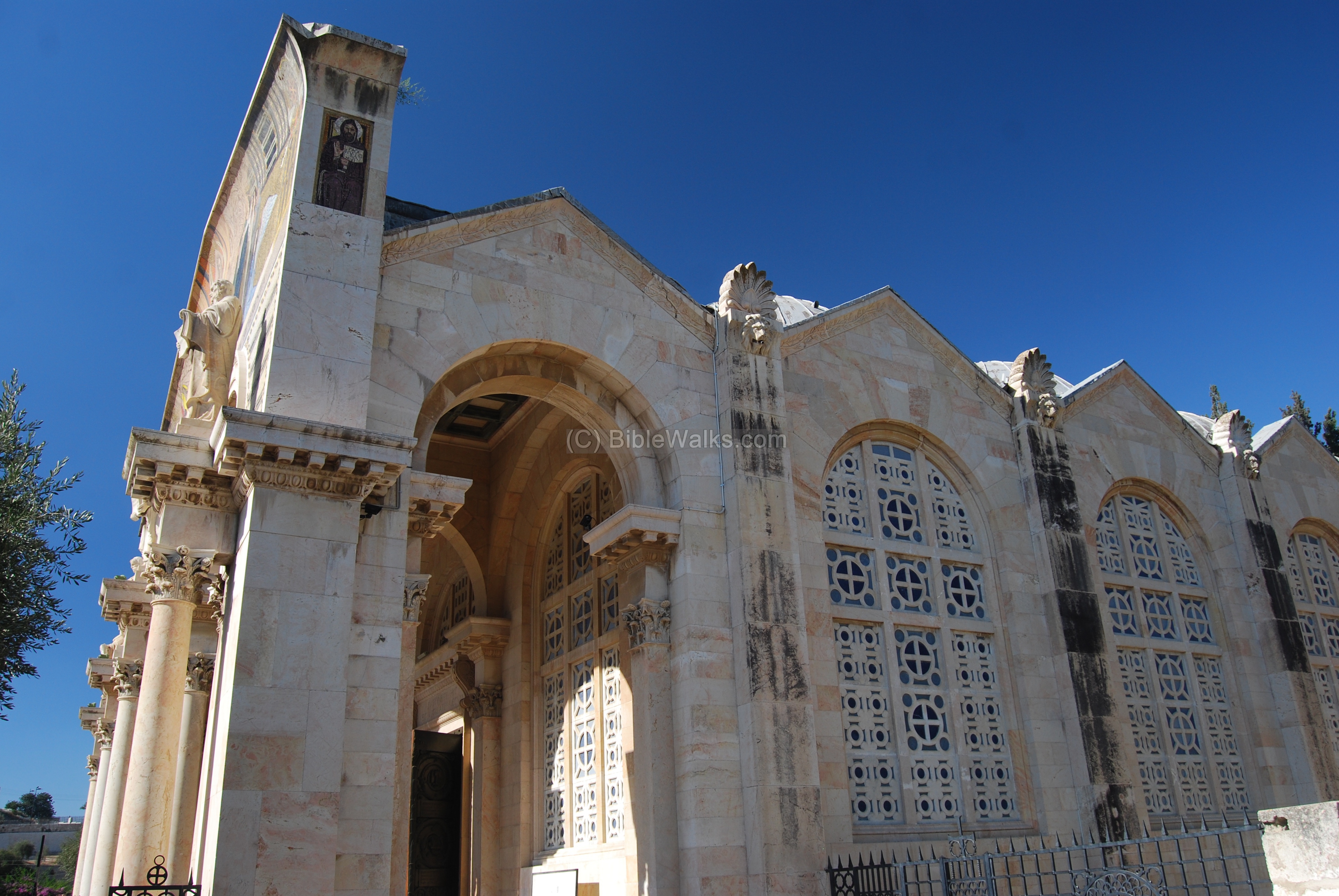
The photo below shows the south side of the basilica, as seen from the south garden.
Biblical:
(a) Mt 26: 36; Mk 14:32
“Then cometh Jesus with them unto a place called Gethsemane, and saith unto the disciples, Sit ye here, while I go and pray yonder”.
“And they came to a place which was named Gethsemane: and he saith to his disciples, Sit ye here, while I shall pray”.
(b) Luke 19: 37-44
Jesus visualizes the ruin of Jerusalem, and wept on its fate and the ignorance (“Ignoratio” in Latin) of its citizens of the events to come.
“And when he was come nigh, even now at the descent of the mount of Olives, the whole multitude of the disciples began to rejoice and praise God with a loud voice for all the mighty works that they had seen; Saying, Blessed be the King that cometh in the name of the Lord: peace in heaven, and glory in the highest. And some of the Pharisees from among the multitude said unto him, Master, rebuke thy disciples. And he answered and said unto them, I tell you that, if these should hold their peace, the stones would immediately cry out. And when he was come near, he beheld the city, and wept over it, Saying, If thou hadst known, even thou, at least in this thy day, the things which belong unto thy peace! but now they are hid from thine eyes. For the days shall come upon thee, that thine enemies shall cast a trench about thee, and compass thee round, and keep thee in on every side, And shall lay thee even with the ground, and thy children within thee; and they shall not leave in thee one stone upon another; because thou knewest not the time of thy visitation”.
(c) John 18: 1-3
This text tells the story of the betrayal of Jesus and his capture at night by the troops in the Garden beyond the Kidron (Cedron).
“When Jesus had spoken these words, he went forth with his disciples over the brook Cedron, where was a garden, into the which he entered, and his disciples. And Judas also, which betrayed him, knew the place: for Jesus ofttimes resorted thither with his disciples. Judas then, having received a band of men and officers from the chief priests and Pharisees, cometh thither with lanterns and torches and weapons”.
(d) Revelation 1: 8, 1:11, 21:6, 22:13
These texts use the phrase Alpha and Omega as “starting and ending”, which explains the letters Alpha and Omega on the mosaics of the church.
“I am Alpha and Omega, the beginning and the ending, saith the Lord, which is, and which was, and which is to come, the Almighty”.
“Saying, I am Alpha and Omega, the first and the last: and, What thou seest, write in a book, and send it unto the seven churches which are in Asia; unto Ephesus, and unto Smyrna, and unto Pergamos, and unto Thyatira, and unto Sardis, and unto Philadelphia, and unto Laodicea”.
“And he said unto me, It is done. I am Alpha and Omega, the beginning and the end. I will give unto him that is athirst of the fountain of the water of life freely”.
“I am Alpha and Omega, the beginning and the end, the first and the last”.
Etymology (behind the name):
-
Har Hazeitim – In Hebrew: Har (Mount) Ha (the) Zeitim (Olives)
-
Shemanim – Hebrew – plural for oil.
-
Gethsemane – Greek: of the Hebrew phrase for “oil press” (Gat Shemanim).
-
Gat, Gath – in Hebrew, a place where the wine is pressed. Normally it is a flat area on the rock where the grapes are pressed, and flow into a cavity or rectangular bath cut into the lower rock. There are many sites with the prefix “Gat”, such Gat, Gat-Rimon and Gat-Shemanim. The suffix, Rimon or Shemanim, is added to distinguish between the sites.
Links:
- Dominus Flevit (“The Lord has wept”) – A Catholic Franciscan chapel above the Basilica of Agony, shaped as a tear drop, symbolizing the weeping of Jesus.
- Check out our new pictorial presentation of the footsteps of Jesus.
The event in the garden is event #97.
BibleWalks.com – walk with us through the sites of the Holy Land
Mount of Olives<—previous site–<<< All Sites >>>—next Jerusalem site–> Dominus Flevit
This page was last updated on Apr 4, 2026 (add sculpture details)
Sponsored links: